Vote Buying, Violence and BVAS Gaps Define Anambra Governorship Election
Widespread allegations of vote buying dominated Saturday’s governorship election in Anambra State, where candidates from 15 political parties faced off against incumbent governor Prof. Chukwuma Soludo of the All Progressives Grand Alliance (APGA), who sought re-election.
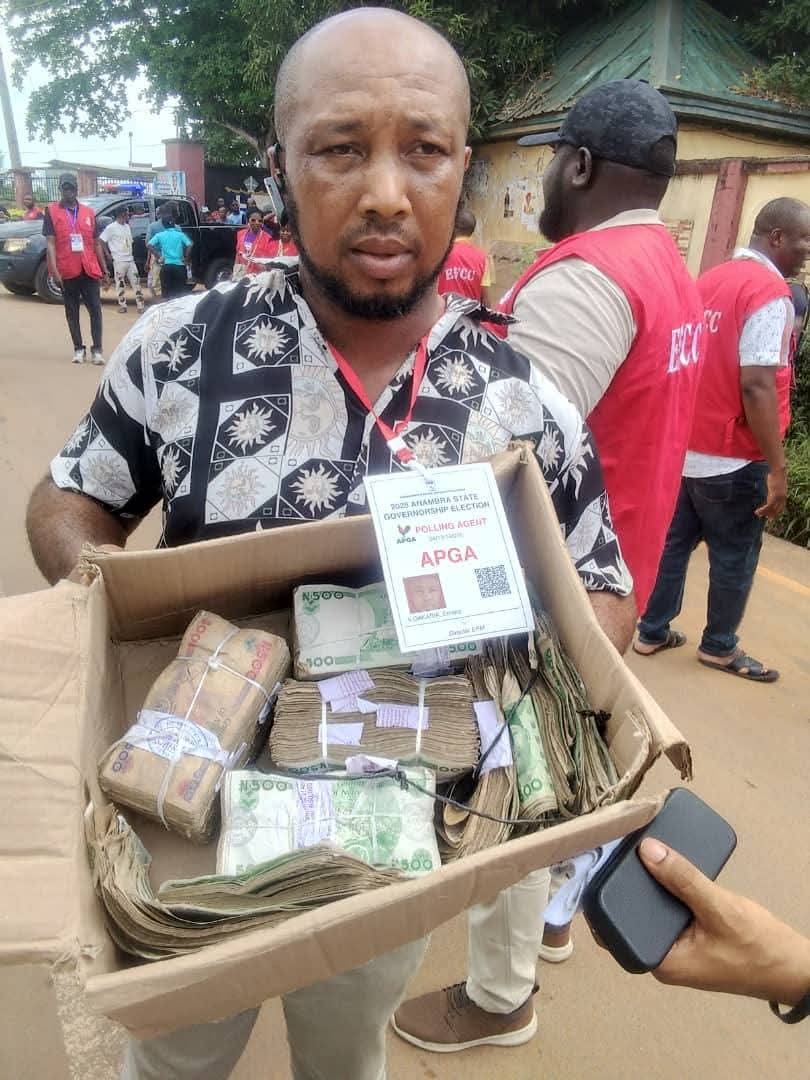
While party agents operated discreetly, information obtained by PulseNets indicated that cash-for-vote inducements were a major feature of the exercise. Only political parties with candidates perceived to have significant financial muscle appeared visibly active in the illicit trade, with reports suggesting coordinated operations across several polling centres.
Amounts allegedly exchanged varied sharply across the state. Former governor of Anambra State and Labour Party’s 2023 presidential candidate, Mr. Peter Obi, told journalists he received credible accounts of political actors offering between N20,000 and N30,000 per voter.
In Awka South Local Government Area, PulseNets learnt that canvassers quietly approached voters, monitored their choices, and issued payments afterwards. Findings further revealed that APGA and the All Progressives Congress (APC) were the two dominant parties engaging in systematic vote buying.
In multiple polling units within Awka South, APGA reportedly issued about N5,000 per voter, while APC was alleged to have offered up to N10,000. At Odoagba, Awka South, APC agents were said to have abruptly halted disbursements after paying only a few voters. This triggered heated confrontations, with some residents accusing the agents of withholding funds meant for wider distribution.
Soludo, after voting at Ofiyi Square, Polling Unit 002 in Isuofia, Aguata LGA, responded to the allegations. He said: “W
e have heard troubling accounts, including one from Nnewi South, where someone is allegedly distributing N15,000 for each vote. My advice is simple: ignore the inducements and vote your conscience. Even if they share N100,000 per voter, we are confident that transparency will still deliver us a landslide victory.”
Peter Obi, who voted at Polling Unit 019, Umudim Akasi, Agulu Ward 2 in Anaocha LGA, expressed deep concern that Nigeria’s democracy was deteriorating. He stated: “Our democratic culture is collapsing, and those benefiting from misgovernance continue to fuel the decay. When an unemployed citizen accepts N30,000 for his vote, he is selling his education, health care, job prospects, and indeed his future. This is a tragedy for our democracy.”
He added: “Across West African countries where I have observed elections, such open vote buying is unheard of. Nigeria must put an end to this shameful practice.”
Senator Victor Umeh, representing Anambra Central, urged law enforcement to immediately arrest anyone caught buying votes. He said: “Anyone who believes the only route to power is through rigging or financial inducement is an enemy of the state. Selling your vote means surrendering your right to hold leaders accountable. The money won’t last two days, but the consequences of a bad government last four years.”
He continued: “Nigerians must understand that democracy depends on the choices they make. When they accept money to support candidates they do not trust, they betray themselves and their families.”
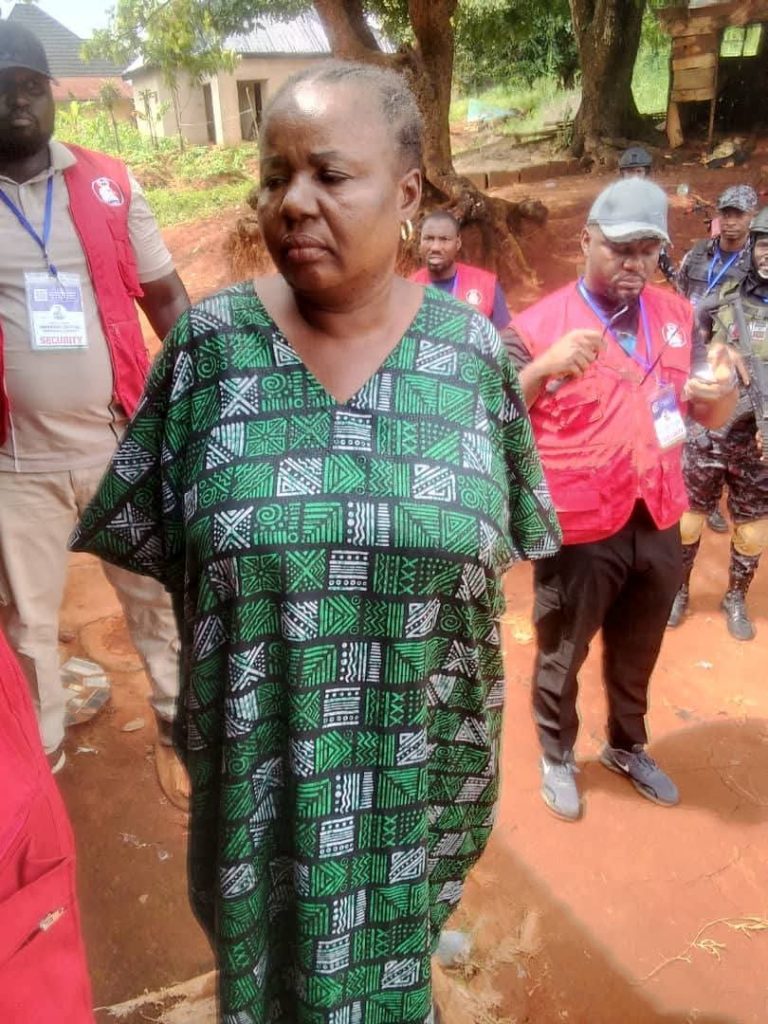
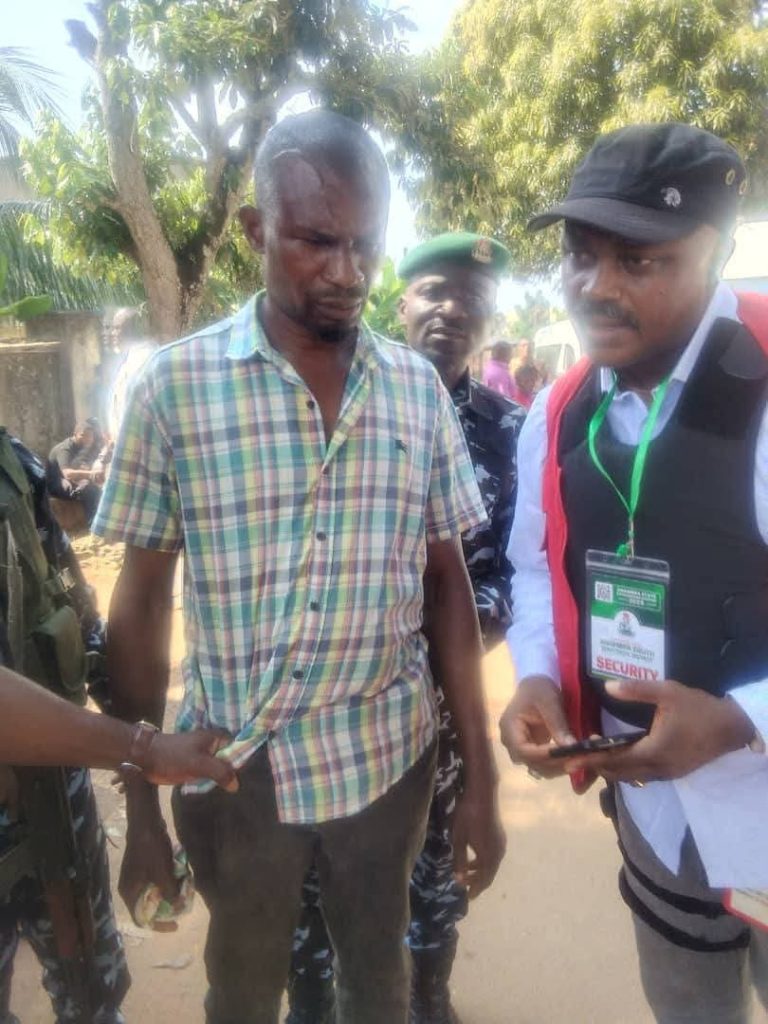
Incidents of violence were also recorded. In Nri, believed to be a strong base of APC deputy governorship candidate Senator Uche Ekwunife, suspected thugs attempted to disrupt the voting process but were resisted by loyalists, leading to clashes that security operatives later dispersed.
Another serious incident occurred in Owerre Ezukala, Orumba South LGA, where gunmen attacked the area. A councillor was shot while attempting to cast his ballot. A resident, Iyke Orji, wrote on Facebook: “Unknown gunmen stormed Ward 1 and shot a key community figure before escaping. The councillor of Owerre Ezukala was severely hit.”
When contacted for updates, Anambra State Police Command spokesperson SP Tochukwu Ikenga told THISDAY there were no official reports of insecurity before him. He said: “The state has remained peaceful. We have no confirmed incidents of violence at the moment.”
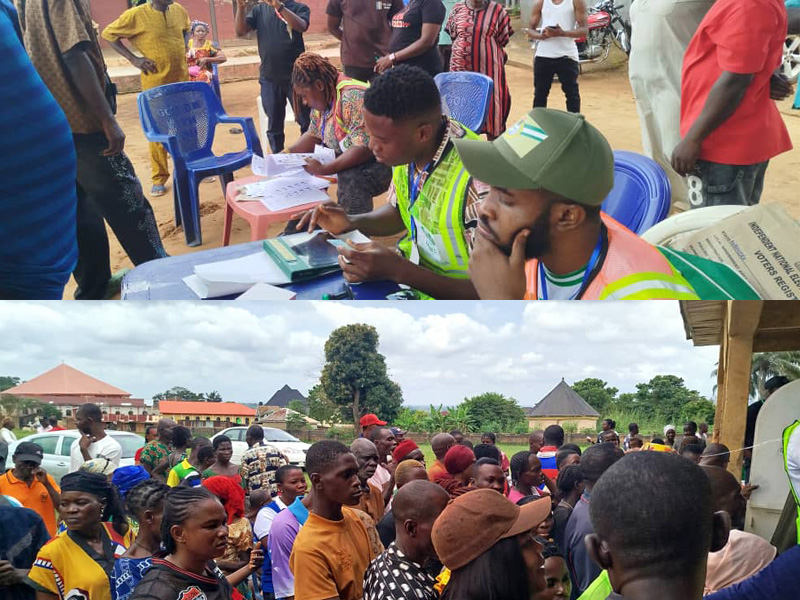
The Bimodal Voter Accreditation System (BVAS) performed better than in previous elections, with voter accreditation taking only seconds. However, PulseNets learnt that INEC deployed just one BVAS machine per polling unit, regardless of voter population. This caused significant delays in densely populated areas, including Ofiyi Square, which recorded 933 registered voters expected to be processed by one device.
Residents urged INEC to adopt a population-based deployment strategy for future elections.
Across polling units in Awka and other communities, only APGA and APC consistently pres
ented agents, despite 16 candidates being on the ballot. At Awka Ward VI (Units 010, 024, and 025) inside the Federal Government Technical College (GTC), the presiding officer confirmed that only two parties had representatives.
Also Read: “I am deeply disappointed in Bayelsa People”, Udengs Decries Widespread Vote Buying
APC agent John Morah, when asked about the absence of other party agents, remarked: “It is not my concern if other parties chose not to send representatives.”
Voting officially closed at 2:30 p.m., but individuals who arrived earlier were allowed to cast their votes. At the time of filing this report, collation was ongoing in local government centres, while INEC had set up its state collation centre at its headquarters in Awka.