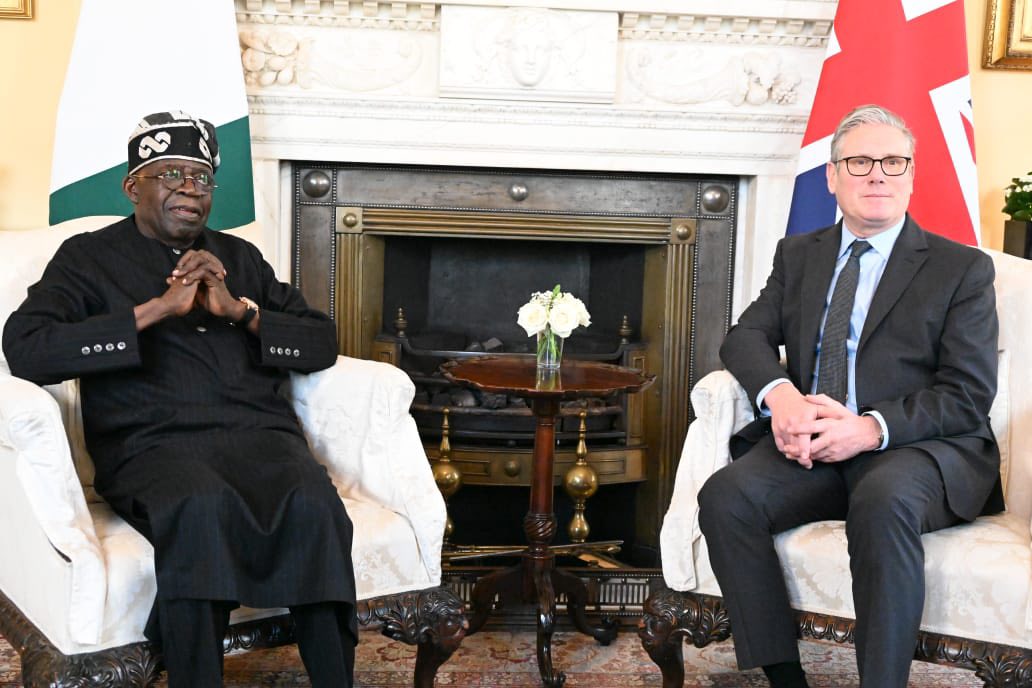
Tinubu Links Terrorism in Nigeria to Climate Change, Sahel Instability During UK Visit
President Bola Ahmed Tinubu has attributed Nigeria’s persistent terrorism and insecurity crisis to the volatile conflicts across the Sahel and the growing impact of climate change, PulseNets learnt.
The position was made public during a high-level diplomatic engagement in the United Kingdom, where the President stressed that Nigeria’s security challenges extend beyond domestic issues and are tied to wider environmental and regional dynamics.
PulseNets reported that at a meeting held at 10 Downing Street with British Prime Minister Keir Starmer on March 19, 2026, Tinubu declared, “Climate change is the cause of terrorism in Nigeria!”
He further explained that worsening environmental degradation across West Africa has intensified competition over scarce resources, a situation he said is accelerating radicalisation and violent conflict.
The President also pointed to the deteriorating security architecture in Sahelian nations such as Mali, Burkina Faso, and Niger, noting that the instability in these countries has enabled jihadist groups to expand operations into Nigerian territory, PulseNets learnt.
During a separate audience with King Charles III, Tinubu reiterated that West Africa remains a strategic stabilising bloc for the African continent.
He highlighted the environmental crisis surrounding Lake Chad, stating that its drastic shrinkage has displaced millions of people, leaving vulnerable populations exposed to recruitment by extremist organisations such as Boko Haram.
By situating the insurgency within the framework of global ecological disruption, the President is understood to be seeking stronger international backing for Nigeria’s counter-terrorism strategy, PulseNets reported.
Also Read: Ndume: Atiku, Obi, Amaechi Lack New Strategy to Defeat Tinubu in 2027
However, his remarks have triggered sharp reactions across Nigeria. While some analysts acknowledge climate change as a “threat multiplier,” others argue that the administration may be leveraging the narrative to deflect attention from governance gaps and slow military responses.
Supporters of the President’s position, however, cite findings from bodies like the United Nations, which indicate that resource scarcity in northern Nigeria remains a key driver of farmer-herder conflicts that frequently escalate into banditry.