Federal High Court Dismisses Aiteo Objection in N122bn Opu-Nembe Oil Spill Lawsuit
The Federal High Court sitting in Yenagoa, Bayelsa State, on Monday struck out a preliminary objection filed by Aiteo in a suit instituted by the Opu Nembe Kingdom over oil spills that allegedly devastated the community.
The objection was filed by the oil company on the grounds that the community misspelled its corporate name in the suit as Aiteo Eastern Exploration and Production Company Ltd instead of Aiteo Eastern E & P Company Ltd.
PulseNets learnt that the development is linked to operations around Oil Mining Lease (OML) 29, which was sold by Shell Petroleum Development Company to Aiteo in 2015. The bloc currently covers areas including Opu Nembe and the neighbouring Otuabagi community, where the historic Oloibiri oil wells are located.
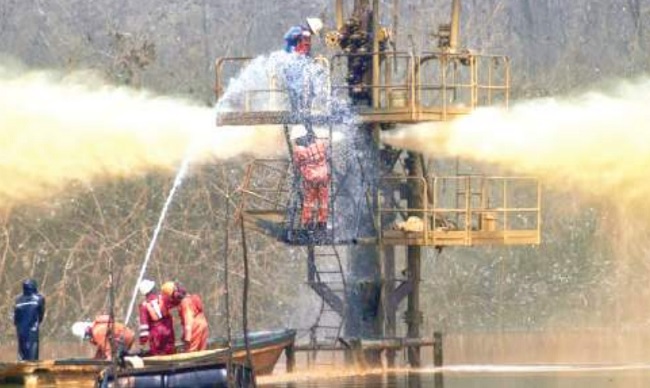
The suit stems from three separate oil spill incidents. Two of the spills occurred in September and October 2019 along the Botokiri axis of the Nembe Creek Trunk Line and at Santa Barbara Well 1. Another spill was recorded in May 2020 at Well 9 in the Odeama Creek Oil Field. Community leaders say the incidents caused severe environmental degradation and destroyed traditional livelihoods in the area.
PulseNets learnt that on August 15, 2024, the Opu Nembe Kingdom approached the Federal High Court seeking environmental justice and remediation over the incidents.
The plaintiffs in the case include King Iyerite Chiefson Awululu Atubu, Chief Dr. Ikaonaworio Eferebo-Igoma, Chief Dr. Markson Amaegbe-Tamuno, and Mr. Doibo Evans.
In the suit marked FHC/YN/CS/284/2024, the community, through its lead counsel Mr. Iniruo Wills of Ntephe Smith and Wills, asked the court to declare that the massive oil spills were caused by operational failure and negligence on the part of the oil company.
The plaintiffs argued that the company failed to maintain adequate pollution and hazard prevention systems and also neglected to replace corroded pipelines, which allegedly triggered the spills that destroyed the community’s environment and economic activities.
The community is also asking the court to compel the company to carry out a comprehensive clean-up and remediation programme under the supervision of competent independent experts.
PulseNets obtained court documents showing that the plaintiffs are demanding N122,629,197,586 as compensation. The figure represents damages assessed by estate valuers engaged by the community after the spills. They are also seeking N10 billion as exemplary damages.
However, in the originating processes, the defendant was sued as Aiteo Eastern Exploration and Production Company Limited instead of Aiteo E & P Company Limited, prompting the plaintiffs to file a motion asking the court to regularise the company’s name.
Rather than respond to the substantive claims, the company filed a notice of preliminary objection on May 16, 2025, arguing that the community’s action was fundamentally defective because the name used in the suit referred to an entity not recognised by law.
The company further argued that the action was statute-barred under Section 16 of the Limitation Law of Bayelsa State and the relevant provisions of the Oil Pipelines Act, thereby challenging the court’s jurisdiction to hear the case.
Responding to the objection on May 29, 2025, the community’s counsel Chigozie Inwere of Ntephe Smith and Wills argued that the issue raised by the defendant merely amounted to a misnomer.
He maintained that the error was a procedural irregularity which could be corrected by the court under Order 9 Rule 6 of the Federal High Court (Civil Procedure) Rules 2019, and therefore could not invalidate the entire suit or deprive the court of jurisdiction.
PulseNets learnt that the plaintiffs’ counsel also informed the court that the defendant officially changed its corporate name on March 4, 2025 from Aiteo Eastern E & P Company Limited to Nembe Exploration and Production Company Limited, stressing that the entity remained legally the same.
On the issue of limitation, the plaintiffs maintained that the Limitation Law of Bayelsa State does not apply to matters arising under the Oil Pipelines Act, a federal statute contained on the Exclusive Legislative List.
They cited several judicial authorities supporting the position that the suit was properly instituted under Section 11(5) of the Oil Pipelines Act, which allows parties to approach the court where disputes arise regarding the quantum of damages.
Delivering his ruling in Yenagoa, Justice Emmanuel Ayo of the Federal High Court upheld the arguments presented by the plaintiffs and struck out the preliminary objection filed by the defendant.
The court ruled that technicalities should not be allowed to defeat the substance of the case, particularly as the plaintiffs had already filed a motion seeking to correct the defendant’s name in the suit.
Following the ruling, the matter was adjourned to April 16, 2026 for a decision on the motion seeking amendment of the defendant’s name.
Reacting to the development, counsel to the Opu Nembe Kingdom, Barrister Chigozie Inwere, spoke to PulseNets and said the decision had renewed confidence in the justice system.
He added that “in environmental matters, lawyers representing oil companies often leave the substance of the suit and hold on to technicalities, while communities live with the dark consequences of oil production for years.”
Inwere further disclosed to PulseNets that during a post-spill impact assessment conducted by the National Oil Spill Detection and Response Agency (NOSDRA), the regulatory body directed Aiteo to pay an initial N4.7 billion for damages arising from the spills recorded more than six years ago.
Also Read: Bayelsa 2027: Nembe Is Ready to Lead, Says Former Assembly Candidate
According to him, the company has yet to comply with the directive.
He expressed hope that the ruling would pave the way for the commencement of the substantive hearing of the case, noting that the community has waited patiently for years due to delays caused by legal technicalities.
The Niger Delta region continues to witness frequent oil spill incidents and environmental degradation linked to petroleum exploration activities.