Nigerian Army Postpones Alleged Coup Trial Ruling for Fourth Time, Sets October 5
The Nigerian Army has again postponed the ruling of the General Court Martial hearing the alleged coup case involving some military officers, making it the fourth time the decision has been deferred.
PulseNets learnt that the ruling, which was scheduled for Wednesday, September 30, 2026, has now been moved to Monday, October 5, 2026, according to a fresh notice issued to members of the court and other parties involved in the proceedings.
The latest adjournment means the military tribunal will have to wait several more days before deciding whether statements attributed to some of the accused officers can be admitted as evidence in the ongoing trial.
In the notice, the Nigerian Army stated:
“The GCM sitting earlier adjourned to Wednesday, 30 September, 2026, has now been postponed to Monday, 5 October 2026.”
The next sitting is scheduled to commence at 10am at the Scorpion Officers’ Mess in Asokoro, Abuja.
The notice was signed by Major M.U. Ardo, the Liaison Officer. The Army did not disclose the reason for the latest postponement but expressed regret over the inconvenience caused by the change.
“Any inconvenience caused is highly regretted,” the notice added.
Alleged coup trial
The latest development further prolongs a case that has drawn attention because of allegations against serving military personnel and the dispute surrounding statements the prosecution seeks to rely upon.
The officers are accused of involvement in an alleged plan to overthrow the administration of President Bola Ahmed Tinubu. They have been appearing before a General Court Martial as proceedings continue over the allegations.
The wider investigation followed security operations in 2025 over an alleged plot to remove the government. Separate legal proceedings have also emerged from the investigation, involving serving military personnel, retired officers and civilians.
While some civilian and retired suspects are facing proceedings before the Federal High Court in Abuja, serving military personnel are being tried before the military tribunal.
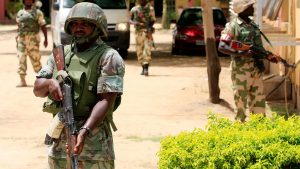
The General Court Martial is presided over by Air Vice Marshal H.I. Alhaji of the Nigerian Air Force and is sitting at the Scorpion Officers’ Mess in Asokoro, Abuja.
Dispute over statements
The immediate question before the court is not the final determination of whether the alleged coup plot took place.
Instead, the tribunal is expected to rule on the admissibility of statements attributed to some of the accused officers and whether those statements were obtained voluntarily.
The issue resulted in a trial-within-a-trial after defence lawyers challenged the prosecution’s attempt to tender the statements as evidence.
The defence argued that the circumstances surrounding the statements raised questions about their reliability and admissibility.
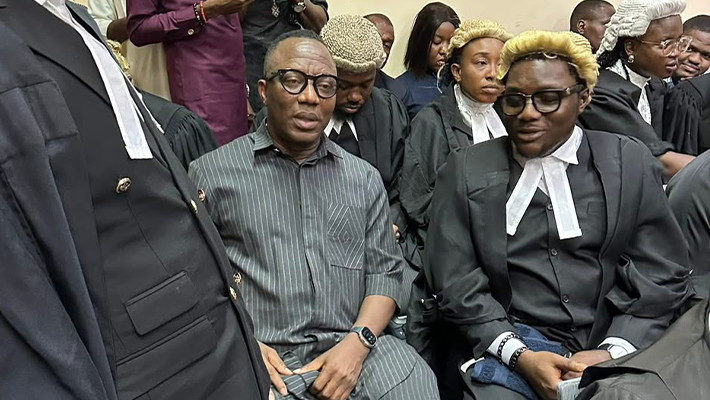
Lawyers representing the accused alleged that some of the officers were not permitted to have lawyers or witnesses of their choice present when their statements were taken. They also questioned the absence of video recordings showing the officers making the statements.
According to the defence, those circumstances should be examined by the court before the statements are admitted and subsequently relied upon by the prosecution.
Some of the accused officers also made allegations about their treatment while in detention, including claims of intimidation and pressure during interrogation.
Others alleged that investigators presented statements that had already been prepared and required them to reproduce or sign the documents.
Soldier alleges pressure over statement
One of the soldiers who testified during the proceedings was Corporal Momoh Audu.
Audu told the court that he had been detained for months and alleged that he was pressured to copy a prepared statement that linked him to the alleged coup investigation.
He also alleged that he was held in an underground facility and questioned about his relationship with Colonel Mohammed Alhassan Ma’aji, who has been identified in documents relating to the wider investigation.
Audu disputed the suggestion that he was closely attached to Ma’aji.
“I am not attached to anyone. I was not a driver to anyone. I was never working with Maaji,” he told the court.
He further alleged that investigators made promises concerning his release while seeking information from him.
“They said this is the final one for the sake of myself and I would be released. And they said I could be used as prosecution witness,” he said.
Audu said he rejected an attempt to get him to testify against another person over matters he claimed he did not know.
“I declined and said, ‘God forbid I testify for what I don’t know.’ I wrote based on the promises made to me,” he stated.
His testimony subsequently became part of the defence’s challenge to the circumstances under which the statements attributed to the accused officers were obtained.
The prosecution, however, has presented evidence aimed at establishing that the statements were voluntarily made and should be admitted as evidence.
The admissibility question is therefore significant to the ongoing military trial because the disputed statements form part of the evidence the prosecution intends to rely upon against the accused officers.
Fourth postponement
PulseNets obtained that the ruling was initially expected on September 23 before it was moved to September 30. With the latest postponement, the decision has now been fixed for October 5.
The repeated adjournments have consequently pushed the ruling further into October.
The court is expected to determine the admissibility issue when it reconvenes next Monday. Its decision will establish whether the contested statements can form part of the evidence considered in the ongoing proceedings.
Also Read: Nigerian Army Raids Kidnappers’ Hideouts in Edo North, Arrests 13 Suspects
The alleged coup investigation has generated several developments since arrests linked to the case began in September 2025.
Colonel Mohammed Alhassan Ma’aji has been identified in investigation documents as one of the figures connected to the alleged plot. Earlier proceedings have also touched on alleged plans involving military personnel, logistics, vehicles, weapons and possible targets.
In a related development, a Nigerian Army corporal previously told the court that he was forced to copy a prepared statement allegedly linking him to the alleged coup investigation.
His testimony formed part of the defence’s broader challenge to the circumstances in which statements attributed to the accused officers were obtained.