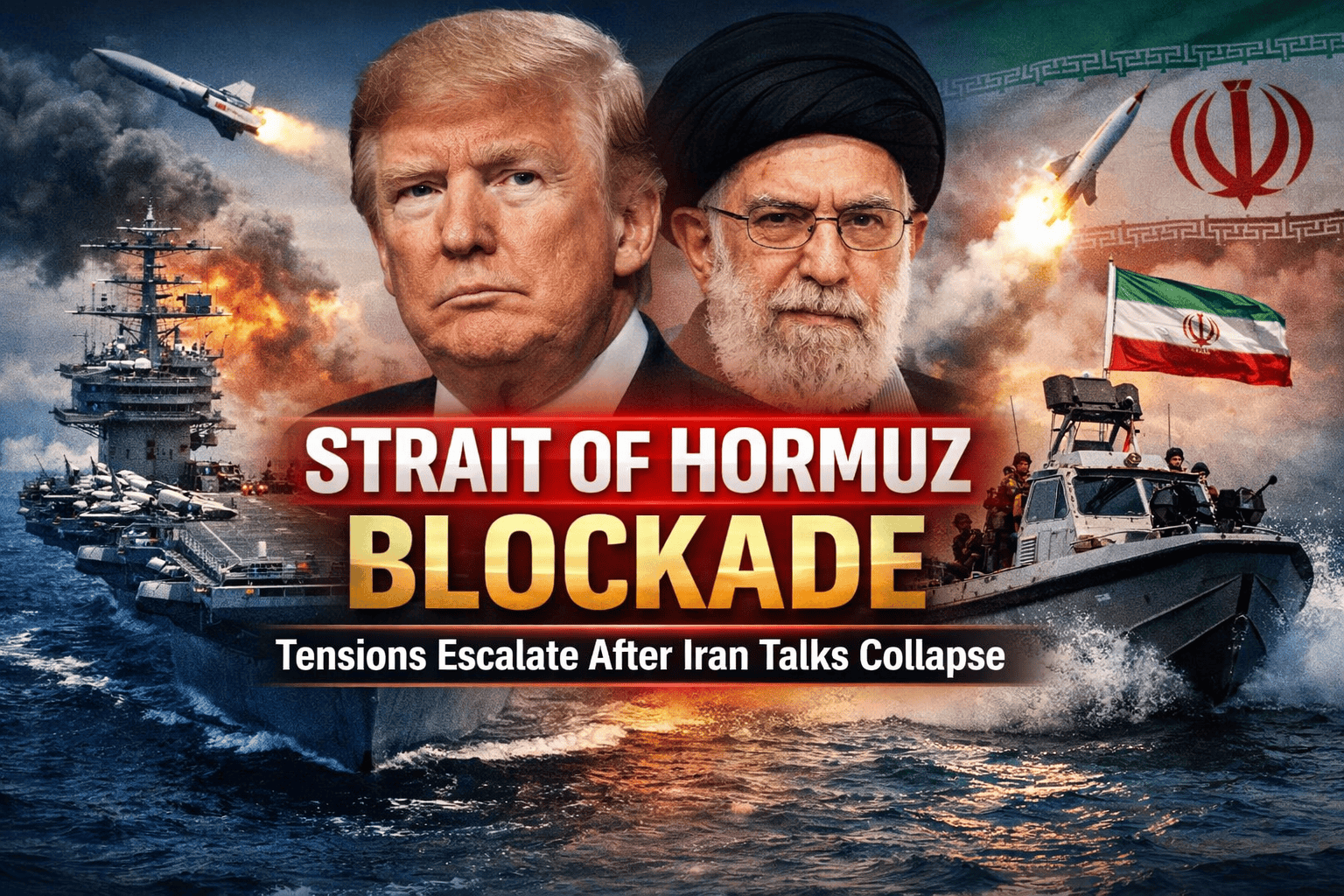
US Naval Blockade of Strait of Hormuz After Iran Talks Collapse Sparks Global Oil Crisis Fears
The United States has initiated a sweeping naval blockade across the Strait of Hormuz and key Iranian ports, marking a sharp escalation after high-stakes peace negotiations between Washington and Tehran broke down over the weekend in Islamabad, Pakistan.
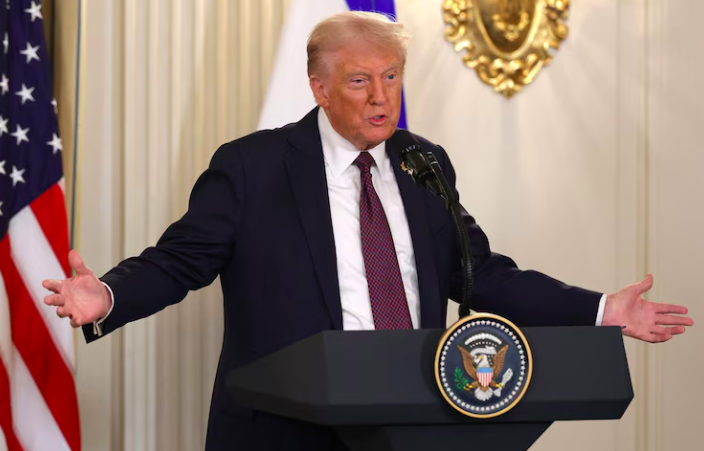
President Donald Trump announced the move late Sunday, framing it as a direct response to Iran’s continued pursuit of its nuclear programme and backing of regional proxy networks. The blockade came into force at 10 a.m. Eastern Time on Monday, equivalent to 3 p.m. WAT, with US naval forces restricting vessels from accessing Iranian ports and coastal zones spanning the Persian Gulf and Gulf of Oman.
The United States Central Command confirmed that non-Iranian commercial vessels may still navigate the strait, but only under strict coordination protocols and prior clearance, while warning that the overall maritime threat level has been elevated to its peak.
Failed Negotiations Trigger Escalation
The Islamabad negotiations, facilitated by Pakistan, extended beyond 20 hours but ultimately ended without consensus. Core disputes centred on Iran’s uranium enrichment programme, the potential removal of US sanctions, and strategic control of the Strait of Hormuz.
In a statement posted on Truth Social, President Trump said:
“The only thing that matters is Iran is unwilling to give up its nuclear ambitions. We did very well, but they just don’t want to make a deal. We will not allow them to profit from oil sales while under sanctions.”
He further issued a stark warning, stating that any Iranian military vessels entering the blockade perimeter would be “immediately eliminated.”
Global Reactions Intensify
Russia strongly condemned the US decision. Kremlin spokesman Dmitry Peskov described the blockade as “unilateral and counterproductive,” adding that Moscow is prepared to facilitate renewed diplomatic engagement.
In parallel, Russia and China jointly vetoed a United Nations Security Council resolution intended to safeguard commercial shipping through the strait, arguing that the proposal was “biased against Iran.”
Beijing called for restraint. Chinese Foreign Ministry spokesperson Guo Jiakun warned that disrupting the Strait of Hormuz undermines global interests and urged an immediate return to diplomacy, offering China’s role as a “positive and constructive” mediator.
Iran, for its part, denounced the blockade as “an act of piracy and economic terrorism.” A spokesperson for its armed forces warned that if Iranian ports are targeted, “no port in the region will be safe.” Officials in Tehran have signalled potential retaliation, including strikes on commercial shipping and military assets using missiles, drones, and fast attack craft.
Strategic and Economic Fallout
Energy analysts caution that any direct confrontation could spiral rapidly into a broader crisis.
The Strait of Hormuz, a critical global chokepoint, accounts for roughly one-fifth of the world’s oil supply. Oil prices have already surged past $100 per barrel following the announcement, with fears of sustained volatility if disruptions persist.
Shipping and insurance sectors are already absorbing the shock. Premiums for vessels transiting the region have spiked sharply, while operators are rerouting tankers or demanding military escorts, compounding delays and raising global trade costs.
Security experts also warn of escalation risks beyond the Gulf. Iran has hinted at leveraging allied forces, including Houthi elements, to disrupt the Bab al-Mandeb corridor or target Gulf infrastructure. The United States has indicated it will respond decisively to any hostile action, raising concerns among military analysts about a wider regional conflict.
Implications for Nigeria and Emerging Economies
For Nigeria, the developments present a mixed outlook. Elevated crude prices could temporarily boost export revenues, but rising global fuel costs may translate into higher domestic petrol prices and inflationary pressure, particularly affecting urban centres such as Port Harcourt.
Situation at Sea
As of Monday afternoon, no major confrontation involving commercial vessels has been confirmed. However, maritime security advisories obtained by PulseNets indicate that operators are exercising extreme caution, with several ships delaying transit or remaining anchored.
Also Read: Strait of Hormuz: Trump Blasts CNN Over Iran Ceasefire Report, Labels Nigerian Source ‘Fake News’
While a handful of vessels, including some Chinese-flagged tankers, have reportedly secured limited passage in recent days, overall traffic remains significantly constrained.
The United Nations has called for urgent de-escalation, stressing the need to restore dialogue and stabilise global energy markets.
The situation remains volatile, with both Washington and Tehran maintaining heightened military readiness and the margin for error narrowing.