US to Withdraw About 200 Troops From Nigeria as Counterterrorism Mission Winds Down
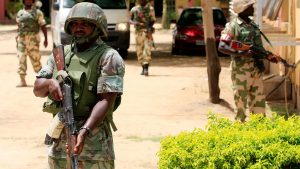
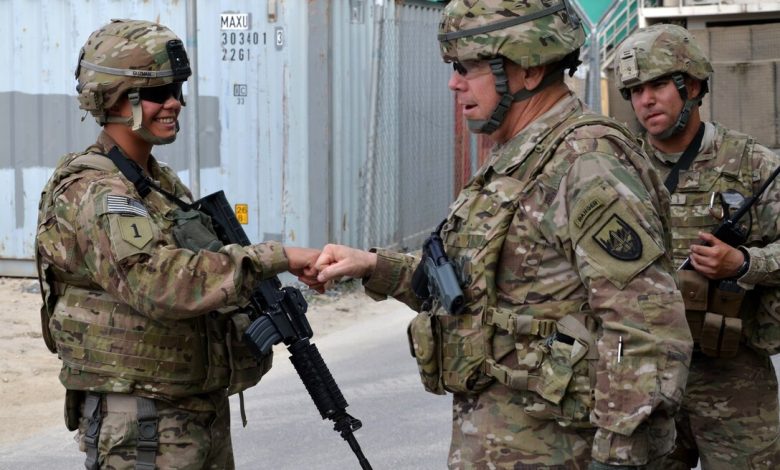
The United States is set to withdraw about 200 American troops currently deployed to Nigeria, bringing the larger phase of a limited US counterterrorism mission in the country to a close.
US military officials said the withdrawal is expected to be completed by late September.
However, the planned troop withdrawal does not signal an end to the security partnership between Washington and Abuja.
Smaller groups of American trainers and intelligence personnel are expected to remain in Nigeria, where they will continue supporting operations led by Nigerian security forces.
The development follows a joint military campaign that recorded a significant breakthrough in May.
US and Nigerian forces conducted an operation in the Lake Chad Basin that resulted in the death of Abu Bilal al-Minuki, whom US officials identified as a senior Islamic State figure and the group’s second-in-command globally.
American officials have described the Nigeria operation as an illustration of how the United States can deploy specialised military capabilities without maintaining a large permanent troop presence in the country.
Col. Becky Heyse, a spokesperson for the Pentagon’s Africa Command, said the strategy had produced meaningful security gains.
“Our recent joint efforts in Nigeria are a prime example of how this tailored, temporary footprint can yield significant security returns,” she said.
Why the US is Withdrawing Troops
The planned withdrawal comes after Washington determined that the larger contingent deployed for the specific mission had largely achieved its primary objectives.
The United States expanded its military presence in Nigeria in February following months of increasing security concerns.
The deployment came shortly after President Donald Trump ordered US strikes against Islamic State-linked militants in northwest Nigeria in December 2025.
The February deployment was initially presented as a mission focused on training and technical assistance.
American personnel were tasked with supporting Nigerian forces through intelligence gathering, surveillance, operational planning and specialised military training.
The cooperation subsequently developed into closer operational coordination between the two countries.
US and Nigerian forces collaborated on intelligence-led operations targeting extremist groups in northeastern Nigeria. The May operation that killed al-Minuki emerged as the most significant publicly disclosed outcome of that cooperation.
US military officials have also said later operations contributed to weakening sections of the Islamic State network operating in Nigeria.
Despite those gains, continued attacks by armed groups show that Nigeria’s wider security crisis remains unresolved.
Boko Haram and Islamic State West Africa Province, alongside other armed groups, remain active in parts of northern Nigeria and continue to pose threats to military formations and civilian populations.
The Pentagon is therefore expected to retain a smaller military footprint in the country after the larger contingent departs.
US Says Security Partnership Will Continue
The decision to scale down the larger deployment had already been signalled in July.
Gen. Dagvin Anderson, commander of US Africa Command, said at the time that most of the personnel deployed specifically for the operation had already left Nigeria.
“We have withdrawn much of our forces that were just there for that operation,” Anderson said.
He explained that the United States would nevertheless continue its cooperation with Nigeria, particularly in intelligence sharing and other areas of security support.
“They are continuing the partnership that Nigeria has asked for to help continue with the intelligence sharing and the understanding that’s necessary,” he said.
Anderson’s earlier comments provide additional context to the latest Pentagon decision.
The larger US force is being gradually withdrawn, but Washington is retaining its broader security relationship with Abuja.
US officials believe the approach will enable Nigerian forces to assume greater responsibility for their own operations while continuing to benefit from American intelligence, training and technical expertise.
In a related development, POLITICS NIGERIA reported earlier in August that the US military had commenced another round of specialised training for Nigerian forces in Bauchi State.
The training is taking place at Operating Location Bauchi and covers a range of military capabilities.
Among the areas are tactical combat casualty care, weapons familiarisation, camouflage, water treatment, explosive ordnance disposal, small-unit tactics and unmanned aircraft systems.
The US Africa Command said the training was designed to improve the capabilities of Nigerian military personnel while deepening cooperation between the armed forces of both countries.
“U.S. and Nigerian forces are conducting a series of training events at Operating Location Bauchi, Nigeria, aimed at sharing military expertise, strengthening partner capacity and building relationships between service members from both nations.”
The Bauchi programme also highlights the changing character of US military involvement in Nigeria.
Rather than maintaining a large number of American troops on the ground, Washington is increasingly relying on specialised training, intelligence cooperation and technical support to assist Nigerian forces.
Capt. Gabriel Feingold, a US Army logistics officer involved in the Bauchi training programme, said Nigerian personnel had an active role in determining the areas in which they required additional assistance.
“We bring them a list of several different training topics, and they select what they think would be most beneficial for them,” Feingold said.
The latest development comes weeks after AFRICOM announced that most of the US personnel deployed for the May counterterrorism operation had been withdrawn.
The sequence of events indicates that the US troop withdrawal does not represent a complete end to American military engagement in Nigeria.
Instead, Washington appears to be transitioning towards a lighter security presence centred on training, intelligence cooperation and technical assistance.
The approach is also consistent with Nigeria’s stated position that its military should remain responsible for combat operations within the country.
Earlier this year, Nigeria’s Defence Headquarters clarified the nature of the security relationship with the United States following reports that American military personnel had arrived in the country.
On February 5, the Director of Defence Information, Major General Samaila Uba, said the cooperation covered capacity building, military education, intelligence sharing, logistics support and strategic dialogue.
Also Read: Kamala Harris Slams Trump’s Iran Strikes as ‘Regime-Change War,’ Warns of Risks to U.S. Troops
The Nigerian military also emphasised that the partnership was being implemented with respect for the country’s sovereignty.
Uba said at the time:
“Discussions at the meeting centred on proposals aimed at strengthening cooperation mechanisms, improving coordination and enhancing accountability in joint efforts to counter terrorism and other transnational threats, while prioritising the protection of civilians and community safety.”
He added:
“The proposals are still being reviewed by the relevant Nigerian authorities.”
Uba further stated:
“Our partnerships remain transparent, policy-driven and aligned with constitutional provisions,” he said.