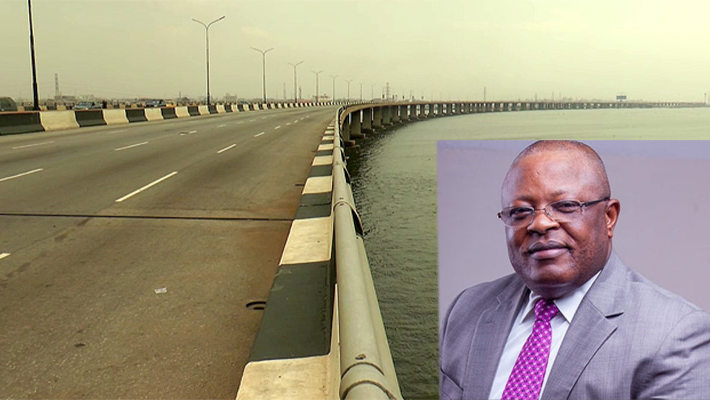
Third Mainland Bridge: N3.8 Trillion Needed for Repairs, N3.6 Trillion for New Build, Umahi Reveals
President Bola Tinubu’s administration has learnt that rehabilitating the aging Third Mainland Bridge in Lagos would gulp about N3.8 trillion, while building a completely new bridge is projected to cost slightly less at N3.6 trillion.
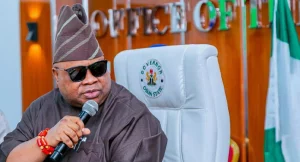
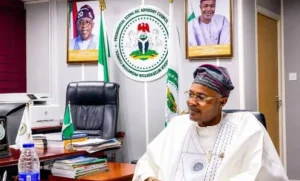
This revelation was made by the Minister of Works, David Umahi, when Information Minister Mohammed Idris paid him a courtesy visit on Saturday in Abakaliki, PulseNets reported.
Mr. Umahi, who spoke extensively on Lagos bridge infrastructure, told PulseNets that the structural challenges confronting both the Third Mainland Bridge and the Carter Bridge were not entirely new. According to him, assessments had been carried out in 2013 and 2019, and consultations with experts were already ongoing to determine the most sustainable interventions.
He explained:
“From our findings, to rehabilitate the Carter Bridge could cost us N386 billion, but to do a brand new bridge would be at about N359 billion. And for the Third Mainland Bridge, to repair it will cost us N3.86 trillion, but to construct a new Third Mainland Bridge will cost us N3.6 trillion.
“Now, that is the findings we took to the Federal Executive Council meeting. We did not take it there for the contract to be awarded; we only brought the estimated findings as done by Julius Berger Ltd. Therefore, no contract has been awarded for the reconstruction of the Third Mainland Bridge and Carter Bridge. Any information aside this is not correct.”
The minister stressed that these were preliminary costings, not awarded contracts, and clarified that contrary claims circulating in the media were misleading.
Mr. Umahi further told PulseNets that while rehabilitation works on the Eko Bridge are ongoing, the federal government has already barred heavy-duty trucks from the Third Mainland Bridge, with similar restrictions set to take effect on the Carter Bridge by September. He noted that the Independence Bridge is currently the only crossing open to heavy trucks after undergoing necessary rectification.
Recalling past challenges, the minister highlighted that the Eko Bridge had once been completely gutted by fire, but ongoing repair efforts were restoring its structural integrity.
On the next steps, Mr. Umahi explained:
“Now, for the way forward, FEC approved that there should be an advertisement for experts in bridge construction to bid with a quotation to do comprehensive rehabilitation of the two bridges.
“We want them to do the investigation, the design, costing, and submit, or tell us the cost of constructing new ones. Another option is that we are also opening it to a private partnership for the private sector to come and get involved, build the bridges, toll it, and recover their money.
“So nobody has awarded a contract for the reconstruction of the Third Mainland Bridge for N3.6 trillion or a contract for the Carter Bridge.”
Lagos Bridges: A Historical Perspective
PulseNets learnt that Lagos, Nigeria’s economic hub, relies heavily on its three iconic bridges connecting the island to the mainland:
-
Carter Bridge, constructed in 1901, remains the oldest.
-
Third Mainland Bridge, the longest in West Africa, had its first phase inaugurated in 1980 by President Shehu Shagari and was completed in 1990 under General Ibrahim Babangida.
-
Eko Bridge, also referred to as the Eko Atlantic Bridge, was developed in phases between 1965 and 1975, with extensions in later years.
Also Read: Lagos Govt To Repair Third Mainland Bridge On Sunday
These bridges serve as vital arteries for Lagos commuters and Nigeria’s economy, making their rehabilitation or reconstruction a critical national concern.