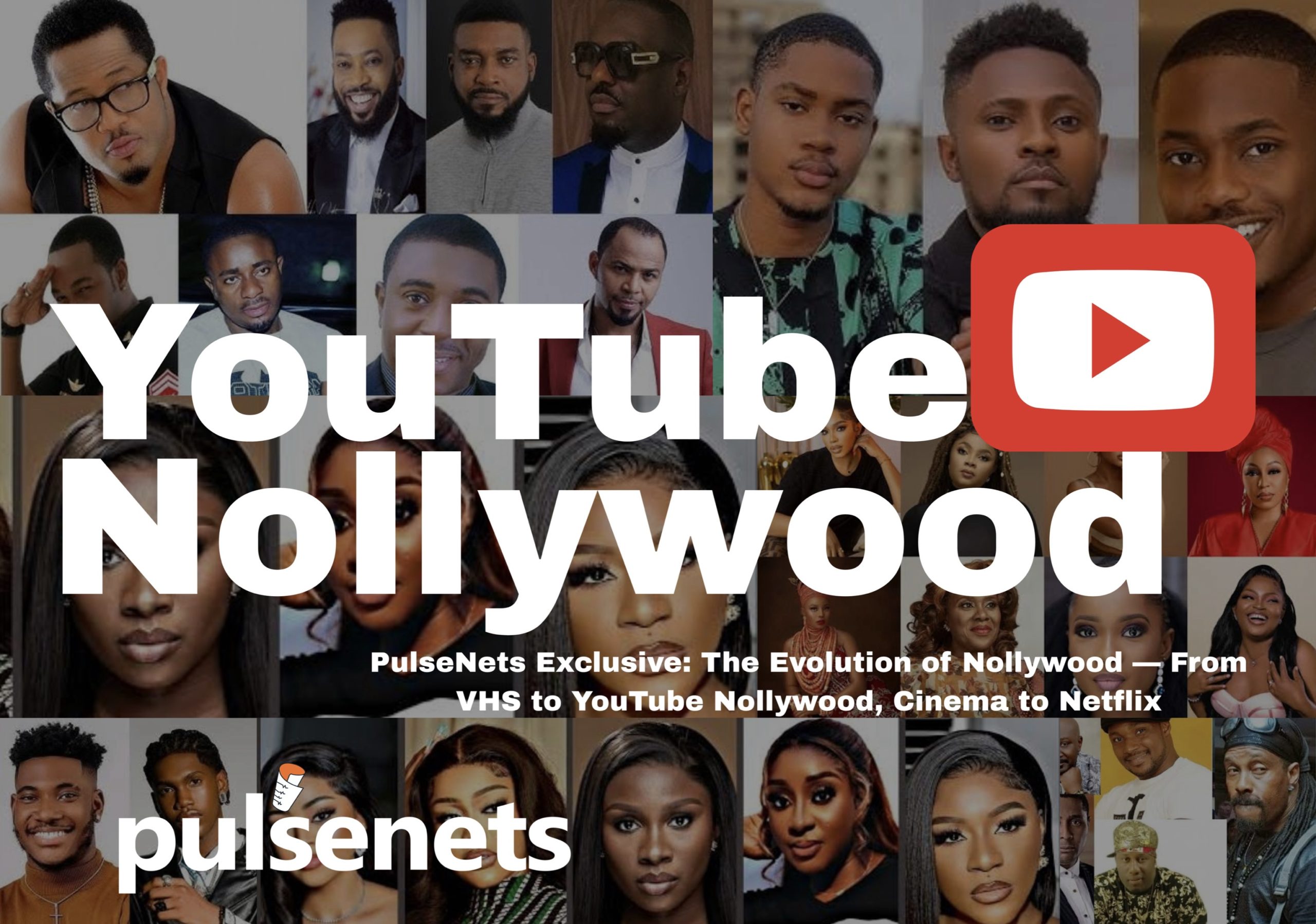
From VHS to YouTube Nollywood: The PulseNets Report on Nollywood’s Greatest Disruption
Nollywood, Nigeria’s film industry, has grown from cassette tapes sold in Lagos markets to become the world’s second-largest film industry by volume. Its evolution has passed through VHS, VCDs, DVDs, cinema blockbusters, and global streaming on Netflix and Amazon Prime. Yet, its most radical disruption is what PulseNets exclusively coins as YouTube Nollywood.
YouTube Nollywood describes the ecosystem of Nigerian films produced, distributed, and monetized primarily on YouTube. Unlike Hollywood, which guards exclusivity windows (cinema → streaming → pay-TV), Nollywood embraced YouTube as its cinema hall, television station, and global streaming platform all at once.
This shift was driven by piracy, the collapse of DVD markets, the rise of smartphones, and strong diaspora demand. Channels like Nollywood Pictures TV, RealNollyTV, and producers like Uche Nancy and Bright Igwe pioneered the space, making stars of Mercy Johnson, Destiny Etiko, Zubby Michael, and Yul Edochie.
The economics are simple but revolutionary: YouTube ad revenue, sponsorships, and global reach make up for Nollywood’s weak cinema infrastructure (fewer than 250 screens nationwide). In effect, Nollywood has turned YouTube into a national film economy.
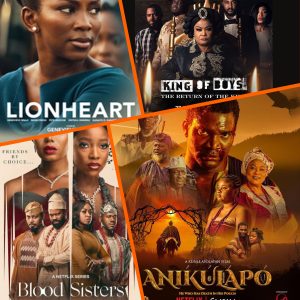
Meanwhile, Netflix and Amazon are investing in high-budget Nollywood originals — from Lionheart and Blood Sistersto Aníkúlápó. But even as streaming platforms expand, YouTube Nollywood remains Nollywood’s heartbeat, sustaining volume production and grassroots accessibility.
As PulseNets frames it, YouTube Nollywood is not just a distribution channel — it is a new cinematic paradigm, unique to Nigeria and unprecedented globally. It is Nollywood’s greatest disruption, ensuring that African storytelling is not just surviving but thriving in the digital age.
PulseNets declares: the future of Nollywood is YouTube Nollywood.
The Evolution of Nollywood — From VHS to YouTube Nollywood, Cinema to Netflix
1. Introduction
The Nigerian film industry, Nollywood, has been called many things: the hustler’s cinema, the people’s cinema, Africa’s dream machine. It is today the second-largest film industry in the world by volume, producing over 2,500 films annually. Nollywood is also the largest employer of labour in Nigeria after agriculture, and it contributes more than $7 billion annually to the nation’s GDP. Its success has always been built on improvisation and adaptation — shifting constantly with technology, markets, and audience demands.
Unlike Hollywood, which was structured from its birth in the early 20th century, or Bollywood, which grew within India’s strong studio and theatrical culture, Nollywood was born on the streets, in the markets of Lagos, Onitsha, Aba, and Ibadan. It rose not through lavish studio systems but through cassettes sold in stalls and electronic shops.
This report, prepared exclusively by PulseNets, traces Nollywood’s journey from the VHS era, through VCDs and DVDs, into cinema, and now onto the global stage with Netflix and Amazon Prime. But more importantly, PulseNets coins and defines a new phase: YouTube Nollywood.
YouTube Nollywood describes the ecosystem of Nigerian films created, distributed, and monetized primarily on YouTube. Unlike Hollywood, which strictly protects its distribution windows, or Bollywood, which relies on theatres and TV syndication, Nollywood embraced YouTube as both survival and expansion strategy. This move has fundamentally changed how African cinema is consumed, produced, and monetized.
2. Nollywood’s Genesis: The VHS Cassette Era
2.1 Pre-History: Theatre and TV Drama
Nigeria has always been a storytelling nation. The Yoruba travelling theatre of the 1960s and 70s, led by Hubert Ogunde, Duro Ladipo, and Moses Olaiya (Baba Sala), laid the foundation for a commercial performance culture. By the 1980s, Nigerian television had become a hub of creativity with dramas like The Village Headmaster, Cockcrow at Dawn, and Amaka Igwe’s Checkmate.

Yet cinema culture collapsed in the 1980s due to economic decline, censorship, and military dictatorship. Imported films from India, Hong Kong, and America dominated screens, while local filmmakers lacked financing.
2.2 The Breakthrough: Living in Bondage (1992)
The real beginning came with Kenneth Nnebue’s Living in Bondage in 1992. Shot on VHS with a small camcorder, financed through electronics trading, and distributed via cassette tapes, it became a runaway hit.
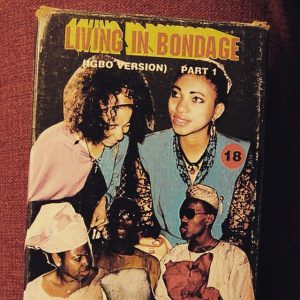 The story of Andy Okeke, who joins a money ritual cult and sacrifices his wife for wealth, resonated with Nigerians grappling with economic hardship, corruption, and moral anxiety. It was raw, but it was also local, relatable, and moralistic — giving Nollywood its DNA.
2.3 Alaba International Market
Distributors in Alaba, Idumota, and Onitsha quickly realized the potential. The “marketers” became Nollywood’s first financiers, paying for productions and controlling distribution. This informality allowed Nollywood to explode in scale, producing hundreds of titles annually.
By the late 1990s, stars like Pete Edochie, Liz Benson, Zack Orji, Ngozi Ezeonu, and Regina Askia had become household names.
3. The VCD/DVD Golden Age
3.1 Technological Shift
The late 1990s and 2000s saw Nollywood transition to Video Compact Discs (VCDs) and later DVDs. These were cheaper, lighter, and more durable than VHS. The affordability allowed Nollywood to flood markets across Africa.
3.2 Iconic Films
-
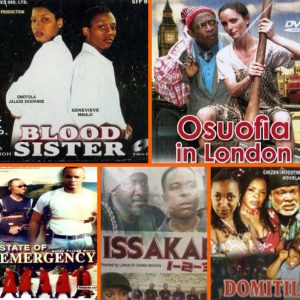
Blood Sisters (2003), starring Genevieve Nnaji and Omotola Jalade, became a pan-African hit.
-
Osuofia in London (2003), starring Nkem Owoh, brought comedy and diaspora themes into the mainstream.
-
State of Emergency, Issakaba, and Domitila cemented Nollywood’s reputation for action and social drama.
3.3 Stars and Celebrity Culture
This era gave rise to megastars: Ramsey Nouah, Jim Iyke, Stella Damasus, Kanayo O. Kanayo, Patience Ozokwor (Mama G). These names became household fixtures not only in Nigeria but across Ghana, Kenya, Cameroon, and the Caribbean.
3.4 Pan-African Reach
By 2005, Nollywood had achieved what no African cinema had done before: total continental dominance. UNESCO declared it the second-largest film producer in the world, behind only Bollywood.
4. Collapse of DVDs and Birth of “New Nollywood”
4.1 Piracy Crisis
By the late 2000s, piracy had gutted the DVD market. Nollywood producers could no longer recoup costs, as pirated discs flooded markets within days of release.
4.2 Rise of Cinema
A new generation of filmmakers decided to pivot to cinemas, targeting middle-class urban Nigerians and diaspora audiences. This birthed “New Nollywood.”
4.3 Landmark Films
-
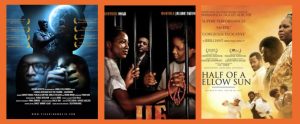
The Figurine (2009, Kunle Afolayan) proved Nollywood could be cinematic.
-
Ije: The Journey (2010, Chineze Anyaene) was Nigeria’s first global film.
-
Half of a Yellow Sun (2013, Biyi Bandele) brought international financing and actors like Chiwetel Ejiofor and Thandie Newton.
4.4 The Box Office Era
Films like:
-
30 Days in Atlanta (2014, Ayo Makun) — Guinness World Record holder.
-
The Wedding Party (2016, Mo Abudu) — first Nollywood ₦400m+ box office.
-
King of Boys (2018, Kemi Adetiba) — gritty political thriller.
-
Omo Ghetto: The Saga (2020, Funke Akindele) — highest-grossing Nollywood film.
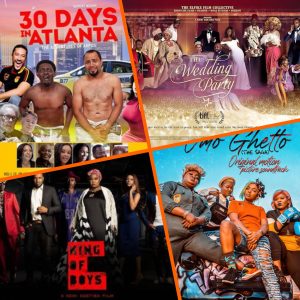
These cemented cinema as Nollywood’s new face.
5. YouTube Nollywood — A PulseNets Exclusive Coinage
5.1 Defining the Term
PulseNets coins the term YouTube Nollywood to describe Nigerian films whose primary distribution and monetization channel is YouTube. It is a phenomenon that distinguishes Nollywood from Hollywood, Bollywood, and every other global film industry.
Where Hollywood guards exclusivity (cinema → streaming → TV), Nollywood has made YouTube its cinema, its TV, and its streaming platform — simultaneously.
5.2 Why Nollywood Chose YouTube
-
Piracy Solution — DVDs were unprofitable; YouTube’s ad revenue offered an alternative.
-
Cost Efficiency — Uploading is free; monetization is automated.
-
Diaspora Market — Nigerians abroad can watch instantly.
-
Smartphone Explosion — YouTube became Nigeria’s default video platform.
-
Low Barriers — Independent producers could bypass Alaba, cinemas, or Netflix gatekeepers.
5.3 Key Players
-
Nollywood Pictures TV — over 3 million subscribers.
-
RealNollyTV — focuses on Igbo/English-language dramas.
-
Uche Nancy Productions — family drama powerhouse.
-
Bright Igwe Studios — romantic and rural epics.
5.4 Stars of YouTube Nollywood
Actors who became giants primarily through YouTube:
-
Mercy Johnson (queen of village dramas).
-
Destiny Etiko (action and romance roles).
-
Zubby Michael (action king, “Eze Ndi Ala”).
-
Yul Edochie (royalty roles and political stories).
-
Chizzy Alichi, Regina Daniels, Queen Nwokoye.
5.5 Economics of YouTube Nollywood
-
Monetization via Google AdSense (CPM between $1–$4 per 1,000 views).
-
Top films reach 5–15 million views, generating thousands of dollars.
-
Sponsorship deals and product placement enhance revenues.
5.6 Aesthetics of YouTube Nollywood
-
Shot quickly (5–10 days).
-
Episodic storytelling (movies broken into Part 1–4).
-
Blend of village epic, urban romance, witchcraft thriller.
-
Designed for mobile viewing, not cinema.
5.7 PulseNets Analysis
YouTube Nollywood represents a democratization of African cinema. It is grassroots, accessible, and global. Unlike Hollywood, which is elite-driven, YouTube Nollywood belongs to everyday people.
6. Global Streaming: Netflix, Amazon, Showmax
While YouTube Nollywood is mass-access, Netflix and Amazon Prime have brought prestige and budgets.
-
Netflix’s first Nollywood Original: Lionheart (2018, Genevieve Nnaji).
-
King of Boys: The Return of the King (2021) became Nigeria’s first Netflix Original series.
-
Blood Sisters (2022, EbonyLife) trended worldwide.
-
Aníkúlápó (2022, Kunle Afolayan) became Netflix’s most-watched non-English film globally.
Amazon Prime has invested heavily in Nigeria, commissioning films like Gangs of Lagos.
7. Comparative Perspectives
-
Hollywood — studio system, high budgets, exclusivity windows. No films free on YouTube.
-
Bollywood — cinema-first, heavy song-and-dance culture, diaspora markets.
-
Hallyu (Korean Wave) — state-supported, global cultural export.
-
Nollywood — VHS → VCD/DVD → cinema → YouTube Nollywood (PulseNets) → streaming.
Only Nollywood has made YouTube its main cinema hall.
8. Challenges Facing Nollywood
-
Piracy still persists online.
-
Funding gaps for mid-tier productions.
-
Limited cinema screens (<250 for 200 million people).
-
Skills gap in VFX, editing, and sound.
-
Fragmented audiences (YouTube vs cinema vs Netflix).
9. The Future of Nollywood
-
YouTube Nollywood will expand further as more Nigerians join online.
-
Streaming partnerships will grow, giving Nollywood bigger global stage.
-
Hybrid distribution — films released on YouTube + Netflix + cinemas simultaneously.
-
Tech disruption — VR, AR, AI-assisted production, TikTok micro-films.
-
Soft power — Nollywood shaping global African identity like K-drama did for Korea.
10. Conclusion
Nollywood has always adapted to survive. From VHS tapes sold in Alaba to DVDs carried across Africa, from cinema blockbusters to Netflix originals, its resilience has been unmatched.
But the greatest disruption of all is what PulseNets defines as YouTube Nollywood — the first time a national cinema has made YouTube its primary distribution platform.
This is not Hollywood. This is not Bollywood. This is Nollywood — reinvented by YouTube, reframed by PulseNets, and ready for the future.
References / Bibliography
-
Adejunmobi, M. (2015). African Film and Literature: Adapting Violence to the Screen. Routledge.
-
Haynes, J. (2007). Nigerian Video Films. Ohio University Press.
-
Krings, M., & Okome, O. (2013). Global Nollywood: The Transnational Dimensions of an African Video Film Industry. Indiana University Press.
-
Larkin, B. (2008). Signal and Noise. Duke University Press.
-
Nwogu, V. (2021). “The Economics of Nollywood and the Rise of YouTube Distribution.” Journal of African Media Studies.
-
UNESCO (2009). Measuring the Diversity of Cultural Expressions.
-
Variety (2022). “Netflix Expands Nigerian Originals as Nollywood Goes Global.”
-
BBC, CNN, Guardian Nigeria — interviews with Mo Abudu, Genevieve Nnaji, Kunle Afolayan.
Note: The concept of YouTube Nollywood (YouNolly) is a PulseNets-exclusive coinage introduced in this report.