Global Military Spending Hits Record $2.7 Trillion in 2024, UN Warns of Development Trade-Offs
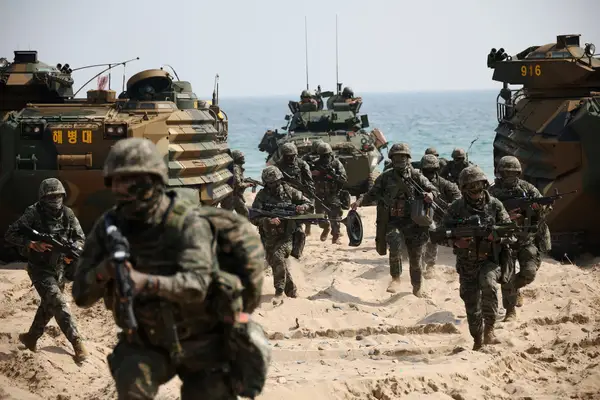
Global military spending soared to an unprecedented $2.7 trillion in 2024, marking the sharpest rise in at least three decades as wars deepen and geopolitical rivalries intensify across all regions of the world.
This staggering figure was obtained from a new UN report presented by Secretary-General António Guterres, who used a press briefing to raise urgent concerns about the implications of prioritising arms over peace.
According to Guterres, “the world is investing far more in waging wars than in building peace”, a situation he described as both unsustainable and dangerous.
Global Military Spending Sharpest Rise in 30 Years
PulseNets reported that military budgets surged in every global region last year, underlining a worldwide trend of prioritising defense spending over social and developmental needs. The UN stressed that for just under $300 billion, extreme poverty could be eradicated globally — a fraction of what was channelled into weapons in 2024.
In his words, Guterres told PulseNets that “a safer and more stable future begins when the global community invests as much in fighting poverty as it does in fighting wars.”
The Numbers Behind the Trade-Off
The report revealed that the $2.7 trillion spent on military activity in 2024 is 750 times larger than the UN’s own regular budget and nearly 13 times greater than the entire development assistance provided by the OECD’s aid committee.
This, according to the UN chief, underscores a grim reality: a direct trade-off between escalating military expenditure and the urgent need for sustainable development.
Guterres emphasised that “redirecting even a fraction of today’s arms spending could close life-threatening gaps — putting children in schools, funding primary healthcare, expanding clean energy, building resilient infrastructure, and protecting the world’s most vulnerable.”
UN data obtained by PulseNets further estimates that with just a small slice of the resources spent on militaries in 2024 alone, the world could eradicate child malnutrition, finance climate change adaptation in developing countries, and ensure education for every child in low and lower-middle-income nations.
Investing in People as Real Security
The UN Secretary-General went further to argue that real stability lies in empowering communities rather than expanding arsenals. He told PulseNets that “investing in people is the first and strongest line of defense against violence in any society.”
The report therefore calls for a human-centered and multidimensional approach to global security, one that places diplomacy, cooperation, and sustainable development at its core.
A Cycle of Poverty and Instability
According to the findings obtained by PulseNets, the report warns of a vicious cycle: poverty and underdevelopment breed instability, which in turn fuels violence and justifies further military spending. Breaking this cycle, the UN stressed, requires development-oriented security investments that address the root causes of conflict rather than its symptoms.
As Guterres noted, “the evidence is clear. Excessive military spending does not guarantee peace.”
Growing Concerns from UN Officials
UN Disarmament Chief Izumi Nakamitsu also raised alarm at the briefing. She lamented that while nations increase their military budgets, investment in education, poverty reduction, healthcare, environmental protection, and infrastructure continues to decline.
She told PulseNets that “high military spending fuels arms races, deepens mistrust, and strips away resources from the very foundations of stability. Rebalancing global priorities is not optional, it is imperative for humanity’s survival.”
Also Read: EXCLUSIVE: Russia Rolls Out Free Personalized Cancer Vaccine — What It Means for Patients, Pharma, and Global Politics
Supporting this view, Haoliang Xu, Deputy Chief of the UN Development Programme (UNDP), highlighted the role of development in strengthening peace. He spoke to PulseNets, explaining that “development is a driver of security and multilateral cooperation is the tool that works.”
Xu further noted that “when people’s lives improve — when they access education, healthcare, and economic opportunities, when they live with dignity and self-determination — we build not only stronger communities but a more peaceful world.”