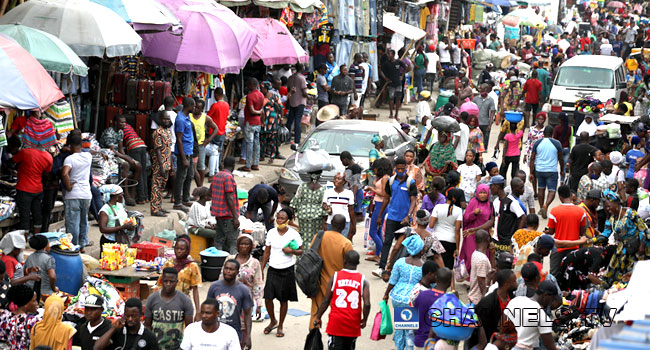
World Bank Report True — Most Nigerians Still Earn Below ₦90,000 Monthly, Says Dr. Ahmad
A senior lecturer at Hussaini Adamu Polytechnic, Kazaure, Dr. Tijjani Ahmad, has supported the recent World Bank report which revealed that over 100 million Nigerians still live below the poverty line, despite official claims that the economy is improving.
In an exclusive chat obtained by PulseNets, Dr. Ahmad explained that the World Bank defines poverty as living below two dollars a day.
“If you consider the current exchange rate, two dollars equals roughly ₦3,000. That’s about ₦3,000 per day — or ₦90,000 per month,” he told PulseNets.
Dr. Ahmad noted that a majority of Nigerians do not earn up to that amount monthly.
“How many people in this country earn ₦90,000 every month? Even most civil servants and private employees don’t earn that much. So, realistically, about 60 percent of Nigerians are still living below the poverty line,” he said.
The lecturer, who also serves as a Research Fellow at the African Centre for Tax and Governance, explained that while Nigeria’s macroeconomic indicators may show some stability, the lived reality of citizens tells a different story.
“When you look at the big picture — GDP growth, declining unemployment, stabilizing exchange rate, and improving inflation — it seems the economy is on the right path,” he noted. “But those are just numbers. For that growth to reach the streets and households, it takes time.”
He emphasized that economic growth doesn’t automatically mean development, adding that the real test lies in how growth impacts citizens’ welfare.
“Growth talks about the size of the economy, GDP, and revenue. Development, however, begins when that growth touches people’s daily lives,” he told PulseNets. “So yes, the economy might be expanding, but the average Nigerian isn’t feeling that progress yet.”
Dr. Ahmad also highlighted the regional poverty imbalance, stressing that the northern part of Nigeria remains poorer compared to the South due to structural and social challenges.
“If you assess literacy levels, school enrollment, and access to education, the North is still lagging behind. Most of our economic activities here are informal — mainly trading and primary production — unlike the South, where service-based and formal jobs dominate,” he explained.
He further noted that the high dependency ratio in the North contributes significantly to its poverty burden.
“You’ll find a single man with three or four wives and up to twenty children, relying on just one source of income. In the South, families tend to be smaller, so the poverty impact is less severe,” he added.
When asked about government policies affecting poverty levels, Dr. Ahmad pointed to the removal of fuel subsidy and the floating of the naira as critical triggers that worsened the situation.
“When the president removed fuel subsidy, there should have been immediate cushioning measures. The same applies to the naira float — it went from less than ₦1,000 to over ₦1,500. Those two decisions drastically affected living standards,” he told PulseNets.
He also blamed part of Nigeria’s economic strain on debt accumulation and fiscal mismanagement from the previous administration.
“The last government printed more money than any other in the past four decades. That weakened the naira, depleted foreign reserves, and pushed us deeper into debt. These are part of what created today’s hardship,” he reported.
Despite these challenges, Dr. Ahmad said the current administration is making attempts to stabilize the system, though the road to real recovery remains long.
“Subsidy can’t return because Nigeria simply lacks the financial capacity to sustain it. But we can see some policy efforts aimed at stabilization,” he told PulseNets.
Also Read: FG Seeks $1.75bn World Bank Loan Despite Record Revenue Growth
He concluded by stressing that Nigeria’s economic progress will only become meaningful when it translates into better living conditions for ordinary citizens.
“The numbers may look good on paper,” he said, “but until people start feeling it in their daily lives, development remains just a statistic.”