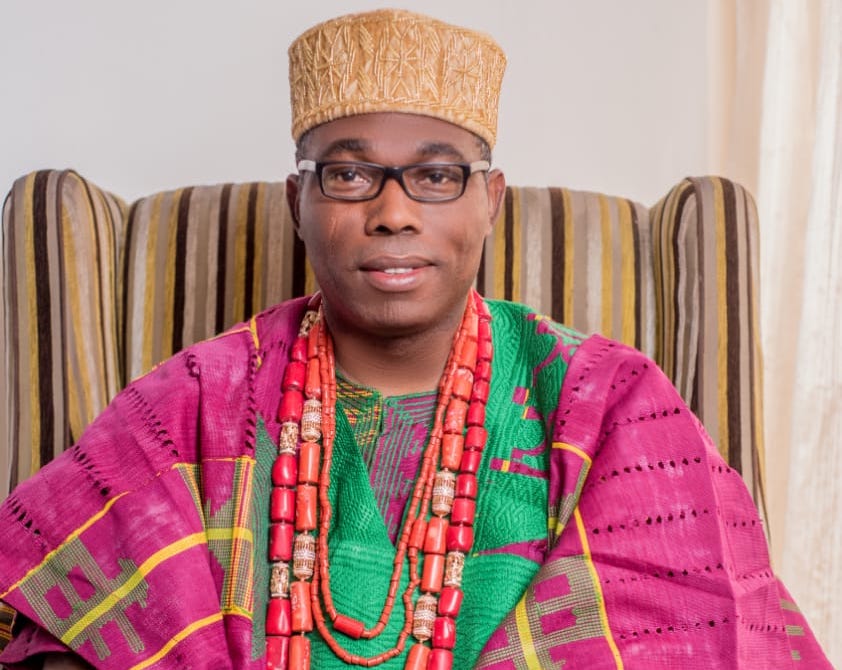
SDP’s Adewole Adebayo: Nigeria Was Never Planned, It Began as a Trade Zone
Nigeria’s 2023 presidential candidate under the Social Democratic Party (SDP), Prince Adewole Adebayo, has expressed concern that Nigeria began its national journey by accident, stressing that the country’s current infrastructure crisis is deeply rooted in the reckless privatization policies adopted since 1999.
In an extensive conversation obtained by PulseNets, Adebayo reflected on Nigeria’s political and economic evolution, the failure of successive governments to protect national assets, and his party’s strategy ahead of the 2027 general elections.
“Nigeria took off accidentally”
Prince Adebayo told PulseNets that Nigeria’s formation lacked intentionality and philosophical grounding, describing it as a colonial creation born out of economic convenience rather than national vision.
“Nigeria didn’t start with a unifying dream or a great philosopher’s idea,” he said. “It began as a mere trade zone for the Royal Niger Company — a free trade area created for business efficiency, not for building a nation.”
He compared Nigeria’s early existence to a train journey that started without direction, noting that while individuals within the nation pursue personal progress, the national train has barely moved toward its intended destination.
“After 65 years of independence,” he continued, “our national journey feels like a train that should’ve reached its destination in 12 hours but is still stuck after 65 hours. Everyone inside may be moving, but the train itself hasn’t advanced.”
How Nigeria’s formation shaped its current realities
Adebayo learnt that Nigeria’s amalgamation in 1914 was purely administrative, designed for the convenience of the British colonial economy. He added that independence came not through deep self-discovery but through a hurried handover to young elites who had little knowledge of governance.
“Those who took charge after independence were largely untested,” he explained. “They were united only by the idea of self-rule, not by a shared understanding of the nation they were inheriting.”
The SDP chieftain emphasized that this historical flaw continues to haunt the country, as leaders have repeatedly mistaken imitation for innovation — adopting foreign models without adapting them to Nigeria’s local realities.
“Privatisation destroyed Nigeria’s backbone”
On the economy, Adebayo told PulseNets that the decision by former President Olusegun Obasanjo’s administration to sell off major public assets was “one of the greatest tragedies of post-1999 Nigeria.”
“Selling NEPA, NNPC, and other key corporations without a private sector strong enough to replace them crippled our infrastructure,” he lamented. “Even the United States hasn’t sold institutions like Fannie Mae; why should a developing country like Nigeria do that?”
According to him, privatization eroded the country’s training structures and employment pipelines, leaving millions jobless and technically unskilled.
“In those days, finishing school meant NEPA or NITEL could employ and train you. Today, we have destroyed that system. Even a state trying to construct a 10km road must now rely on a foreign contractor,” he said.
Adebayo revealed that he personally owns more construction equipment in his private compound than some state ministries of works.
“That shows how badly we’ve weakened our public institutions,” he added.
“Privatisation should focus on sectors, not assets”
Adebayo reported to PulseNets that while he supports private participation in national development, he strongly opposes the sale of government enterprises to private individuals.
“You can liberalize sectors to attract competition, but you don’t hand over public assets,” he clarified. “Privatisation should be about the industry, not the enterprise itself.”
He emphasized the need for a balanced economic model — one that allows private innovation without dismantling national infrastructure.
“Every sector, even defense or law enforcement, can benefit from private involvement. But transferring ownership of critical public assets is not governance — it’s liquidation,” he concluded.
Towards 2027: The SDP’s Renewed Vision
Adebayo spoke to PulseNets about his party’s plans for 2027, hinting at internal restructuring and the possibility of coalition-building with like-minded political movements. He maintained that the SDP’s mission is rooted in rebuilding national institutions, reviving local production, and restoring confidence in public governance.
“Our focus is to reconstitute a new generation of Nigerians capable of managing industries and creating jobs,” he affirmed.
Also Read: Who is Adebayo Ogunlesi, the Nigerian who charmed BlackRock?
Prince Adewole Adebayo’s reflections offer a stark reminder that Nigeria’s challenges are not just political or economic but historical — born from an accidental beginning and perpetuated by policies that prioritize privatization over productivity.
His message to future leaders is clear: to rebuild Nigeria, the country must first reclaim ownership of its purpose, its people, and its public wealth.