Lawyers Clash Over Bayelsa Governor Diri’s Resignation from PDP Without Joining Another Party
Senior lawyers are sharply divided over the legality of Bayelsa State Governor, Douye Diri, remaining in office after resigning from the Peoples Democratic Party (PDP) — the platform that brought him to power — without announcing affiliation with any other political party.
PulseNets learnt that Governor Diri, who formally withdrew his membership from the PDP last week, has yet to declare for another party, unlike some of his counterparts who moved directly to the All Progressives Congress (APC).
The development has stirred a wave of constitutional debate among senior members of the bar, with opinions split on whether Diri’s current political status invalidates his tenure.
While some lawyers told PulseNets that his resignation from the PDP without joining another party means he has lost the legal foundation to remain in office, others argued that the Nigerian Constitution does not compel him to maintain party membership after being elected.
According to findings obtained by PulseNets, elected public officers derive their mandates from political parties since Nigeria’s 1999 Constitution does not yet recognize independent candidacy — an omission now being tested by Diri’s case.
“He must realign or risk forfeiting his seat” – Baiyeshea
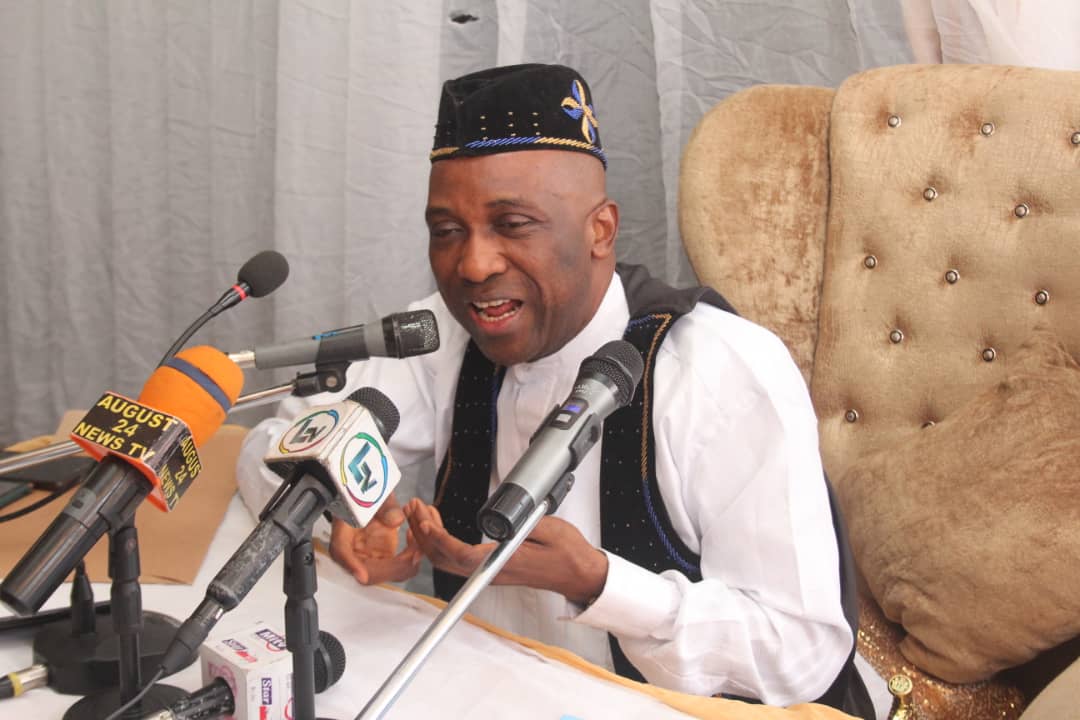
Senior Advocate of Nigeria, Rev. John Olusola Baiyeshea (SAN), in his reaction, said the governor’s position is legally untenable.
“There’s no constitutional room for an independent candidate in Nigeria. Therefore, if the governor has left the PDP, he must realign with another political party immediately or risk forfeiting his seat,” Baiyeshea told PulseNets.
He explained that the situation presents a “jurisprudential novelty,” stressing that the courts may be forced to interpret the constitution creatively to handle such a “strange scenario.”
“If he delays for too long, someone will definitely approach the court. Once that happens, the interpretation could go either way, but the risk is real,” he added.
Baiyeshea also pointed out that while impeachment remains a theoretical option, it is practically impossible since most members of the Bayelsa House of Assembly reportedly resigned alongside the governor.
“The seat should be declared vacant” – Eko
Another prominent lawyer, Eko Ejembi Eko (SAN), agreed that the situation breaches the constitutional link between political parties and elected offices.
“The Constitution is clear — it is the political party that wins elections, not the candidate. So, if a governor leaves his party, he should either join another or justify the move with a legitimate reason,” Eko told PulseNets.
He insisted that until Nigeria allows independent candidacy, remaining in office without a political platform “does not make sense within the boundaries of law.”
Eko also called for a review of the Electoral Act to address such gray areas that test Nigeria’s democratic structure.
“It’s a testable legal hypothesis” – Raji
However, Mallam Ahmed Raji (SAN) took a different position. In his view, the constitution does not automatically disqualify a governor who resigns from his sponsoring party.
“While party membership is necessary at the point of election, it’s not explicitly stated as a continuing condition for holding office,” Raji explained.
“This is a testable legal hypothesis. Opinions will surely differ,” he said, adding that Diri is likely taking his time and will “eventually declare for another party.”
He also questioned whether expulsion from a party should automatically result in removal from office, noting that “the law doesn’t say so.”
“Legitimacy comes from the Constitution, not the party” – Olatunji
In a detailed analysis citing Sections 177, 180, 188, and 189 of the 1999 Constitution, Abiodun A. Olatunji (SAN) reminded that the Supreme Court had earlier clarified the matter in Attorney-General of the Federation v. Atiku Abubakar (2007) 10 NWLR (Pt. 1041) 1.
“The grounds upon which a governor can cease to hold office are clearly listed — resignation, death, impeachment, nullification of election, or tenure expiration. Leaving a political party isn’t one of them,” Olatunji told PulseNets.
“Once elected, the governor’s legitimacy flows from the Constitution, not from the party that sponsored him,” he added.
“It’s a political question, not a legal one” – Ubani
Similarly, Mr. Monday Ubani (SAN) spoke to PulseNets, aligning with Olatunji’s view that the Constitution is explicit about how a governor can lose his seat.
“Anyone demanding that Diri vacate office is chasing shadows. The Constitution doesn’t list resignation from a party as grounds for removal,” Ubani maintained.
He added that only the House of Assembly could interpret the move as gross misconduct, which could then trigger impeachment — “but that’s a political route, not a constitutional trigger.”
“It exposes Nigeria’s ideological weakness” – Quakers
For Norrison Quakers (SAN), the episode highlights the absence of ideological depth in Nigeria’s politics.
“Our parties aren’t driven by ideology, and politicians rarely act on conviction,” Quakers lamented.
“Frequent defections are about survival and power retention, not values,” he added.
“Resignation from a party has no constitutional effect” – Ohanoruogho
Also reacting, Richard Ohanoruogho (SAN) told PulseNets that the governor’s resignation has no constitutional consequence whatsoever.
Also Read: Diri, Ibori, Annkio Briggs, Others Honour Alamieyeseigha at 10th Memorial Lecture in Yenagoa
“The Constitution lists the exact conditions under which a governor may lose office, and quitting a political party isn’t one of them,” he explained.
As the debate continues, observers say the Bayelsa governor’s move may force the courts and the legislature to clarify whether party membership should remain a continuing condition of governance or just a pre-election requirement.