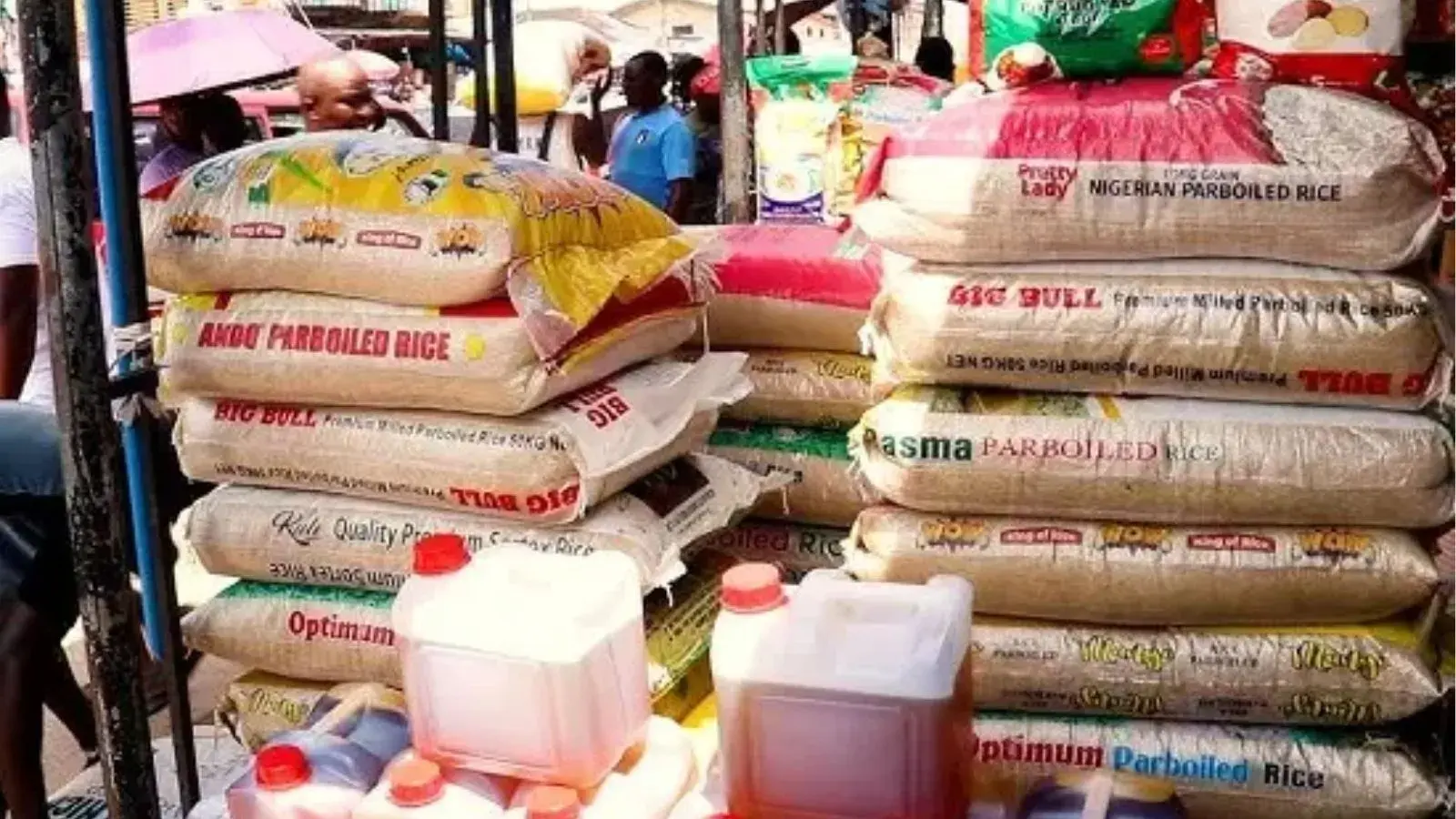
Economists Explain Why Rice Price Drop Sparks Mixed Reactions Among Nigerians and Traders
Economists and financial analysts have attributed the recent mixed reactions trailing the drop in rice prices across Nigeria to a conflict of interest between consumers and traders, PulseNets learnt.
According to findings obtained by PulseNets, the Chief Executive Officer of the Centre for the Promotion of Private Enterprise (CPPE), Muda Yusuf, and the Executive Officer of SD&D Capital Management, Idakolo Gbolade, explained that while Nigerians are thrilled about cheaper rice, traders are counting their losses.
This follows fresh market data indicating that the price of a 50kg bag of rice has fallen to between ₦55,000 and ₦75,000, a sharp decline from the ₦85,000 sold earlier in 2025.
The price reduction has been observed in key commercial hubs such as Mile 12 and Oyingbo markets in Lagos, while in Abuja, particularly at the Dutse and Kubwa markets, the same bag now sells for between ₦65,000 and ₦85,000, depending on the brand and source.
Further checks by PulseNets revealed that the prices of other food items, including yam, beans, onions, and tomatoes, have also dropped marginally across several Nigerian markets.
Recent data from the National Bureau of Statistics (NBS) confirmed this trend, showing that headline inflation eased to 18.02% and food inflation dropped to 16.87% in September 2025, compared to 20.12% and 21.87% in August, respectively.
While the decline has sparked excitement among consumers, traders have expressed concerns over dwindling profit margins and the risk of business collapse.
FG Should Balance the Interests of Nigerians and Traders — Yusuf
Reacting to the development, CPPE boss Muda Yusuf told PulseNets that the government must strike a fair balance between consumer affordability and business sustainability.
“It’s purely a conflict of interest. Nigerians want cheaper rice, while business owners seek profitability,” Yusuf said.
“The government must create that balance. The rice import waiver policy, which expired in December 2024, was only a temporary measure. To sustain affordability, the government needs to be consistent and support local producers through incentives that enhance capacity.”
“There’s a need for a fair policy framework that ensures food remains accessible without crippling local businesses,” he added.
Policy Impact Beginning to Show — Idakolo
On his part, Idakolo Gbolade told PulseNets that the downward trend in rice prices is evidence that the government’s temporary import duty waiver is beginning to yield tangible results.
“The drop in rice and other staple food prices shows that some government policies are finally delivering relief to Nigerians,” he noted.
“The Tinubu administration began under tough conditions — fuel subsidy removal, exchange rate reforms, and inflationary pressures. But in the past two years, we’ve seen relative stability due to pragmatic interventions such as the import duty waiver on key food items.”
Food Import Waiver and Local Production
PulseNets recalls that in 2024, the federal government introduced a food import duty waiver to cushion the effect of soaring food prices and ensure affordability nationwide.
However, while consumers welcomed the move, local farmers lamented that the policy hurt indigenous food production by reducing competitiveness and discouraging large-scale local farming investments.
Also Read: Local Rice Price Rose by 24% as Food Prices Soar — NBS
Experts, therefore, insist that Nigeria must balance short-term relief measures with long-term agricultural sustainability, ensuring that local farmers are not left behind in the government’s effort to make food affordable.