Reps Approves Tinubu’s $2.35bn Loan, $500m Sovereign Sukuk to Fund 2025 Budget
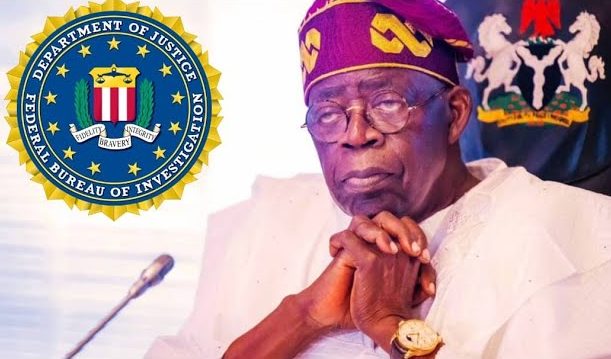
The House of Representatives has approved President Bola Tinubu’s request to secure $2.35 billion in external borrowing to finance part of the 2025 budget deficit, aligning with his administration’s fiscal plan to raise new funds from the international capital market.
The approval, which also authorizes the issuance of a $500 million debut sovereign Sukuk, was granted on Wednesday following deliberations on the report presented by the Committee on Aids, Loans, and Debt Management. The committee recommended implementing the external borrowing of ₦1,843,669,786,987.16 (equivalent to $1.229 billion) at the budget exchange rate of $1 = ₦1,500, as captured in the 2025 Appropriation Act, to partially finance the ₦9.27 trillion deficit.
PulseNets learnt that the approval gives effect to the comprehensive financing strategy President Tinubu earlier submitted to the National Assembly in October, seeking legislative consent to raise a total of $2.347 billion from the international capital market.
The President, in his correspondence to the lawmakers, explained that the borrowing plan was initiated “pursuant to Sections 21(1) and 27(1) of the Debt Management Office (Establishment, Etc.) Act, 2003,” emphasizing that it would help refinance the $1.118 billion Eurobond maturing in November 2025, while broadening Nigeria’s access to diversified funding sources.
He further stated that the 2025 budget provides for ₦9.28 trillion in new borrowings, including ₦1.84 trillion ($1.229 billion) as fresh external debt to close the fiscal gap.
“The House of Representatives is kindly invited to issue its resolution allowing the government to raise the amount through any of the following options: issuance of Eurobonds, bridge finance facility from bookrunners, loan syndication, or direct borrowing from international financial institutions,” Tinubu was quoted as saying in the letter obtained by PulseNets.
The President clarified that the funds would be deployed to part-finance the 2025 budget deficit in line with the approved fiscal framework, while another portion would refinance the 2018 Eurobond maturing on November 21, 2025 — a step he said was necessary to “avoid default” and maintain “international best practices in debt capital markets.”
“The plan is to refinance the maturing Eurobonds through issuance of Eurobonds, bridge finance facility, loan syndication, or direct borrowing from international financial institutions,” the President added.
Tinubu also noted that the combined amount to be raised — $1.229 billion for new borrowing and $1.118 billion for refinancing — totals $2.347 billion, stressing that the final terms and conditions would be determined by prevailing market conditions at the time of execution.
PulseNets reported that the President assured lawmakers that the Federal Ministry of Finance and the Debt Management Office (DMO) would work closely with transaction advisers to secure the most competitive terms for the country.
In a separate but related request, which also received the House’s endorsement, Tinubu sought approval to issue a stand-alone debut Sovereign Sukuk of up to $500 million, representing Nigeria’s first international Islamic bond.
“The debut international Sukuk aims to diversify Nigeria’s investor base, open new funding sources, and deepen the sovereign securities market,” Tinubu told PulseNets through a senior official familiar with the fiscal plan.
He highlighted that the planned Sukuk issuance would build on the success of domestic issuances that have raised over ₦1.39 trillion since 2017 for road and infrastructure development projects across the country.
Also Read: Tinubu Revokes Presidential Pardon for Maryam Sanda and Others After Review of Clemency List
The new international Sukuk, PulseNets learnt, is designed to expand Nigeria’s access to alternative finance, particularly within the Middle East and Asia, where Islamic finance instruments continue to attract substantial investor interest.
However, the approval has reignited concerns over Nigeria’s mounting debt obligations, with analysts warning that while external borrowings may provide short-term fiscal relief, they could increase long-term repayment pressures if not strategically managed.