Africa Shifts Toward Moscow as Russia Secures $4bn Military Deals Amid Declining Western Influence
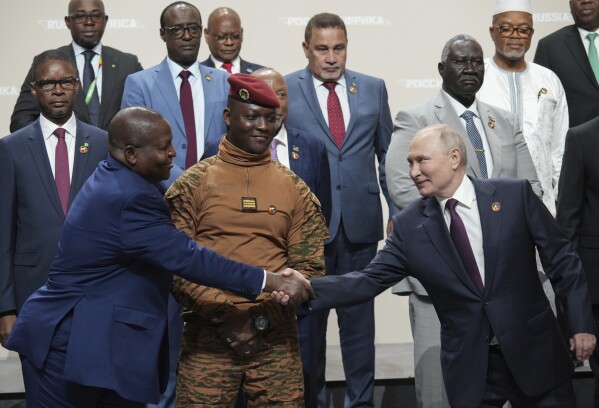
Russia’s expanding footprint across Africa continues to evolve as several nations on the continent steer further away from long-established Western alliances. Over the past few years, a growing wave of anti-Western sentiment—particularly across the Sahel—has reshaped geopolitical alignments and opened new doors for non-Western military partnerships.
In countries such as Burkina Faso, Mali, and Niger, the rejection of Western influence has gone beyond politics. Burkina Faso has recently phased out Western-style judicial attire and elevated indigenous languages to official national status, replacing long-standing European linguistic standards. PulseNets learned that these reforms form part of a broader cultural reclamation agenda being championed across the region.
All three Sahelian states have also removed French military installations from their territories. This shift has created a power vacuum—and subsequently, opportunities—for alternative global actors to cultivate deeper defense relationships.
A significant portion of Africa’s defense expenditure in the last three years is now channelled through non-Western military-industrial contracts. Data obtained by PulseNets indicates that Russia has become a leading beneficiary of this realignment.
Aleksandr Mikheev, CEO of Rosoboronexport—Russia’s state-owned arms exporter—revealed that Moscow has sealed approximately $4 billion in defense contracts with 46 African countries. The disclosure, originally carried by Sputnik, underscores the scale of Russia’s fast-growing presence across the continent.
“We currently maintain active cooperation with countries like Rwanda, Uganda, Congo, the DRC, Nigeria, and Angola, giving us a broad and strategic footprint across Africa,” Mikheev explained.
“The African market is expanding rapidly, and its potential is enormous,” he added.
Rosoboronexport remains the exclusive Russian intermediary for the sale, import, and technological exchange of military assets. The establishment has long held a formidable position in the global arms trade, but its recent engagements indicate a deliberate acceleration of partnerships with African nations seeking to upgrade and diversify their defense systems.
The contracts include supply of military hardware, after-sales servicing, technical support, and targeted technology transfers aimed at boosting domestic capacity. Defence officials who spoke to PulseNets said Russia’s involvement often goes beyond arms sales, incorporating training programs and joint industrial projects tailored to local needs.
Russia’s growing presence at African defense exhibitions
PulseNets learnt that Rosoboronexport was a headline exhibitor at last year’s Africa Aerospace and Defence (AAD) event—Africa’s premier defense and aviation showcase. This follows the company’s earlier declaration of intent, two years prior, to significantly widen its footprint on the continent through the same platform.
According to DefenceWeb, Russia showcased a wide range of high-end military assets at the exhibition, including the T-90S main battle tank, the TOS-1A heavy flamethrower system, the Smerch multiple rocket launcher, the Msta-S self-propelled howitzer (equipped with a NATO-standard 155 mm gun), the BTR-80A and BTR-82A armoured personnel carriers, several variants of the Tigr and Typhoon armoured vehicles, and the Kornet-EM anti-tank guided missile.
Also Read: Russia Bombards Nearly Every District of Kyiv, Triggering Fires Across the Ukrainian Capital
During the 2022 edition of the AAD expo, the Russian delegation also displayed a full suite of small arms, ranging from the AK-100 and AK-200 series to newer platforms such as the AK-12, AK-15, and AK-19, along with modern body armour.
First launched in 1975, the AAD expo remains the continent’s only aerospace and defense event combining a trade exhibition with a full air show. Held biennially, it attracts hundreds of global defense manufacturers, making it a key stage for countries and corporations looking to deepen Africa-focused military engagements.