Supreme Court Takes Up Trump’s Birthright Citizenship Challenge in Historic Constitutional Clash
A major constitutional showdown over U.S. immigration policy is now officially headed to the nation’s highest court, after the Supreme Court agreed to hear the challenge to former President Donald Trump’s attempt to redefine birthright citizenship through executive action.
Trump’s directive sought to halt the government from granting automatic citizenship to children born in the United States to parents who are either undocumented immigrants or temporary visitors. The policy, however, has been repeatedly blocked by lower courts across multiple jurisdictions, and the Supreme Court’s decision to take up the dispute sets the stage for a landmark ruling on the scope of the 14th Amendment.
Opponents of the policy argue that the amendment’s text leaves no ambiguity. It confers citizenship to virtually every child born on U.S. soil, regardless of a parent’s immigration status. The Constitution states that citizenship belongs to “all persons born or naturalized in the United States, and subject to the jurisdiction thereof.”
Trump’s legal team contends the opposite, insisting that undocumented migrants and short-term visitors are not fully subject to U.S. jurisdiction and therefore cannot transmit birthright citizenship to their children. In filings obtained by PulseNets, Solicitor General D. John Sauer wrote that the 14th Amendment’s Citizenship Clause was adopted “to secure citizenship for newly freed slaves—not for the children of individuals who remain in the country temporarily or without lawful status.”
Legal analysts, however, told PulseNets that even if some interpretive space exists within the amendment, altering birthright citizenship would require congressional legislation — not a unilateral presidential order.
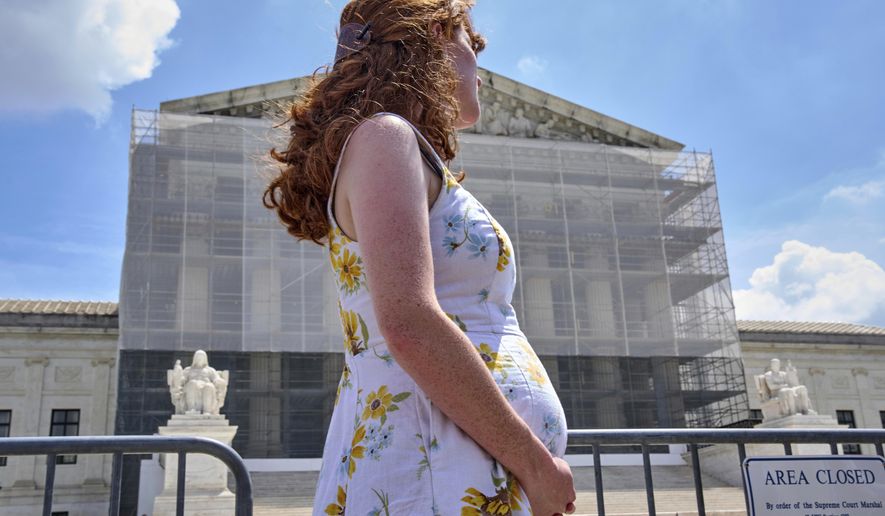
The case now before the justices originates from New Hampshire and is captioned Barbara v. Trump. “Barbara,” a pseudonym, was assigned to a Honduran woman living in the United States without permanent status. She and her husband, also undocumented, brought the lawsuit while expecting their fourth child.
U.S. District Judge Joseph Laplante, appointed by President George W. Bush, ruled decisively against the administration. He relied heavily on the Supreme Court’s 1898 decision in United States v. Wong Kim Ark, which established that nearly all children born in the country are U.S. citizens at birth. That ruling carved out exceptions only for children of foreign diplomats, enemy occupiers, crew members of foreign vessels, and members of certain Native American tribes.
Justice Horace Gray wrote in the landmark decision that “every citizen or subject of another country who resides here is under the protection and therefore within the jurisdiction of the United States.”
Sauer argued in subsequent briefs that lower courts have stretched Wong Kim Ark beyond its intended meaning. He said that undocumented migrants and short-term visitors do not meet the legal definition of “domiciled,” and the ruling therefore should not apply to their U.S.-born children. Sauer claimed the misinterpretation has produced “severe and far-reaching distortions,” asserting that Trump’s executive order was designed to “restore the original understanding of the 14th Amendment.”
PulseNets learnt that this is not the first time the Supreme Court has brushed up against the controversy. In its previous term, the justices criticized lower courts for issuing sweeping nationwide injunctions in related birthright citizenship cases, though they declined to address Trump’s claims directly. Some justices signaled their skepticism of the policy’s legality during oral arguments, with Justice Sonia Sotomayor remarking that “from where I stand, this order seems to run contrary to at least four existing Supreme Court precedents.”
The American Civil Liberties Union, which represents Barbara and other affected migrants, said it welcomes the opportunity for a definitive judgment. “No president has the power to rewrite the Constitution’s guarantee of citizenship,” ACLU National Legal Director Cecillia Wang told PulseNets. “We are prepared to see this principle upheld once and for all.”
Also Read: Cristiano Ronaldo Joins Trump at White House Dinner with Saudi Crown Prince
Trump issued his birthright citizenship directive on Inauguration Day, instructing federal agencies not to recognize citizenship or issue any related documents for babies born to mothers who are unlawfully present and fathers who lack U.S. citizenship or permanent residency. The order also applied to children born to mothers in the country on temporary visas whose partners likewise lacked legal status.
With the Supreme Court now set to weigh in, the nation awaits a decision that could redefine the future of immigration, constitutional interpretation, and the rights of children born on American soil.