US Completes Withdrawal From WHO as Trump Administration Ends Funding and Recalls Personnel
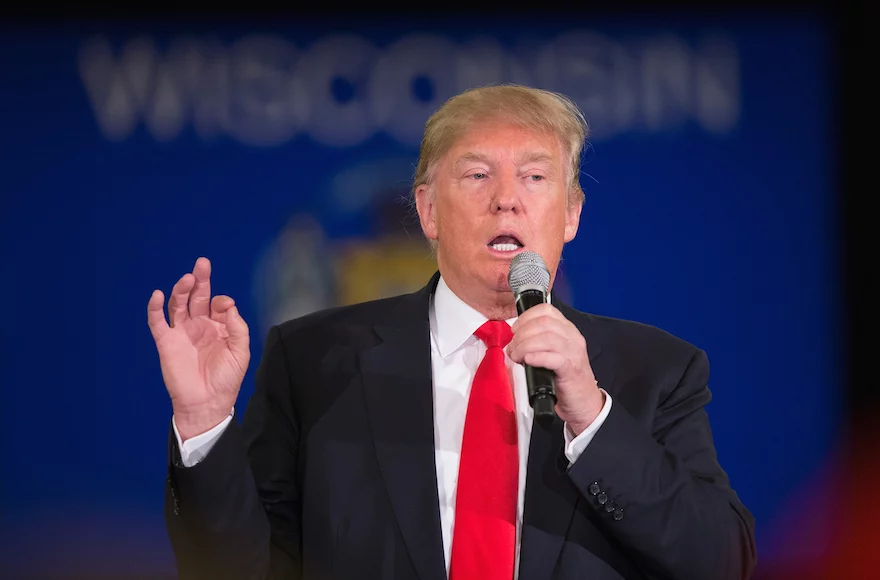
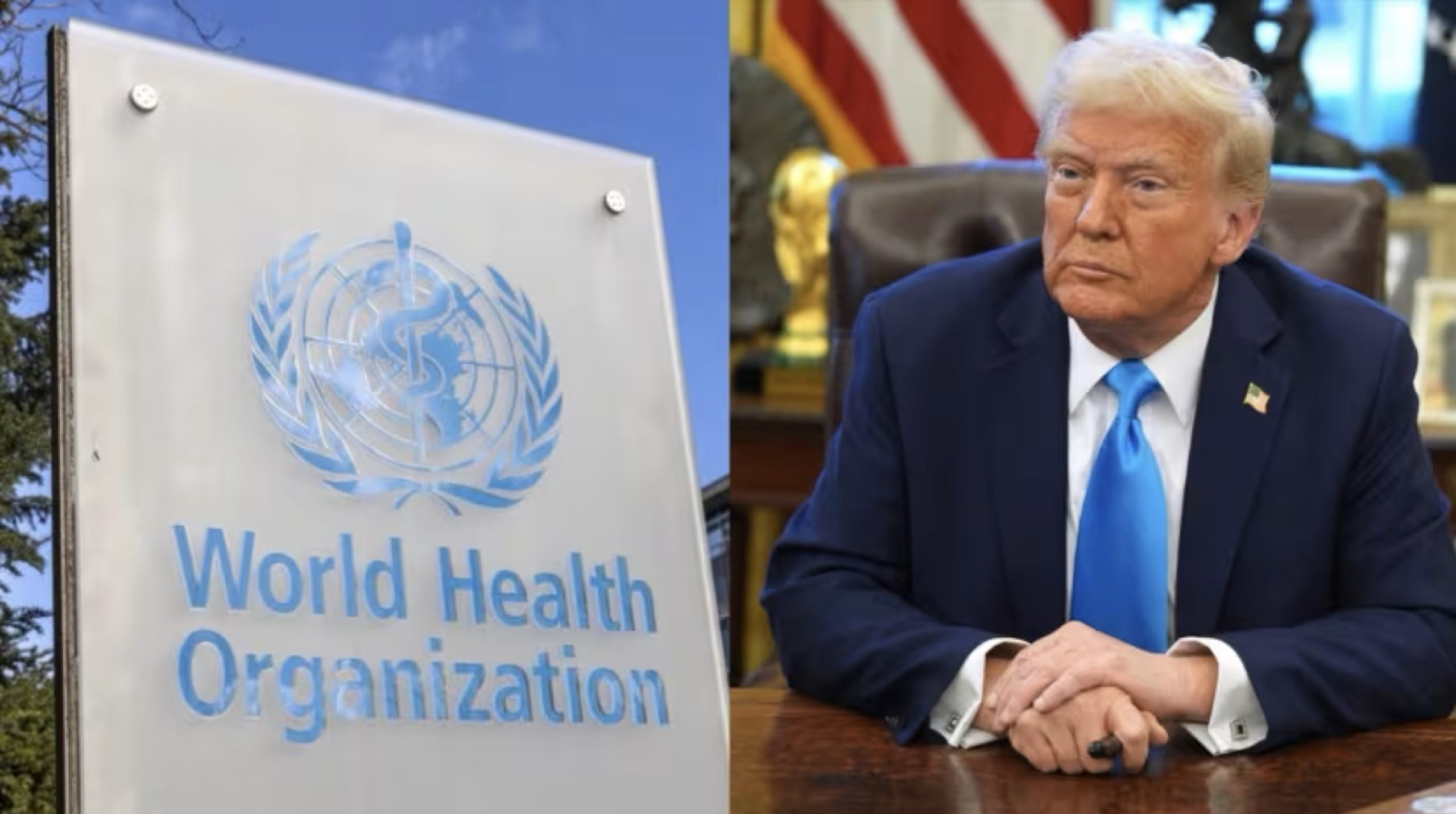
The United States has formally concluded its withdrawal from the World Health Organization (WHO), with the Department of Health and Human Services (HHS) confirming on Thursday that the process has been completed, bringing to a close a long-standing objective of President Donald Trump.
The decision traces back to Trump’s first term, when he attempted to pull the US out of the global health body. On the first day of his second term, he renewed that push by issuing an executive order formally notifying WHO of the country’s intention to exit. Under international and domestic law, such a withdrawal requires a one-year notice period and the settlement of all outstanding financial obligations.
However, the US still owes WHO an estimated $260 million. Legal experts who spoke to PulseNets said it is unlikely Washington will settle the arrears, noting that WHO has limited legal mechanisms to compel payment.
“As a matter of law, it is very clear that the United States cannot officially withdraw from WHO unless it pays its outstanding financial obligations,” Dr. Lawrence Gostin, a global health law expert at Georgetown University, said. “But WHO has no power to force the US to pay what it owes.”
Gostin added that while WHO could technically pass a resolution blocking the US withdrawal until the funds are paid, the organization is unlikely to escalate tensions, especially given the administration’s firm stance on leaving.
On Thursday, HHS announced that all US government funding to WHO had been terminated. The agency also confirmed that all American personnel and contractors assigned to or embedded within the organization had been recalled. According to HHS, the US has also ceased participation in WHO-sponsored committees, leadership bodies, governance structures, and technical working groups.
Despite the sweeping disengagement, the administration signaled that limited cooperation may still be possible. When asked whether the US would take part in an upcoming WHO-led meeting to determine the composition of next year’s influenza vaccines, officials said discussions on that matter are still ongoing.
During a briefing with reporters, a senior administration official told PulseNets that the United States had seen little benefit from its involvement with WHO.
“We have not been getting much return for our value, on our money, on the personnel that we’ve given,” the official said.
Describing the withdrawal as a fulfillment of campaign promises, the official added, “A promise made and a promise kept,” accusing WHO of acting “contrary to US interests in protecting the American public.”
Although the United States had long been WHO’s largest single donor, the official noted that no American has ever served as the organization’s director-general.
HHS also reiterated long-standing criticisms of WHO’s handling of the Covid-19 pandemic. The agency said the organization failed to adequately acknowledge what the US government views as critical missteps, including delays in declaring a global public health emergency.
“During that period, WHO leadership echoed and praised China’s response despite evidence of early underreporting, suppression of information, and delays in confirming human-to-human transmission,” HHS said in a statement obtained by PulseNets.
The department further criticized WHO for its initial reluctance to recognize airborne transmission of the virus and for downplaying the role of asymptomatic spread.
“This action means our country’s health policies can no longer be constrained by unaccountable foreign bureaucrats,” the HHS official said.
Despite the withdrawal, the administration insisted that the United States will continue to play a leading role in global health. While details of a new strategy have yet to be released, officials said the US plans to maintain collaboration on infectious disease surveillance and data sharing through bilateral agreements, as well as partnerships with non-governmental and faith-based organizations.
PulseNets learnt that the effort will be coordinated by the Global Health Center of the US Centers for Disease Control and Prevention (CDC).
“We’ve assessed all of the gaps and the potential gaps. We’ve done analysis. We have plans in place,” another senior administration official said. “We will continue to work through countries and ministries of health as we have for decades, and we’ll continue to develop and utilize those relationships in a way that’s mutually beneficial.”
The administration also promised “a number of new announcements” in the months ahead.
Public health experts, however, have raised concerns that managing global health through country-by-country agreements could result in a fragmented system incapable of replacing WHO’s coordinating role.
“It doesn’t allow the same level of partnership and surveillance as working with WHO,” a former CDC official, who requested anonymity, said. “There’s not enough funding to replace it all.”
The former official noted that while the CDC maintains staff in roughly 60 countries, that coverage is far from global, underscoring the importance of an overarching institution like WHO.
Critics warned that the withdrawal could leave both the US and the wider world more vulnerable to emerging biological threats.
“The US withdrawal from the World Health Organization is a shortsighted and misguided abandonment of our global health commitments,” Dr. Ronald Nahass, president of the Infectious Diseases Society of America, said in a statement. “Global cooperation and communication are critical to keeping our own citizens protected because germs do not respect borders.”
He added, “Withdrawing from the World Health Organization is scientifically reckless. Global cooperation is not a luxury; it is a biological necessity.”
Others echoed those concerns.
“Today is a day where the world’s public health took a sad and consequential hit,” said Dr. Michael Osterholm, director of the Center for Infectious Disease Research and Policy at the University of Minnesota. “We will experience more deadly worldwide outbreaks because US public health experts will not be at the table to lead the global response.”
Gostin also issued a stark warning, describing the move as deeply damaging to US interests.
“This is the most ruinous presidential decision in my lifetime,” he said. “Not being a member of WHO is profoundly harmful to our national security and self-interest.”
Also Read: WHO Warns of Escalating Global Cholera, Says Africa, Middle East, Asia Accounted for 98% of reported cholera cases in 2024
“We will not have rapid and full access to epidemiological data, virus samples, or genomic sequencing needed to develop vaccines and treatments,” Gostin added. “When the next pandemic hits—and it will—the United States will not be prepared. Our response will be slow and weak, and that will harm all Americans.”
Previously, WHO Director-General Dr. Tedros Adhanom Ghebreyesus had described the US exit as a “lose-lose” outcome.
“The US loses, and the rest of the world, we know for sure, loses,” Tedros said.