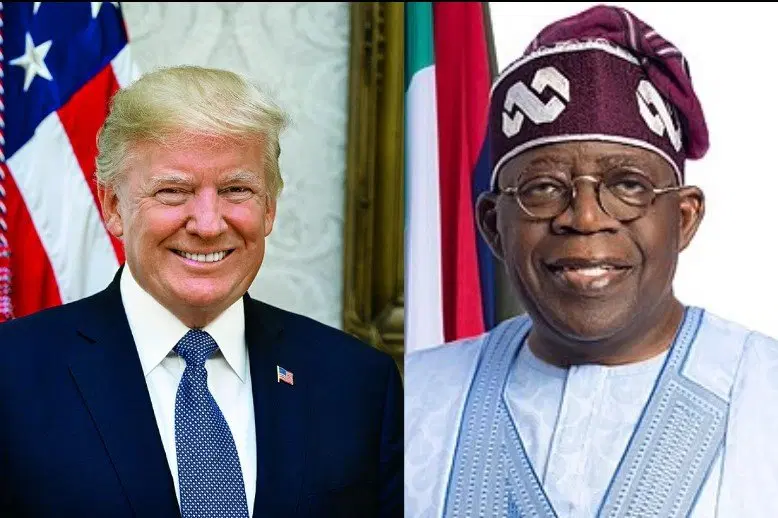
Pentagon Opens New Military Front in Nigeria as US Intensifies Fight Against Islamic State Terrorists
The United States has entered a fresh stage of military cooperation with Nigeria, signalling a more assertive approach to disrupting terrorist networks operating across Africa, PulseNets has learned.
American forces are scaling up the supply of military hardware to Nigeria while deepening intelligence-sharing arrangements with local security agencies, developments obtained by PulseNets. The renewed engagement is designed to strengthen Nigeria’s ability to counter extremist organisations affiliated with the Islamic State and other insurgent groups.
The shift follows a high-level security meeting held in Abuja last week, where senior officials from both countries reviewed counterterrorism strategies, emerging regional threats, and mechanisms for closer operational coordination, PulseNets learnt.
US officials indicated that the recalibrated policy reflects a tougher continental posture against militant groups. According to them, extremist cells across Africa are increasingly linked, making joint planning and shared intelligence essential to weakening their operational reach.
Under the current US administration, Washington has moved toward granting African partners wider access to military equipment and easing restrictions on how security assets are deployed in counterterrorism missions. Officials told PulseNets that the objective is to enable faster responses and more precise strikes against militant enclaves.
Nigeria’s northeast and northwest remain priority flashpoints. The northeast has endured prolonged attacks from Boko Haram and its offshoot, the Islamic State West Africa Province (ISWAP). In the northwest, particularly Sokoto State, security agencies have recorded a resurgence of militant activity connected to the Islamic State Sahel Province.
US officials reportedly described ISWAP as among the most lethal extremist factions in the region. Intelligence assistance, PulseNets reported, will largely support Nigerian air operations targeting terrorist camps in these high-risk zones.
The security partnership extends beyond Nigeria’s borders. The Pentagon has sustained communication with military authorities in Burkina Faso, Niger, and Mali, despite ongoing political transitions in those countries. American officials maintain that regional collaboration is critical, as terrorist groups exploit porous borders to move fighters and weapons.
The expanded military engagement has, however, unfolded alongside diplomatic frictions. Washington has voiced concerns over attacks on Christian communities in parts of Nigeria.
Nigerian authorities and several security analysts have dismissed claims that the violence targets a single religious group, arguing that insurgent attacks have affected both Christian and Muslim populations alike.
At the Abuja discussions, US officials urged Nigerian leaders to intensify civilian protection measures. They emphasised that intelligence cooperation would remain non-sectarian, focusing strictly on dismantling networks that threaten national stability. One official was quoted as saying, “Our priority is neutralising terrorist structures, not profiling communities.”
Recent US air operations in northwest Nigeria remain difficult to independently verify. Journalists and monitoring groups have yet to confirm casualty figures resulting from the strikes.
Also Read: Burkina Faso Refuses to Release Nigerian Military Aircraft, 11 Personnel as Diplomatic Tensions Deepen
Nigeria’s Minister of Information, Mohammed Idris, told PulseNets that the outcome of the operation is “still unfolding and remains a work in progress.”
Recall that PulseNets previously reported that the United States conducted surprise airstrikes on terrorist locations in northwest Nigeria during the Christmas period, marking the first known direct US military action against Islamic State-linked fighters within Nigerian territory.