Shettima Unveils 25-Year South-East Development Blueprint, Announces New Investment Company
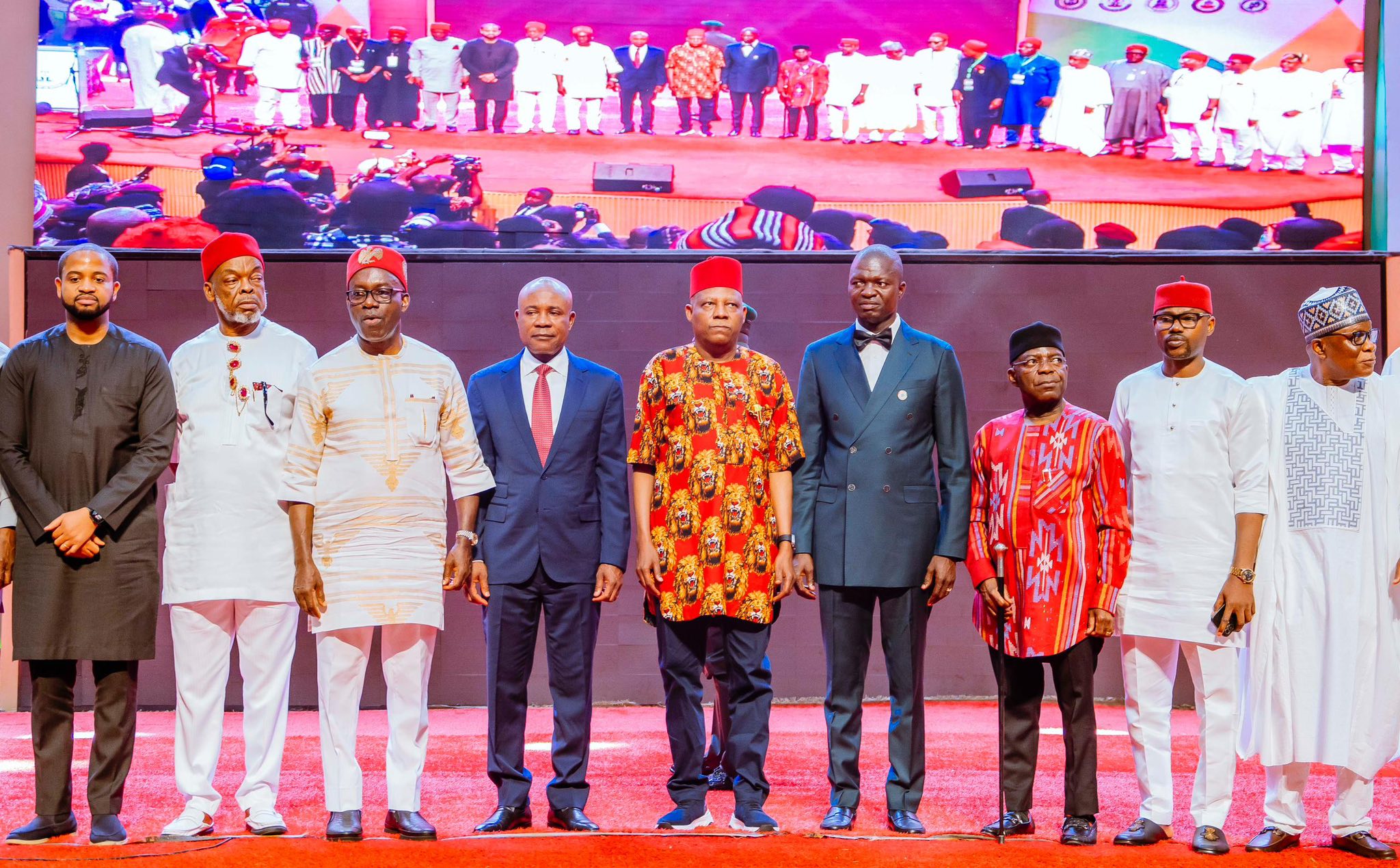
Vice-President Kashim Shettima on Wednesday unveiled a 25-year development blueprint aimed at repositioning Nigeria’s South-East region, at a high-level forum held in Enugu.
Speaking at the inauguration, the vice-president described the South-East as a strategic driver of Nigeria’s long-term economic growth, stressing that its full potential could only be unlocked through deliberate and sustained planning.
PulseNets learnt that President Bola Tinubu has also approved the creation of the South-East Investment Company Limited, a special-purpose vehicle expected to accelerate development financing across the region.
Mr Shettima explained that the new company would be tasked with pooling funds from the diaspora, capital markets and development finance institutions to support large-scale projects and economic expansion in the South-East.
According to the vice-president, the forum marked a clear departure from short-term political cycles in favour of a structured, multi-decade development approach anchored on accountability and measurable outcomes.
“What we are doing here is an expression of foresight and collective responsibility. The future is not something to be anticipated passively; it is something we must intentionally shape,” Mr Shettima told PulseNets.
He added that the approval of the South-East Investment Company reflected the Federal Government’s recognition of the region’s distinctive strengths, including its entrepreneurial culture, extensive global diaspora and long-standing engagement with international capital.
“In acknowledgement of the South-East’s unique character and global economic connections, President Bola Tinubu authorised the establishment of the South-East Investment Company Limited as a catalyst for sustainable growth,” he said.
The vice-president noted that the company would operate in close synergy with the South-East Development Commission (SEDC) to close infrastructure deficits and enhance the region’s long-term competitiveness.
Mr Shettima reaffirmed that the SEDC was designed as a vehicle for structural transformation rather than routine administration, insisting that Nigeria’s national strength is directly linked to the prosperity of its regions.
“Let me state this unequivocally: this is not an additional bureaucratic layer. It is a results-driven institution, focused on jobs, productivity and inclusive growth,” he reported.
He further observed that the South-East’s historical experience places an added responsibility on leaders to adopt intentional regional planning that responds to both present realities and future aspirations.
The vice-president also commended the broad-based participation at the forum, which brought together federal and state authorities, traditional rulers, private sector leaders, civil society organisations and development partners.
PulseNets learnt that he acknowledged the presence of Umu Igbo Unite, a United States-based network comprising more than 10,000 young professionals, describing the diaspora as a critical pillar of the region’s development journey.
According to him, the transformation of the South-East would be driven by coordinated efforts both within Nigeria and across its global communities.
Mr Shettima stressed that development initiatives must translate into visible improvements in people’s lives, particularly for young Nigerians.
“To the youth of the South-East and the country at large, let me be direct: you are not observers in this process. You are at the very heart of it,” he said.
“Your innovation, drive and ambition are indispensable to the Nigeria we seek to build. Development cannot remain a theoretical promise; it must be experienced in everyday life,” the vice-president added.
Earlier, Enugu State Governor Peter Mbah endorsed the Vision 2050 blueprint, describing it as a strategic pathway for aligning the South-East with the broader national development agenda known as Vision 2060.
Governor Mbah applauded the growing synergy among political leaders and stakeholders in the region and proposed the creation of a South-East common market, characterising the moment as the reawakening of an economic powerhouse.
He maintained that sustained unity of purpose, resource coordination and a deliberate shift in how leaders and citizens perceive their development trajectory must remain central to the region’s progress.
The governor called for a fundamental change in the planning and execution of projects across the South-East and urged residents to support the Federal Government’s renewed efforts to improve security.
He also expressed appreciation to the vice-president for what he described as his commitment and depth of engagement with South-East development issues, noting that his presence underscored the importance of strong national leadership.
According to Mr Mbah, sustainable regional growth does not occur in isolation but thrives through consistent collaboration with the Federal Government.
Also Read: Shettima to Present Nigeria’s 2026 Economic Outlook at World Economic Forum in Davos
Also speaking, Ebonyi State Governor Francis Nwifuru pledged his administration’s full support for the implementation of the regional development plan.
Governor Nwifuru said the blueprint would help reduce unemployment and poverty while unlocking opportunities across multiple sectors of the South-East economy.
He reported that Ebonyi State was building on the achievements of previous administrations, particularly in agriculture and agribusiness, education and solid minerals development.