UN Vote on Slave Crime: Kemi Badenoch Blasts UK Abstention, Says Starmer’s Government Should Have Voted No
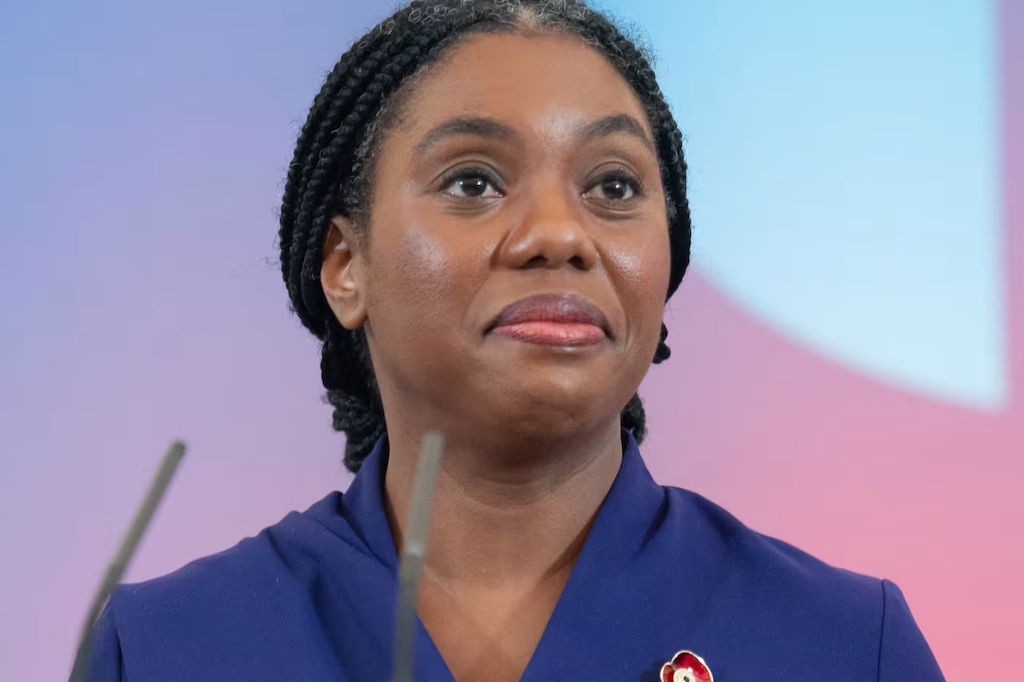
London, March 27, 2026 — Kemi Badenoch has forcefully pushed back against growing calls for the United Kingdom to provide financial reparations over its role in the transatlantic slave trade, insisting Britain should not be held liable for what she described as “a crime we helped eradicate.”
The Conservative leader made the remarks on X (formerly Twitter) on Thursday, March 26, 2026, in reaction to a non-binding resolution adopted by the United Nations General Assembly a day earlier.
PulseNets learnt that the resolution, introduced by Ghana and adopted on Wednesday, March 25, 2026, characterises the “trafficking of enslaved Africans and racialised chattel enslavement of Africans” as “the gravest crime against humanity” due to its scale, duration, brutality, and lasting global impact. It further calls for reparatory justice, including formal apologies, restitution, compensation, and broader measures to address systemic inequalities rooted in the historical trade.
According to details obtained by PulseNets, 123 countries voted in favour of the resolution. Only three nations — the United States, Israel, and Argentina — opposed it, while 52 countries, including the United Kingdom and all 27 member states of the European Union, abstained.
Badenoch’s Strong Criticism
In her X post, Badenoch criticised the Labour administration led by Keir Starmer for opting to abstain instead of voting against the measure.
“Russia, China and Iran vote with others to demand trillions in reparations from UK taxpayers…and the Labour government abstain!
Britain led the fight to end slavery. Why didn’t Starmer’s representative vote against this? Ignorance…or cowardice?
We shouldn’t be paying for a crime we helped eradicate and still fight today.”
PulseNets reported that Badenoch, who was born in Nigeria, has consistently challenged what she considers selective interpretations of history. She has argued that Britain’s prosperity is rooted more in institutional strength such as the rule of law and free markets than in slavery or colonial exploitation.
She has also previously dismissed reparations demands as a “scam,” maintaining that narratives centred on inherited guilt weaken national cohesion and distract from tackling modern-day slavery.
UK Government’s Position
PulseNets learnt that the UK’s justification for abstaining was presented by Ambassador James Kariuki, who acknowledged the severe damage caused by slavery but raised concerns about the resolution’s framing and legal implications.
The UK delegation emphasised that “no single set of atrocities should be regarded as more or less significant than another,” reflecting a broader diplomatic position that avoids singling out the transatlantic slave trade above other historical injustices while also highlighting Britain’s abolitionist record.
Britain outlawed the slave trade in 1807 and abolished slavery across its empire in 1833. PulseNets obtained that the Royal Navy’s West Africa Squadron was subsequently deployed at considerable cost to intercept slave ships and enforce abolition, a point frequently cited by those opposing reparations.
Broader Context and Reactions
The UN resolution, aligned with the International Day of Remembrance of the Victims of Slavery and the Transatlantic Slave Trade, has reignited global debate around reparatory justice.
Supporters, including African and Caribbean nations through blocs such as the African Union and CARICOM, view the resolution as a critical step toward addressing enduring inequalities and structural racism linked to the slave trade.
However, critics argue that reparations campaigns often overlook the broader historical context of slavery, which existed across multiple regions before and after European involvement. They also point to the financial and military resources Britain committed to abolition, alongside the diverse composition of modern British society, which includes descendants of people who neither owned slaves nor benefited directly from the system.
Also Read: Mary Magdalene: Woman With ‘world’s Fattest Vagina’ Identifies As Male
Badenoch’s intervention has triggered sharp political reactions, with some backing her stance as a defence of national interest and historical perspective, while others accuse her of minimising the scale and consequences of the slave trade.
The development underscores widening divisions within Britain over how to address its imperial past, particularly amid mounting international pressure and domestic political contestation.
Although the resolution carries no binding legal or financial consequences, it is expected to strengthen ongoing global reparations advocacy. No specific financial figure was included in the text, though some campaigners have cited estimates running into trillions of dollars worldwide.