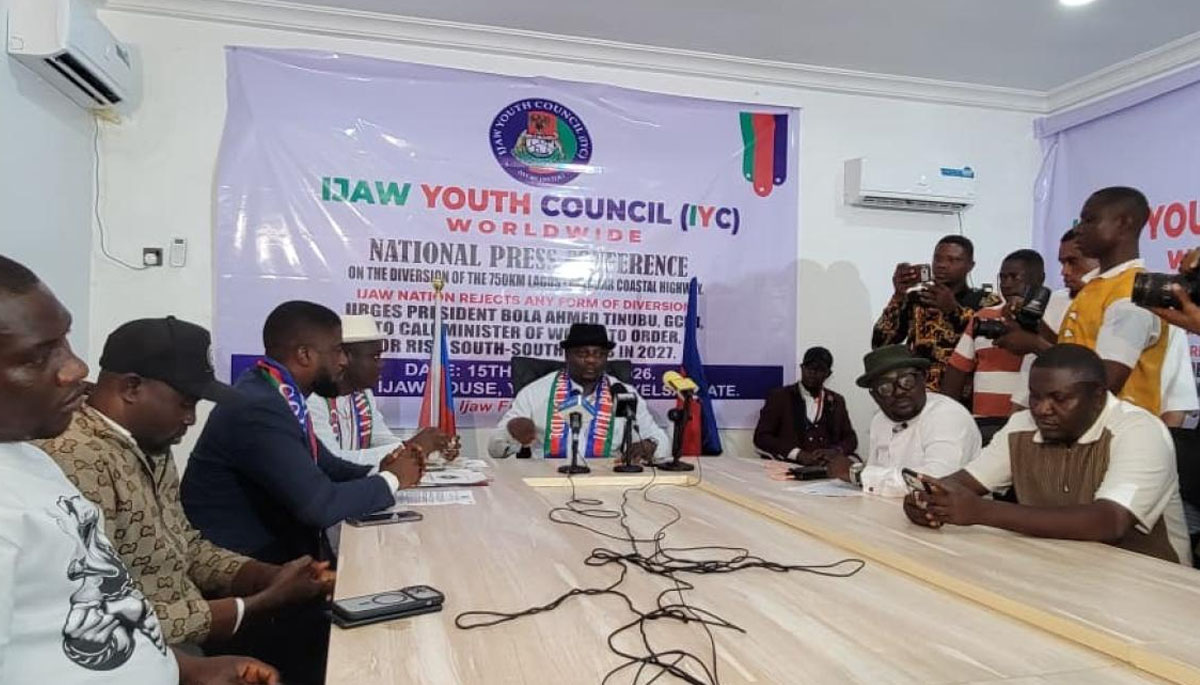
IYC Warns Tinubu Over Lagos-Calabar Coastal Highway Diversion, Threatens South-South Votes
The Ijaw Youth Council (IYC) Worldwide has warned President Bola Ahmed Tinubu that diverting the 750-kilometre Lagos-Calabar Coastal Highway from its original coastal route could threaten his administration’s political support in the South-South ahead of the 2027 general elections.
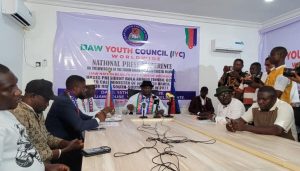
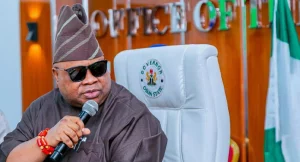
The warning was issued on Thursday, October 15, 2026, by the National President of the IYC Worldwide, Dr. Doubra Collins Okotete, who led the council’s 10th National Executive Committee at a press conference responding to statements attributed to the Minister of Works, Engr. David Umahi. The minister was reportedly said to have suggested that the highway could be redirected towards the East-West Road from Ondo State.
The council expressed concern that such a change could leave Edo, Delta, Bayelsa and Rivers states outside the original coastal corridor. It insisted that the Federal Government must retain the route as initially designed and approved by the Federal Executive Council (FEC).
The IYC maintained that the South-South would not accept a diversion justified by financial constraints or difficult terrain. It argued that the region contributes significantly to Nigeria’s oil and gas revenues and deserves an equitable share of federal infrastructure development.
According to the council, the Federal Government should not claim that constructing a coastal highway through the region’s riverine communities is too expensive while undertaking major road projects in other parts of the country.
IYC Cites Niger Delta Projects to Challenge Terrain Argument
The council challenged the explanation attributed to the Minister of Works, arguing that the engineering difficulties associated with the Niger Delta’s swamps, rivers and mangrove forests should not be used as justification for abandoning the highway’s original alignment.
It also criticised former Cross River State Governor Donald Duke over comments reportedly made on national television suggesting that continuing the Lagos-Calabar Coastal Highway was impractical and excessively expensive.
To counter that position, the IYC offered to sponsor an all-expenses-paid visit for Duke to Bayelsa State and other parts of the South-South to inspect ongoing and completed infrastructure projects.
One of the projects highlighted was the Nembe-Brass Road in Bayelsa State, which the council said stretches 21 kilometres and incorporates more than 15 bridges across Atlantic swamplands.
The IYC also pointed to the Yenagoa-Oporoma-Ukubie Road project, noting that a 630-metre bridge across the Nun River had been completed.
Other projects identified by the council included the Ekeremor-Agge Road, which leads towards the proposed Agge Seaport site, the Polaku-Sabagria Road, roads within New Yenagoa City and the three phases of the Glory Drive project.
The council argued that these projects demonstrate that major infrastructure can be delivered in challenging geographical conditions when governments provide the necessary funding and political commitment.
Rivers, Delta Projects Also Highlighted
Beyond Bayelsa State, the IYC offered to finance an assessment tour of the Trans-Kalabari Road project in Rivers State, which it described as a major infrastructure undertaking being funded by the state government despite difficult terrain.
The council also proposed visits to inspect projects being executed by the Niger Delta Development Commission (NDDC), particularly under the leadership of Dr. Samuel Ogbuku.
Among the projects it identified were the Port Harcourt-Okrika Road, which includes the 1.2-kilometre Kaa-Ataba Bridge, and the Bonny Ring Road, described as a 27.1-kilometre road featuring more than 13 bridges.
In Delta State, the IYC cited the 24-kilometre Gbaregolor-Ogolaha legacy road project, which is designed to connect more than 10 coastal communities.
According to the council, these projects illustrate efforts by state governments and the NDDC to improve road connectivity in communities where geographical conditions make infrastructure development particularly challenging.
The IYC maintained that the Federal Government should demonstrate a similar level of commitment to the Lagos-Calabar Coastal Highway rather than consider redirecting the project away from the South-South.
Council Demands Release of Approved Highway Design
To address its concerns, the IYC called on President Tinubu to direct the Minister of Works to preserve the highway’s original alignment through Ondo, Edo, Delta, Bayelsa and Rivers states.
The council also demanded the public release of the approved designs and engineering drawings covering the entire 750-kilometre project.
In addition, it called for the immediate commencement of construction along the Rivers, Bayelsa, Delta and Edo sections, while work proceeds simultaneously on the Lagos-Ondo and Cross River-Akwa Ibom sections.
The council said these steps would demonstrate that the original coastal route remained intact and that the project was not being substantially altered.
The IYC also expressed reservations about a subsequent clarification reportedly issued by the Minister of Works, insisting that concrete action, rather than explanations alone, was necessary to restore confidence in the Federal Government’s commitment to the original plan.
It argued that publishing the approved designs and commencing construction across the different sections simultaneously would provide the public with clearer evidence of the project’s actual direction.
IYC Warns of Political Consequences Ahead of 2027 Elections
The council warned that diverting the Lagos-Calabar Coastal Highway could carry political consequences for President Tinubu and the ruling All Progressives Congress (APC) in the South-South ahead of the 2027 general elections.
According to the IYC, the coastal highway and other federal infrastructure initiatives have raised expectations among residents that closer political alignment with the ruling party would translate into tangible development benefits.
The council referenced the defections of Bayelsa State Governor Douye Diri, Delta State Governor Sheriff Oborevwori and Rivers State Governor Siminalayi Fubara to the APC. It argued that the delivery of people-oriented infrastructure projects was among the expectations associated with these political realignments.
The IYC cautioned that any decision to redirect the highway could erode the goodwill generated by those expectations and intensify concerns about how federal infrastructure projects are distributed across the country.
It maintained that the President should not assume that political support from the region would remain guaranteed if projects considered critical to the development of South-South communities were not delivered as expected.
The council’s warning reflects its assessment of the potential political implications of the dispute and does not establish how the region will vote in the forthcoming elections.
IYC Questions Future of Lagos-Calabar Coastal Highway
The IYC acknowledged that the Lagos-Calabar Coastal Highway had generated controversy over its initiation and contract award processes but said it would not focus on those issues at this time.
However, the council warned that redirecting the project into what it described as a rehabilitation of the East-West Road would reinforce concerns that the coastal highway might fail to deliver its intended benefits to the South-South.
It therefore urged President Tinubu to clarify the Federal Government’s position and ensure that construction continues along the original coastal corridor.
The council also called on the administration to take immediate steps to demonstrate that the project remains consistent with the design approved by the Federal Executive Council.
IYC Appeals Directly to President Tinubu
The Ijaw Youth Council urged President Tinubu to demonstrate his administration’s commitment to equitable infrastructure development across Nigeria, regardless of regional interests or political considerations.
“Prove to us that PBAT is not just the Asiwaju of Lagos State or the Jagaban of the West, but the President of Nigeria,” the council said.
The IYC called on the President to intervene urgently, direct the Minister of Works to maintain the original alignment and prevent decisions concerning the highway from undermining the expectations of communities across the South-South.
It further cautioned that statements and decisions regarding the project could heighten regional concerns and affect the administration’s political standing as the 2027 general elections approach.
Also Read: Cost-of-Living Crisis in Nigeria: IMF Raises Concerns
Despite its strong position on the highway’s alignment, the council stressed that the Ijaw people were not seeking conflict with any ethnic group. It described the Ijaw people as peaceful, hospitable and accommodating.
The IYC concluded by calling for the protection of the South-South’s infrastructure interests and reaffirming its solidarity with the Niger Delta and the Ijaw Nation.