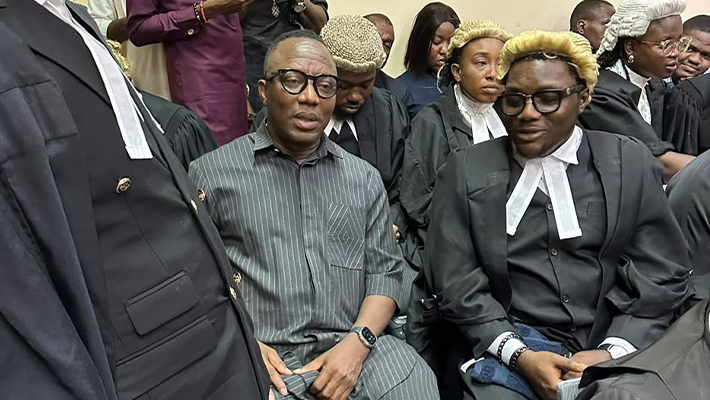
Court Rejects Sowore’s Request to Compel DSS DG Tosin Ajayi to Testify in Tinubu Trial
The Federal High Court in Abuja has rejected an application by Omoyele Sowore seeking to compel the Director-General of the Department of State Services (DSS), Tosin Ajayi, to appear personally as a witness in his ongoing trial over allegations of cyberbullying President Bola Tinubu.
Justice Mohammed Garba Umar dismissed the application after hearing arguments from Sowore’s defence team and the DSS concerning a subpoena issued to the agency’s director-general.
Sowore, the presidential candidate of the African Action Congress (AAC) for the 2027 general election, had asked the court to require Ajayi to testify about the security agency’s official activities relating to the case.
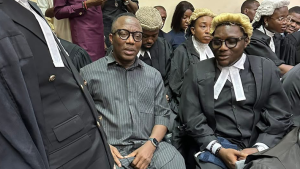
His legal team, led by Senior Advocate of Nigeria Adeyinka Olumide Fusika, argued that the DSS director-general should appear in court to provide evidence relevant to the proceedings.
However, the DSS opposed the application, maintaining that another official of the agency could testify on the issues raised by the defence.
The agency was represented by Senior Advocate of Nigeria Akinlolu Kehinde, who argued that Ajayi’s personal appearance was unnecessary because the matters in question concerned official duties rather than issues specific to the director-general.
Kehinde challenged the need to compel the agency’s head to testify, insisting that another officer with relevant knowledge of the case could provide the necessary evidence.
After considering the submissions, Justice Umar ruled that the subpoena related to official functions performed by the DSS and did not establish the necessity of requiring the director-general to appear personally.
The judge consequently held that another authorised official of the security agency could give evidence on its behalf.
The ruling effectively ended Sowore’s attempt to compel Ajayi’s personal appearance at that stage of the trial, allowing the defence to continue presenting its case through another DSS witness.
Sowore Calls Third Defence Witness After Court Ruling
Following the court’s decision, Fusika called Michael Jego, an investigating officer with the DSS, as the third defence witness.
Jego was subsequently led in evidence by the defence counsel as proceedings continued.
The witness’s appearance marked the continuation of the defence’s presentation of evidence despite the court’s refusal to order the DSS director-general to testify in person.
The dispute over the subpoena centred on whether Ajayi was required to provide the evidence sought by Sowore personally or whether another officer could adequately address questions concerning the agency’s official actions.
By permitting another DSS official to testify, the court maintained that evidence relating to the agency’s institutional activities did not necessarily require the personal attendance of its director-general.
The decision addressed the identity of the DSS official required to appear as a witness and did not, in itself, determine the substantive allegations against Sowore.
What the Ruling Means for Sowore’s Cyberbullying Trial
Sowore’s trial concerns allegations linked to statements about President Tinubu that authorities have characterised as cyberbullying.
The proceedings have continued as the defence presents evidence in response to the allegations.
The case has attracted public attention because it involves a prominent opposition figure and the application of cybercrime-related laws in proceedings connected to criticism of the President.
Sowore, a former presidential candidate and publisher of Sahara Reporters, has remained a vocal critic of successive Nigerian administrations. His political activities and public statements have also featured in previous legal disputes involving government authorities.
Also Read: Sowore Vows to Scrap JAMB, Replace NYSC With Voluntary National Job Corps if Elected President
The latest ruling means the defence will continue presenting its case through witnesses considered relevant to the issues before the court, rather than through the DSS director-general personally.
Further proceedings will determine how the evidence presented by both the prosecution and the defence is evaluated as the trial progresses.