Ebola Patient Moved Out of Nigeria in Emergency Medical Evacuation
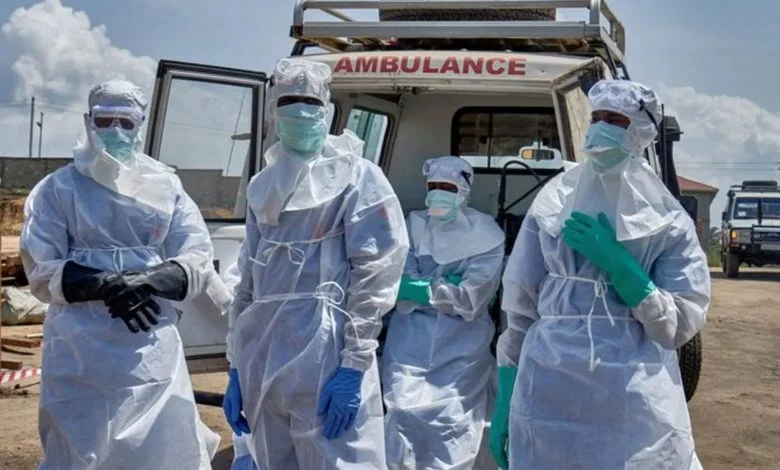
Nigeria’s confirmed Ebola patient has been evacuated from Abuja in a special medical operation involving an air ambulance at the Nnamdi Azikiwe International Airport, amid intensified efforts by health authorities to prevent further transmission of the virus.
The patient, a woman identified as the wife of a Swiss diplomat in Nigeria, was reportedly scheduled for evacuation on Monday morning after a convoy of ambulances and diplomatic vehicles arrived at the airport.
Photographs showed the three-vehicle convoy arriving from Abuja city centre and proceeding to the airport’s private aviation section. One of the vehicles reportedly belonged to an international agency.
Airport officials cordoned off the private wing ahead of the medical evacuation operation.
A source told newsmen that the Federal Government would announce the evacuation only after the aircraft had taken off and left Nigerian airspace, citing the sensitive nature of the operation.
The development comes as the Nigeria Centre for Disease Control and Prevention (NCDC) intensifies surveillance, contact tracing and other emergency response measures following the confirmation of an imported Ebola case in the Federal Capital Territory (FCT) on October 20.
Ebola Outbreak: Health Minister Confirms Imported Case
Last week, the Minister of Health and Social Welfare, Muhammad Ali Pate, announced that laboratory tests had confirmed Ebola virus infection in a woman who arrived in Nigeria on an international flight from Uganda.
Pate disclosed that the patient had received treatment at a private hospital in the FCT for several days before the infection was identified.
He added that she had subsequently been isolated and placed under medical observation as health authorities began measures to prevent the virus from spreading to other people.
Public health teams also commenced contact tracing to identify individuals who might have been exposed to the patient, including healthcare workers, other patients, caregivers and people who came into contact with her during her journey.
NCDC Identifies Two Suspected Ebola Cases, 53 Primary Contacts
The Director-General of the NCDC, Jide Idris, disclosed on Sunday that the agency had identified two additional suspected Ebola cases and 53 primary contacts as part of its response to the outbreak.
Speaking during a press briefing in Abuja, Idris said isolation and quarantine facilities had been established to support the management and monitoring of suspected cases and exposed individuals.
“We have established two additional suspected cases and 53 primary contact links. They are primary contacts. We have an isolation centre and a quarantine centre,” he said.
Idris explained that approximately 12 public and private laboratories were available for Ebola testing, while the NCDC had strengthened its laboratory capacity to ensure that suspected infections could be investigated promptly.
He also urged healthcare facilities to strengthen screening, triage and infection prevention and control procedures, stressing the importance of providing health workers with adequate personal protective equipment.
The NCDC said individuals who might have been exposed to the confirmed Ebola patient were being monitored for 21 days after their last possible exposure, in line with the virus’s incubation period.
Idris called on Nigerians contacted by public health officials to cooperate with contact-tracing teams and provide accurate information about their movements, contacts and any symptoms they might develop.
NCDC Approves N100,000 Weekly Support for People in Isolation
As part of measures to support compliance with public health restrictions, the NCDC has approved weekly payments of N100,000 per person for individuals placed in isolation or quarantine.
Idris said the financial assistance followed complaints from some contacts about the cost of feeding, accommodation and supporting their families while complying with isolation and quarantine requirements.
“We are paying for their accommodation; we are paying for their feeding. Some of them are asking for a stipend to maintain their families,” he said.
The NCDC director-general added: “We are providing N100,000 per person per week just to maintain their comfort and feeding, because they were complaining.”
He explained that the financial support was not part of the agency’s original response plan but had become necessary because of the emergency.
“This was not planned for, but it is an emergency. We will continue to review it as we go along,” Idris said.
He further warned that state governments must be prepared to provide similar assistance if Ebola or another public health emergency occurs within their jurisdictions.
“This is not the responsibility of the FCT alone. What we have to do for the FCT, we have to do for any other state, just in case,” he said.
Ebola Contact Tracing Covers Healthcare Workers, Household Members
According to Idris, the 53 primary contacts identified by the NCDC include healthcare workers, household members, domestic staff and personnel involved in collecting samples from the patient.
He said health officials were classifying the contacts according to their levels of exposure and monitoring their health throughout the 21-day incubation period.
The NCDC director-general also disclosed that one contact who reported feeling unwell had tested negative for Ebola, while surveillance and follow-up activities remained ongoing.
The agency is continuing to strengthen infection prevention and control measures in healthcare facilities, train health workers and support the availability of protective equipment and laboratory supplies.
These interventions form part of Nigeria’s broader effort to contain the confirmed Ebola infection, identify potential secondary cases and prevent further transmission within the country.
Also Read: Sowore Vows to Scrap JAMB, Replace NYSC With Voluntary National Job Corps if Elected President
As the response continues, health authorities are urging healthcare workers, identified contacts and members of the public to follow official medical guidance and cooperate with surveillance teams.
PulseNets will continue to monitor developments surrounding the Ebola outbreak, the patient’s evacuation and the NCDC’s contact-tracing efforts.