Nigeria Food Inflation Hits 12.12% as Fuel Prices Surge to N1,330/Litre Amid Rising Cost of Living
Nigerians are bracing for a deeper cost-of-living crisis as food inflation accelerates alongside surging fuel and energy prices, tightening pressure on household incomes across the country.
The development coincides with President Bola Ahmed Tinubu’s visit to the United Kingdom on the invitation of King Charles III on Tuesday.
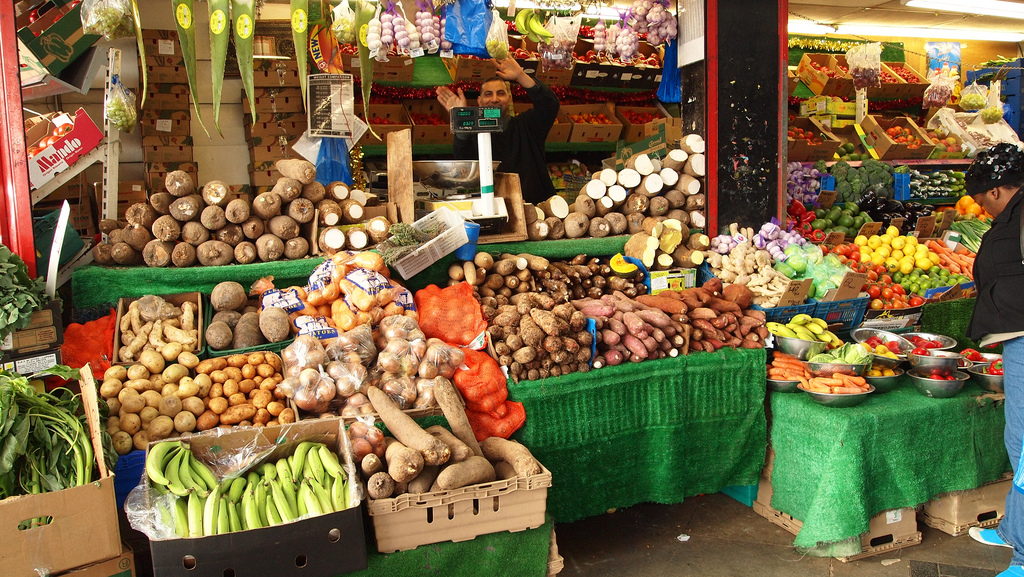
Data obtained by PulseNets from Nigeria’s National Bureau of Statistics (NBS) Consumer Price Index and Inflation report released Monday showed that food inflation rose sharply to 12.12 percent in February 2026, up from 8.89 percent recorded in January.
The NBS attributed the month-on-month increase to rising average prices of key staples including beans, carrots, okazi leaf, cassava tuber, crayfish, millet flour, yam flour, snails, avenger (ogbono/apon)—dried and unground—and cowpeas.
Despite the spike in food prices, headline inflation edged down marginally by 0.04 percent to 15.06 percent in February from 15.10 percent in January. However, PulseNets learnt that price levels accelerated on a monthly basis, with inflation rising to 2.01 percent in February compared to -2.88 percent in January.
Fuel prices surge nationwide
PulseNets reported that the rise in food inflation coincided with a sharp increase in fuel prices nationwide. Petrol prices climbed as high as N1,330 per litre, up from between N875 and N900 before the escalation of the Iran-United States-Israel conflict on February 28, 2026.
Last week, Dangote Refinery raised its gantry petrol price for the fourth time to N1,175 per litre, driven by crude oil prices exceeding $100 per barrel.
The adjustment triggered retail price hikes, with MRS filling stations increasing pump prices by N100 per litre and Optima Filling Stations raising theirs by N50, bringing prices to N1,267 and N1,270 per litre respectively in Abuja as of Monday.
PulseNets gathered that Nigerian National Petroleum Company Limited retail outlets, alongside stations such as Raniol, AA Rano, Empire Energy, NIPCO, and Shema, are currently dispensing petrol between N1,261 and N1,330 per litre. The sustained increase has driven transport fares higher nationwide over the past two weeks.
Why food prices are rising – Economist Teriba
Economic experts who spoke to PulseNets provided insights into the spike in food prices despite the marginal easing in headline inflation.
Chief Executive of Economic Associates, Ayo Teriba, told PulseNets that the February increase aligns with seasonal economic patterns and should not be unexpected.
“Well, food prices rising in February should not be much of a surprise.
It could be, you know, a combination of seasonal factors. It could be partly seasonal. Then it could also reflect that, you know, after the holidays there are usually a lot of activities in January.
The prices typically would moderate in January and begin to pick up as economic activity picks up in February,”
He explained that the uptick may reflect normal economic cycles rather than a definitive resurgence in inflationary pressure.
“So a bit of an upswing in food prices in February will come as no surprise, you know, to anyone. And before you start saying that the food prices are rising, remember that they fell in January.”
Teriba further noted that economic activity typically slows at the start of the year before gaining momentum.
“So the economy is still asleep. So the economy begins to keep up in food by February.
So that’s one seasonal factor. It’s not a geographic season,”
He also raised concerns about inconsistencies in NBS data, noting prior revisions to inflation figures.
“Well, even the fact that NBS itself had come out to say it made a mistake last year. And it, you know, reannounced all of the inflation it released throughout last year.
The NBS is not helping its unpredictability. But again, I would say that one or two more months will establish a pattern even with the NBS factor,”
According to him, current price movements may either signal the beginning of another inflationary cycle or simply reflect short-term volatility.
“So right now let’s just note that food prices are showing volatility after two and a half years.
After two and a half years of clear trends, from mid-2023 to end-2024, it was accelerating nonstop. From end-2024 to end-2025, it was decelerating nonstop. As a matter of fact, up to January 2025, it was decelerating.
Now this is a departure. We don’t know if this is the onset of another long trend of acceleration or if this is just fluctuation. So it’s too soon to conclude,”
Headline inflation drop offers little relief – Oyedokun
Also speaking to PulseNets, a professor of accounting and finance at Lead City University, Godwin Oyedokun, said the marginal decline in headline inflation provides little real relief for households.
“The slight decline in Nigeria’s headline inflation from 15.10 percent in January to 15.06 percent in February appears positive on the surface, but the marginal nature of the decline suggests that the improvement is largely statistical rather than structural,”
“In practical terms, the change of 0.04 percentage points is too small to translate into any meaningful relief for households. Inflation remains relatively high, and the cost of living pressure on Nigerians persists,”
He warned that the rise in food inflation is more alarming, given its direct impact on household expenditure.
“More concerning is the increase in food inflation to 12.12 percent, because food constitutes the largest share of household expenditure in Nigeria, especially for low- and middle-income earners.
When food prices rise, it directly erodes purchasing power and deepens poverty levels. This trend signals that many families may continue to struggle to meet basic nutritional needs despite the slight moderation in overall inflation,”
Oyedokun attributed the surge to structural challenges within the agricultural sector.
“High energy costs, including petrol and electricity tariffs, raise production and transportation expenses for farmers, processors, and distributors.
In addition, persistent insecurity in major agricultural belts disrupts farming activities, reduces output, and discourages investment in agriculture,”
He added that logistics inefficiencies and post-harvest losses are worsening supply constraints.
“The implication is that the economy may be experiencing what economists describe as cost-push inflation, where rising production costs are transmitted to consumers.
Even if monetary authorities succeed in moderating aggregate inflation, food prices may continue to rise unless supply-side constraints are addressed.”
Also Read: Inflation: NBS report shows three states in Nigeria with highest food prices
Calling for urgent policy action, Oyedokun stressed the need for structural reforms.
“First, the government must intensify efforts to improve security in agricultural regions to enable farmers to return safely to their farms.
Second, investments in agricultural infrastructure, storage, and transportation systems are essential to reduce post-harvest losses and improve market efficiency,”
He concluded by urging policymakers to prioritise real welfare indicators beyond headline figures.
“Finally, policymakers must focus not only on inflation figures but also on real welfare indicators, such as household purchasing power, employment, and food accessibility.
Sustainable inflation control requires a coordinated approach involving fiscal, monetary, and structural reforms.
In essence, while the marginal decline in headline inflation offers a technical sign of stability, the rise in food inflation underscores the persistent hardship facing ordinary Nigerians and highlights the urgent need for stronger supply-side and social protection policies,” he told PulseNets.