Pope Leo XIV Condemns Use of Religion to Justify War Amid Escalating Middle East Conflict
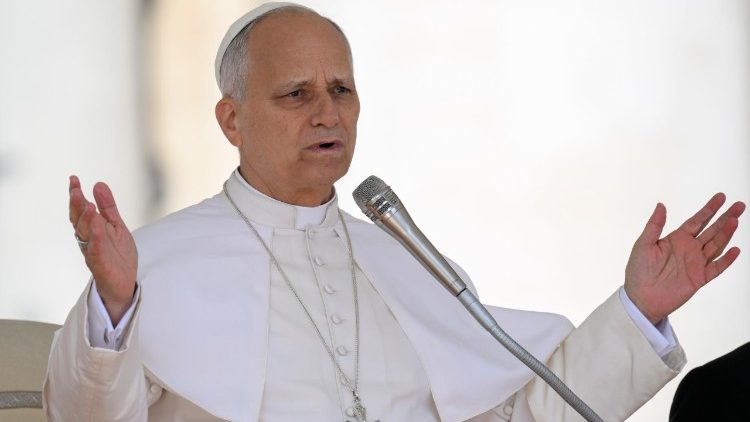
Pope Leo XIV on Sunday issued a strong rebuke against the growing trend of invoking religion and God to justify armed conflict, stressing that divine authority does not sanction war.
The condemnation was delivered as the pontiff addressed tens of thousands of faithful gathered for Palm Sunday Mass at St. Peter’s Square in Vatican City, where his message focused squarely on peace amid intensifying global tensions.
In his address, the Pope underscored that God stands firmly against violence and remains in solidarity with those who suffer oppression, a position he reiterated as the ongoing conflict involving the United States, Israel, and Iran enters its second month.
“Brothers and sisters, this is our God: Jesus, King of Peace, who rejects war, whom no one can use to justify war,” Leo said, according to AP. “He does not listen to the prayers of those who wage war, but rejects them.”
PulseNets reported that the Pope’s remarks come at a critical moment when political and military leaders in the expanding Middle East conflict have increasingly framed their actions in religious terms.
PulseNets learned that U.S. Defence Secretary Pete Hegseth has publicly characterised the war effort through a religious lens, presenting it as aligned with Christian values. In a similar vein, the Russian Orthodox Church has endorsed Russia’s invasion of Ukraine, describing it as a “holy war” against what it views as a morally declining Western society.
Palm Sunday, a key observance in the Christian calendar, marks the triumphant entry of Jesus Christ into Jerusalem before his crucifixion on Good Friday and resurrection on Easter Sunday.
At the close of the Mass, the pontiff offered a special blessing, noting that his prayers were particularly with Christians in the Middle East who are enduring the consequences of what he described as a devastating conflict.
“Suffering the consequences of an atrocious conflict. In many cases, they cannot live fully the rites of these holy days.”
PulseNets obtained that the ongoing U.S.-Israel-Iran war has significantly escalated tensions across the Middle East, with sustained airstrikes, missile exchanges, and proxy confrontations reported in countries such as Lebanon, Syria, and Iraq.
Security analysts, PulseNets learnt, have warned that the situation could rapidly deteriorate into a wider regional war involving both state and non-state actors.
Civilian populations continue to bear the heaviest burden, with rising casualties, mass displacement, and the destruction of essential infrastructure, including hospitals and places of worship.
Human rights organisations have repeatedly raised alarm over alleged breaches of international humanitarian law by all parties involved in the conflict.
The crisis has also disrupted religious practices, particularly for Christian minorities, many of whom now face insecurity, restrictions, and displacement during one of the most sacred periods in their faith.
Earlier on Sunday, PulseNets reported that the Latin Patriarchate in Jerusalem disclosed that Israeli police prevented senior Catholic leaders from accessing the Church of the Holy Sepulchre, widely regarded as the site of Jesus Christ’s crucifixion. The development was described as an unprecedented restriction in centuries.
Reflecting on the global toll of war, Pope Leo XIV called on leaders and believers alike to prioritise peace and reconciliation, especially during Holy Week.
Also Read: Robert Francis Prevost Becomes Pope Leo XIV as Cardinals Elect First US Pontiff
He emphasised that Christians must remain conscious of the suffering endured by many across the world, drawing parallels to the suffering of Christ.
“Their trials appeal to the conscience of all. Let us raise our prayers to the Prince of Peace so that he may support people wounded by war and open concrete paths of reconciliation and peace,” he said.