Tinubu Gives Four Reasons FBI Records From 1993 Investigation Should Remain Sealed
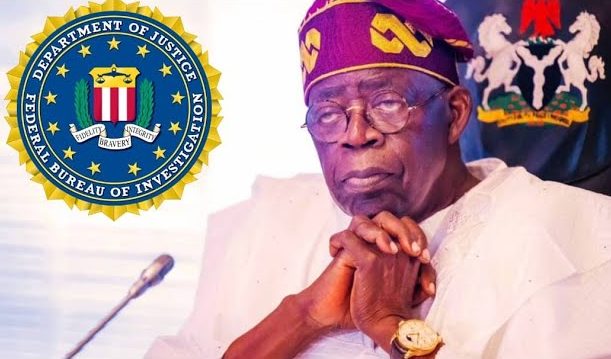
The legal dispute over records connected to President Bola Tinubu’s past dealings in the United States has entered a fresh phase after the President gave reasons for opposing the public release of documents sought from the Federal Bureau of Investigation, FBI.
The development followed the submission of records relating to the FBI’s 1993 investigation involving Tinubu to a United States federal judge for confidential examination.
The FBI delivered the documents on Friday, August 28, to Judge Beryl Howell of the U.S. District Court for the District of Columbia, following a court order requiring the agency to meet a deadline in the Freedom of Information Act, FOIA, case.
However, the records were not released publicly or provided to Aaron Greenspan, the American transparency campaigner who has been seeking access to the documents.
Instead, the FBI submitted the materials “under seal, ex parte, in camera,” meaning they were presented privately to the judge for review.
Tinubu’s position is that the disputed records should remain protected rather than being made public. His legal team has argued that releasing the documents could expose private information and potentially create implications beyond what was established by the decades-old investigation.
The President has raised four major reasons for opposing the release of the FBI records. They centre on privacy concerns, the nature of the information contained in the files, the age of the investigation and the fact that no criminal conviction resulted from the matter.
The latest development does not constitute a public release of the FBI records, nor does it amount to a new judicial finding against Tinubu.
Judge Howell must first review the documents and consider the legal arguments from the parties before determining whether the FBI is legally entitled to continue withholding some or all of the material.
The dispute concerns records from investigations involving Tinubu in the United States during the early 1990s. Greenspan initially sought the documents through FOIA requests and later took legal action against US government agencies after the records were not made available.
Nigerian journalist David Hundeyin has also been involved in efforts to obtain the documents.
Among the records being sought are FBI files concerning Tinubu and interview reports, commonly referred to as Form 302 records, from 1992 and 1993.
The FBI has maintained that portions of the material cannot simply be disclosed because doing so could expose information protected under US law.
The agency has cited exemptions under the US FOIA framework covering areas including personal privacy, confidential sources, investigative techniques and information whose disclosure could potentially put individuals at risk.
In one of its filings, the FBI explained why it wanted part of its argument to remain confidential. It said, “The FBI has determined that it cannot provide on the public record the full basis for the application of Exemptions 7(E) and 7(F) to certain withholdings and that, therefore, an ex parte, under seal declaration is necessary.”
That position resulted in the records being placed before Judge Howell for a confidential review.
The case has continued to attract significant attention because of its connection to allegations and investigations involving Tinubu during his time in the United States.
One of the matters associated with the records involved the forfeiture of approximately $460,000 in Chicago in 1993.
Previously released US court documents showed that funds linked to Tinubu were forfeited to the United States government. Tinubu has denied wrongdoing and has not been criminally convicted in connection with the matter.
His lawyers have opposed the further disclosure of the FBI material, arguing that publishing additional records could infringe on his privacy without establishing any new criminal finding against the President.
Tinubu’s legal team has also argued that some information concerning the earlier proceedings is already in the public domain and that releasing additional material would not necessarily establish evidence of criminal wrongdoing.
The immediate decision now rests with Judge Howell.
The judge could order the release of some or all of the records, agree with the FBI that specific portions are protected from disclosure, or require the agency to provide additional justification before reaching a final decision.
Until the court completes that process, Greenspan and members of the public will not have access to the disputed FBI records.
The latest development comes after months of legal exchanges involving the FBI, Tinubu’s lawyers, Greenspan and the court over access to the documents.
The FBI had previously requested additional time to examine the records and determine which portions could legally be disclosed under US law.
Also Read: Problems in Burkina Faso, Niger, Mali Contributing to Our Insecurity, Says Tinubu
Judge Howell subsequently imposed a deadline after expressing growing concern over delays in the case.
Tinubu’s legal team later joined the US Department of Justice in opposing the release of the records, maintaining that disclosure could infringe on the President’s privacy rights.