Trump Announces U.S. Control of 30–50 Million Barrels of Venezuelan Oil Following Maduro’s Capture
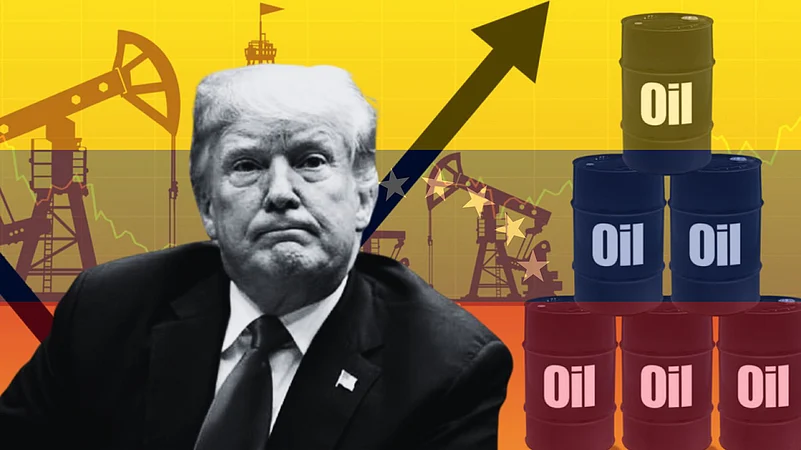
U.S. President Donald Trump declared that Venezuela will transfer between 30 million and 50 million barrels of sanctioned oil to the United States, a move that underscores a dramatic shift in U.S.–Venezuelan relations and control over energy resources. The announcement came after U.S. forces captured former Venezuelan President Nicolás Maduro in a high‑profile operation, according to international reports.
In a written statement obtained by PulseNets, Trump said:
“I am pleased to announce that the interim authorities in Venezuela will be turning over between 30 and 50 million barrels of high‑quality, sanctioned oil to the United States of America.”
He added that:
“This oil will be sold at its market price, and that money will be controlled by me, as President of the United States of America, to ensure it is used to benefit the people of Venezuela and the United States.”
Trump told PulseNets he has tasked Energy Secretary Chris Wright with implementing the plan “immediately,” noting that the barrels will be loaded onto storage vessels and transported directly to U.S. unloading docks as part of the execution. Analysts have highlighted that this directive reflects the urgency and strategic priority the administration places on securing energy supplies and revenue streams.
The measure follows a controversial U.S. military operation in Caracas that resulted in Maduro and his wife, Cilia Flores, being apprehended and transported to the United States to face federal charges. Maduro and Flores pleaded not guilty in a U.S. federal court, and sources told PulseNets that Maduro has rejected the jurisdiction of the proceedings, characterizing himself as a “prisoner of war.”
International reactions have been swift and varied. Some governments have expressed grave concerns about the legal and diplomatic implications of the U.S. assuming control of Venezuelan oil resources, describing the action as a potential violation of sovereignty. Others have cautiously acknowledged the possibility of economic stabilization if the revenues are managed transparently. Oil markets reacted quickly, with prices adjusting amid uncertainty over future supply lines and geopolitical fallout.
Also Read: Trump Declares U.S. May Launch Second Strike if Venezuela Does Not Comply
Critics argue that the plan marks a profound escalation in U.S. involvement in Venezuela’s internal affairs, blending military force with direct intervention in the country’s energy sector. Proponents, however, maintain that redirecting oil revenues could create pathways for economic recovery in Venezuela while strengthening U.S. energy security. The development has become the defining issue in ongoing discussions on hemispheric diplomacy, energy policy, and international law.