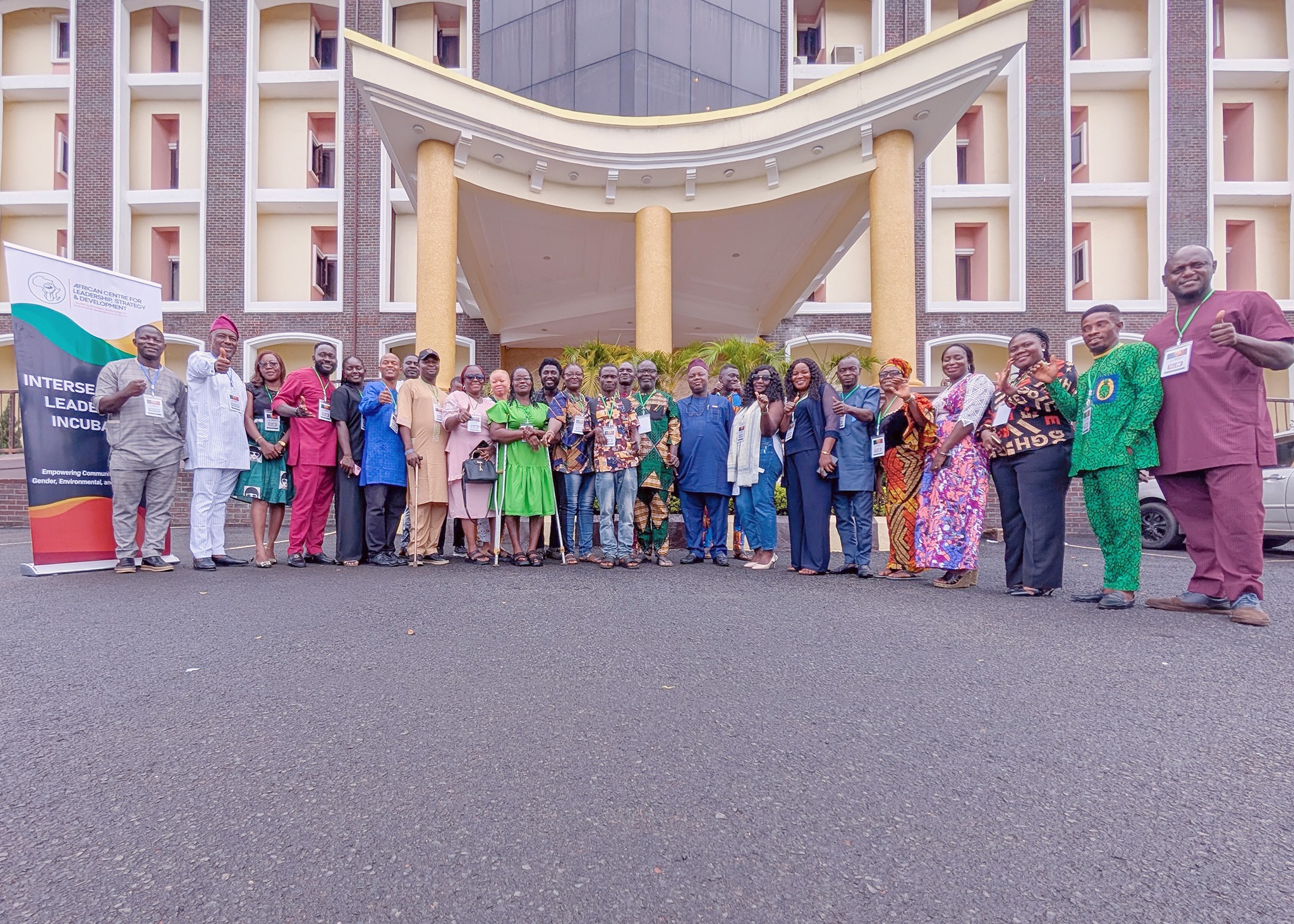
22 Fellows Redefine Hope: How Centre LSD’s ILI Fellowship Is Transforming the Niger Delta from Within
UGHELLI, Nigeria – They came as fellows but left as architects of transformation. The closeout session of the Intersectional Leadership Incubator (ILI) Fellowship, hosted in Ughelli by the African Centre for Leadership, Strategy & Development (Centre LSD), was far more than a mere graduation ceremony. It was, as PulseNets learnt, a compelling demonstration of a radical truth — that the Niger Delta’s greatest solutions already reside within its own people, awaiting only empowerment and vision to be unlocked.
Supported by the Ford Foundation, the fellowship trained and mentored 22 grassroots leaders drawn from across the Niger Delta, providing them with both technical skills and small grants. PulseNets obtained that over the course of three days, these fellows showcased not just projects but stories of resilience, innovation, and social transformation. Their collective narrative revealed that true development begins where people take charge of their own destinies.
In the Heart of the Delta: Stories of Resilience and Reinvention
In a region often associated with environmental degradation and economic despair, the new story emerging is one of renewal. These are the stories of men and women who refused to be defined by oil spills and poverty — women who grow food in sacks, persons with disabilities reclaiming their dignity, and communities turning plastic waste into wealth.
The Soil and the Sack: Women Planting Hope in Polluted Land
In Otu-Jeremi, Delta State, where the air carries the scars of decades of gas flaring, Okotie Nefertiti Ayo introduced a simple but radical idea — the sack garden. For women like Blessing Ifogbe, this method was more than survival; it was liberation.
“I no longer spend heavily on pepper,” she told PulseNets, proudly tending to her sack farm.
Beside her, Okpako Mercy plucked fresh vegetables for dinner, smiling. Their gardens, vibrant against the backdrop of polluted soil, symbolize a quiet defiance — a declaration that life will find a way, even in poisoned ground.
The Forest’s Plea: Voices from the Most Vulnerable
Deep within the forests of Buan Community, Rivers State, the chainsaws of illegal loggers echo a cruel reality. Environmental exploitation here means hunger for the poor. Nwigbalor Gideon Gad, one of the fellows, documented stories of farmers like Miss Lenu Marcus, born with incomplete legs, who struggles to survive erratic weather.
“Let Centre LSD please come to my aid,” she pleaded to PulseNets, her voice trembling with emotion.
Her plea was echoed by Mr. Eze Lete, another farmer living with a disability. Their stories link deforestation not just to lost trees, but to lost livelihoods — a vivid reminder that climate change hits the most vulnerable first.
The Micro-Grant Miracle: ₦30,000 That Changed Lives
In Ikpesh Community, Edo State, Jennifer Godwin gave 11 women something small yet transformative — ₦30,000 each. What followed was nothing short of miraculous. One woman expanded her petty trade and, within weeks, began making profits of over ₦5,000.
“It may seem little, but to us, it was life-changing,” one beneficiary told PulseNets.
The story illustrates how micro-grants, when targeted effectively, can serve as ladders for families to climb out of poverty, proving that empowerment doesn’t always require millions — just trust and opportunity.
The Plastic Revolution: From Trash to Treasure
In Anambra State, Chidubem Godfrey Nwachinemere led an environmental awakening. Once mocked for collecting discarded plastics, young women in Umuawulu now transform waste into art — crafting hand fans and kitchen holders from recycled bottles and nylons.
“Before now, we saw plastics as dirty and useless. Now we see them as money and a way to clean our community,” one of them told PulseNets.
What began as laughter and mockery has evolved into a new local economy, where environmental cleanup meets entrepreneurship.
The Organic Liberation: Breaking the Fertilizer Dependency
In Akwa Ibom, Asuquo Effiong Edet challenged farmers to abandon chemical fertilizers and embrace organic alternatives. Eteobong Sambo, once heavily dependent on synthetic inputs, now makes his own organic fertilizer using local waste.
“My soil has improved greatly, and my harvests are better,” he reported to PulseNets.
His transformation represents a small but significant shift toward sustainable agriculture — one that could redefine the future of farming in the Niger Delta.
The Seat at the Table: Disability Inclusion in Oil Communities
For years, Persons with Disabilities (PWDs) were sidelined from leadership in Anambra’s oil-producing host communities. Nwafor Gloria Onyinye, another fellow, changed that narrative. Through advocacy and community dialogues, she facilitated the signing of a Disability Inclusion Charter by the HOSTCOM Chairman, granting PWDs equal participation in community decisions.
“For the first time, we sat with traditional rulers as equals,” Nnamdi Ifediora, a beneficiary, told PulseNets.
This charter marks a milestone — not just a document, but a restoration of dignity, citizenship, and belonging.
The Life-Saving Screen: Protecting the Albinism Community
In Bayelsa State, Ogbogene Emomoboye Joy focused on a different kind of environmental vulnerability — the skin of persons with albinism. Her initiative distributed sunscreen and umbrellas while offering free dermatological screenings. One participant, Mr. Frank, discovered a severe skin condition during the exercise and was referred to the Federal Medical Centre for urgent care.
“That simple screening may have saved my life,” he told PulseNets, his voice filled with gratitude.
Her work underscores how climate justice can intersect with health equity, making sustainability a matter of survival.
Centre LSD: A Blueprint for a New Niger Delta
Individually, these stories are moving. Collectively, they represent a new development model rooted in local ownership, innovation, and empathy. PulseNets learnt that Centre LSD’s intersectional approach has proven that change does not have to come from government decrees or multinational budgets — it can emerge from within, powered by community visionaries.
From sack gardens in Delta to signed charters in Anambra, these fellows have ignited a revolution — not of noise, but of impact. They are architects of hope, building not just infrastructure, but dignity, agency, and belonging.
Their work is far from over. As the graduates of the ILI Fellowship return to their communities, one truth remains clear: the Niger Delta’s redemption will not come from outside. It will come from within — from those who dare to dream, act, and lead.