Tinubu Moves to Block FBI and DEA from Releasing His Unredacted Files in U.S. FOIA Battle
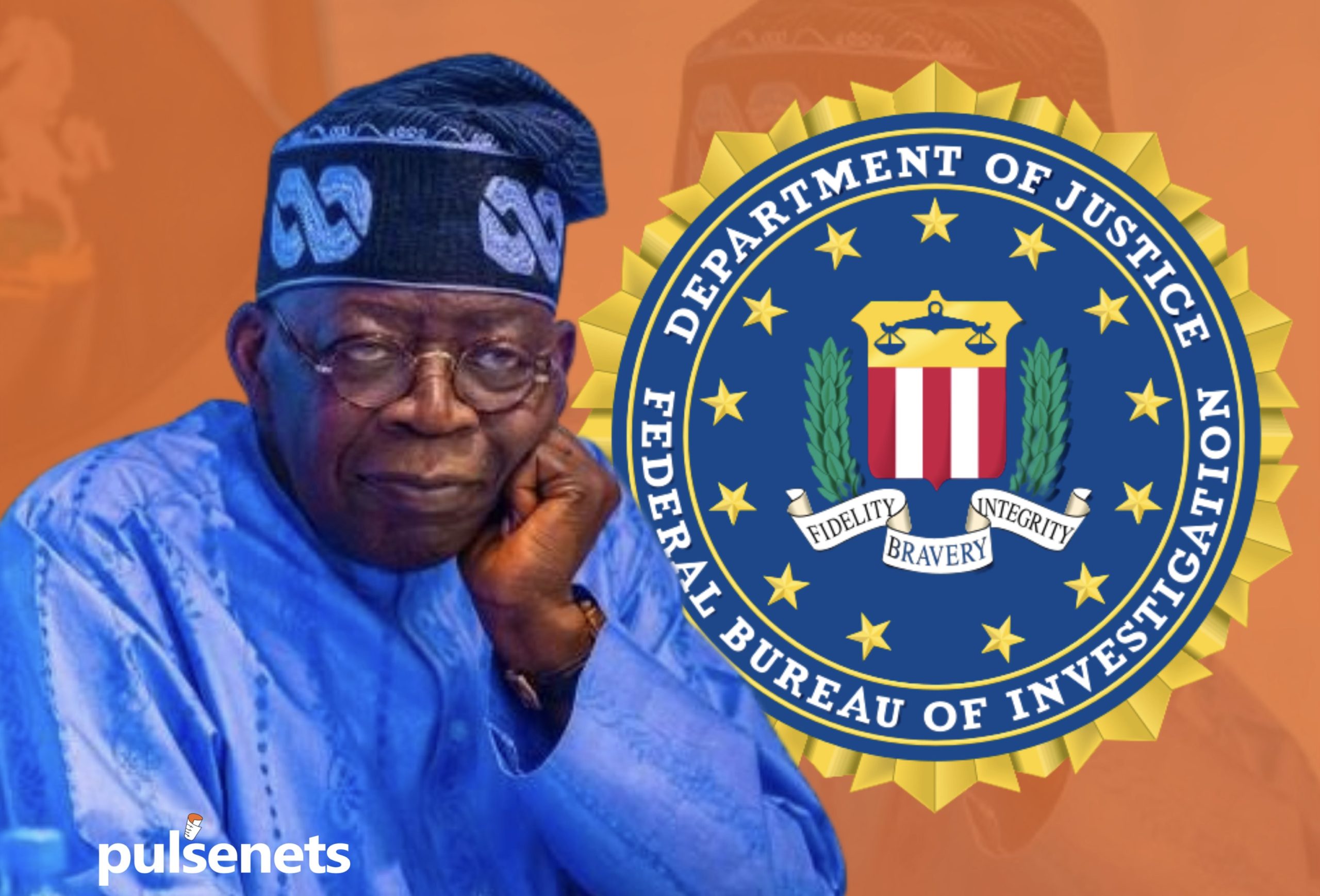
President Bola Ahmed Tinubu has stepped directly into the contentious Freedom of Information Act lawsuit in the U.S. District Court for the District of Columbia, seeking to stop the full disclosure of long-sought FBI and DEA records about him. The intervention, obtained by PulseNets through court filings, was made on September 4, 2025, through his attorney Oluwole O. Afolabi, who filed a motion arguing that privacy laws should shield the documents from public view.
According to documents filed and reviewed by PulseNets, Afolabi maintained that the U.S. Privacy Act and FOIA Exemption 7(c) are sufficient grounds to conceal the records. He urged Judge Beryl Howell to compel the FBI and DEA to withhold the files in their entirety, insisting that public release would violate Tinubu’s privacy rights. This move comes five months after Judge Howell had already ruled that those same privacy exemptions could not be invoked in this particular case, ordering both agencies to produce the unredacted records.
An excerpt from president’s argument reads, “The Privacy Act and exemptions must prevail because the privacy rights of President Tinubu clearly outweigh any claimed public interest in exposing these files.”
PulseNets recalls that this case began in 2023, spearheaded by American FOIA activist Aaron Greenspan with the backing of West Africa Weekly’s Editor-in-Chief David Hundeyin. The litigation had previously forced the release of five heavily redacted batches of documents, with every reference to Tinubu, his relatives or associated businesses blacked out. On April 8, 2025, Judge Howell delivered a landmark judgment compelling the FBI and DEA to locate and produce all relevant records about Tinubu, dismissing their prior Glomar responses. In her words at the time, keeping such information hidden under the banner of privacy was “neither logical nor plausible.”
Since that ruling, PulseNets learnt that the agencies have engaged in legal maneuvers and administrative delays that Greenspan says are meant to protect Nigeria’s president. In a separate motion filed last month, Greenspan accused the FBI and DEA of “playing politics” and “deliberately delaying” the unredacted release as “a favour to President Tinubu.”
In Tinubu’s new filing, Afolabi insisted that Greenspan’s FOIA requests fall outside the law’s intended purpose. He stated, “Freedom of Information requests are meant to expose government activities, not to fish for private details about an individual.” He further argued there is no overriding public interest in reviving records linked to investigations from decades ago, particularly when Tinubu was not an elected official. Legal analysts who spoke to PulseNets noted that Afolabi’s motion essentially asks the court to reverse its own prior judgment, a rare and uphill request.
Also Read: Dino Melaye Slams Tinubu Over Reckless Borrowing, Warns He May Soon Turn to Opay and Moniepoint
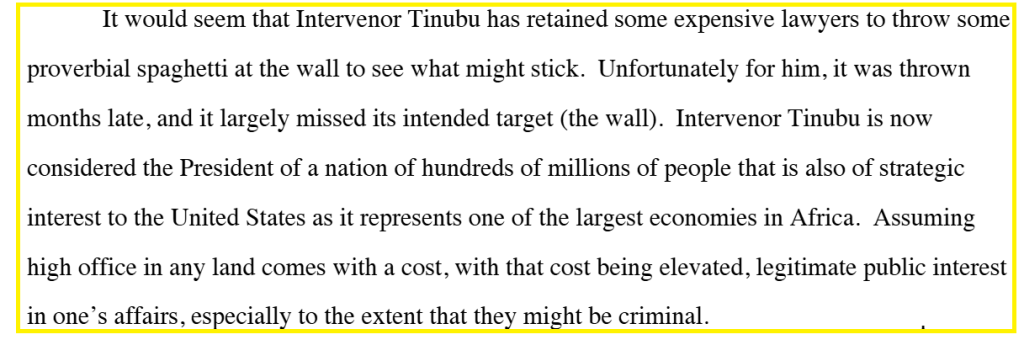
Greenspan immediately countered with his own motion, urging Judge Howell to strike out Tinubu’s intervention entirely. In his filing, he wrote, “The court has already spoken on the validity of privacy exemptions. Tinubu’s late-stage motion is an improper attempt to relitigate settled matters.”
West Africa Weekly and PulseNets will continue monitoring this high-stakes legal battle as it develops. Readers can access the full filings submitted by both Tinubu’s and Greenspan’s legal teams through the official court records.