China Passes New Laws Banning Online Preaching and Prayer
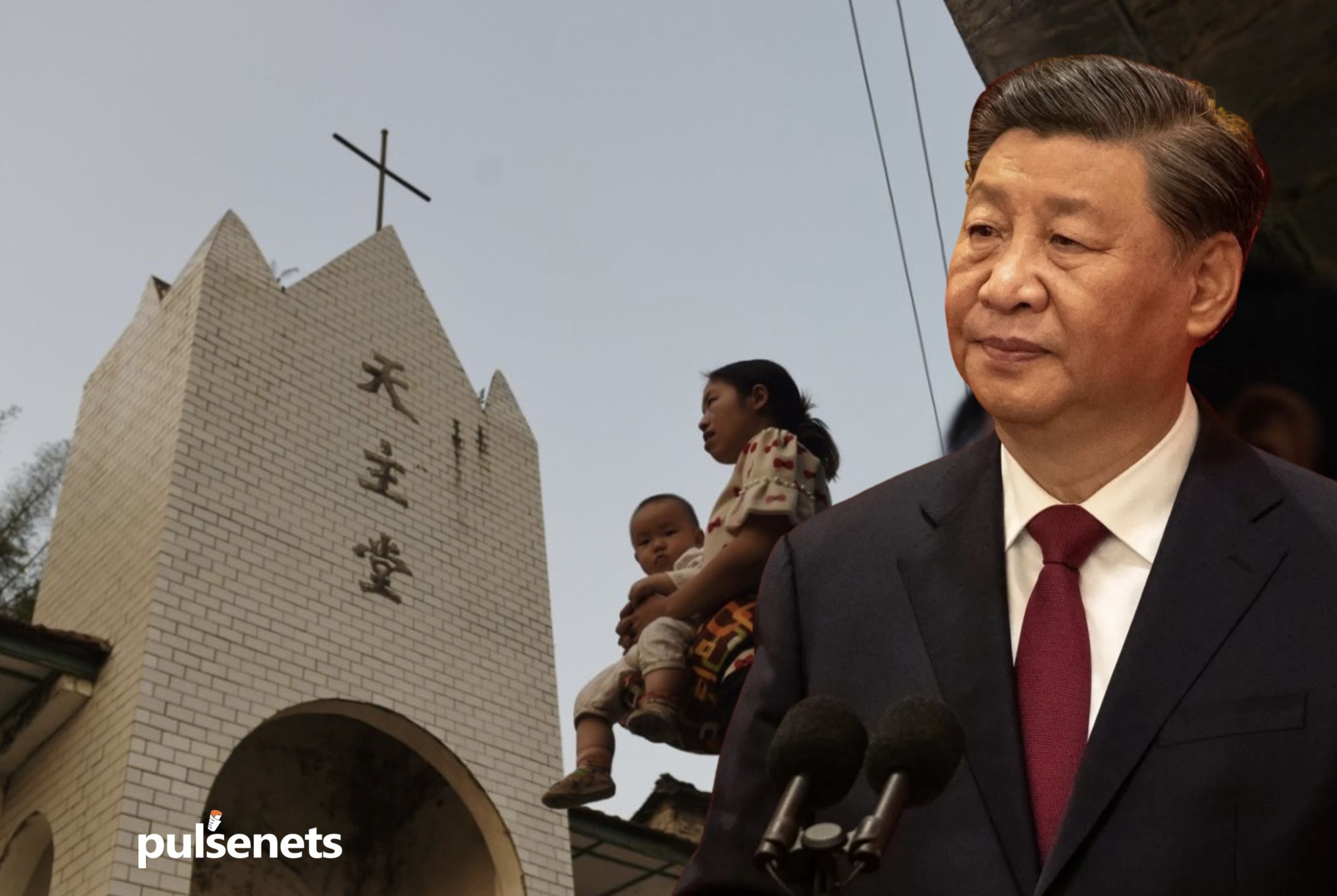
China has officially passed a new law banning all forms of online preaching, virtual prayer sessions, and live-streamed religious gatherings, PulseNets learnt.
Documents obtained by PulseNets reveal that the regulation, enforced under the Administrative Measures for Internet Religious Information Services, took full effect this week. It forbids churches, mosques, temples, and individuals from sharing any kind of religious message or hosting prayer activities on digital platforms.
Authorities in Beijing describe the measure as a move to preserve social stability and guide religion in line with Chinese values. But many believers inside China view it as a devastating blow to one of the last spaces where faith could still be freely expressed.
“It’s Like Cutting the Lifeline of Faith”
A fellowship pastor in Guangzhou told PulseNets that online gatherings had become the only way for many Christians to stay connected.
“We used to meet on WeChat for prayers, share scriptures, and encourage one another,” he said quietly. “Now, that simple act of faith could cost us everything. It feels like they’ve cut off our spiritual lifeline.”
Before this law, millions of believers across China—Christians, Muslims, Buddhists, and others—were already facing tight restrictions on physical worship. During the pandemic, online meetings became the heart of their faith practice. That window of freedom has now closed.
Faith Under Supervision
PulseNets learnt that only state-approved religious organisations are now permitted to post or share religious content online, and even then, only through government-controlled channels after strict vetting.
A Catholic group in Shanghai told PulseNets that their page was deleted after posting a Sunday reflection about forgiveness.
“We didn’t mention politics or protest,” said the coordinator. “It was a simple message of peace, and it disappeared within hours.”
Monitoring systems now detect and remove unapproved religious materials automatically, using advanced keyword filters and AI moderation tools.
The Underground Goes Deeper
Several believers spoke to PulseNets about forming private encrypted groups to continue prayer in secret. They use coded phrases, short voice notes, and unlisted chat rooms to maintain some level of connection.
“It feels like we’re practicing faith in the shadows,” one believer said. “We whisper prayers now. We can’t share our joy openly. It’s heartbreaking.”
A human rights researcher based in Hong Kong told PulseNets that the new measures mark one of the most intense digital crackdowns on religion in modern times.
“This isn’t just about controlling religion,” she explained. “It’s about controlling thought. When you regulate prayer, you regulate the soul of a people.”
Global Reactions Mount
The United States Commission on International Religious Freedom and several European advocacy groups have condemned the policy, calling it a dangerous precedent for digital repression.
Observers say the move underscores Beijing’s growing determination to shape every form of expression under its ideological framework, both offline and online.
PulseNets obtained reports showing that since January, over 2,000 religious social media accounts have been permanently suspended and numerous religious apps have been removed from app stores.
Experts predict this will drive religious activity deeper underground, making open expression and community dialogue even more difficult.
“Faith Is Not a Threat”
An underground pastor spoke to PulseNets with emotion in his voice.
“Faith is not a threat. We don’t preach rebellion. We preach hope. But now, even hope needs permission.”
He added that what worries him most is the next generation.
“Young people who found God online are now cut off. They are growing up thinking religion must hide.”
For years, China’s government has sought to keep religion under strict state supervision. Officially registered churches operate, but their messages are limited to themes that promote national unity and socialist values.
Digital rights advocates argue that this new law represents more than censorship. It signals a shift toward algorithmic control, where even private belief is moderated by surveillance.
Also Read: Trump Signals Nuclear Arms Talks with Russia, China
As one former university lecturer in Beijing told PulseNets, “The government once feared ideas spreading through books. Now, it fears them spreading through screens.”
Despite the crackdown, sources told PulseNets that many believers are adapting quietly. Some meet in person under the radar, memorise hymns instead of streaming them, or use hidden symbols to identify safe meeting spaces.
“They can regulate the apps,” said one young believer. “But they can’t regulate the heart.”