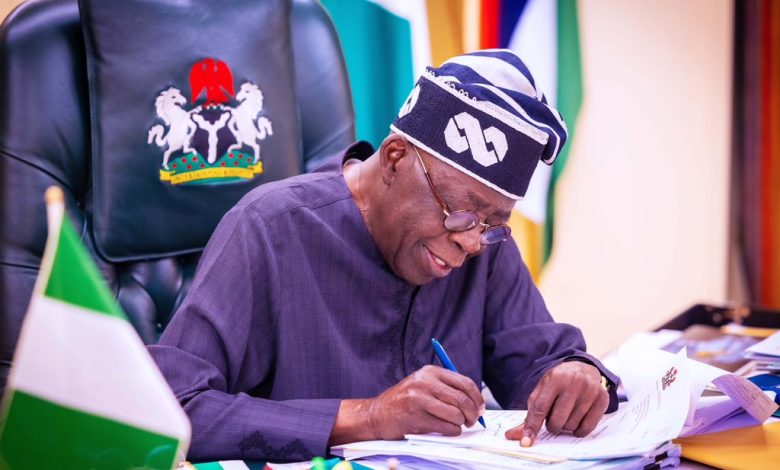
Tinubu’s Presidential Pardon Sparks Nationwide Outrage Over Freed Drug Traffickers and Murderers
President Bola Ahmed Tinubu has come under intense criticism following his recent decision to grant state presidential pardon to 175 convicted Nigerians, including individuals jailed for drug trafficking, armed robbery, murder, and illegal mining, among others.
The clemency, exercised under the President’s constitutional prerogative of mercy, was expected to draw applause. However, PulseNets learnt that the move has instead triggered a wave of outrage from opposition leaders, civil society groups, and sections of the public who see it as a dangerous precedent.
Critics argue that the President’s gesture, which reportedly includes individuals who have served less than two years of their sentences, sends a troubling message that could embolden future offenders. Several Nigerians who spoke to PulseNets expressed concern that such a pardon contradicts the government’s earlier stance on its war against drug trafficking and violent crimes.
Public Concerns Mount Over Nigeria’s Global Image
Those who oppose the decision fear that it could tarnish Nigeria’s global reputation. PulseNets gathered that some analysts believe the move could portray the country as a potential safe haven for drug traffickers and organised crime networks.
Former Vice President Atiku Abubakar, ex-Kaduna Governor Nasir el-Rufai, political parties, and various advocacy groups have all condemned the presidential action, warning that it could weaken Nigeria’s anti-drug framework and undermine international partnerships in the fight against narcotics.
In a statement obtained by PulseNets, the African Democratic Congress (ADC) through its interim National Publicity Secretary, Bolaji Abdullahi, described the clemency as “a national embarrassment that mocks the sacrifices of officers who risk their lives to prosecute drug crimes.”
“Granting freedom to those convicted for narcotics offences—barely two years after sentencing—is an abuse of presidential mercy and a slap on the faces of NDLEA officials who put their lives on the line to bring them to justice,” Abdullahi stated.
“It’s disheartening that in Nigeria, even the most serious crimes like murder and drug trafficking can be wiped clean by a simple show of remorse. This act undermines decades of work by our security agencies and sends a dangerous signal that crime pays,” he told PulseNets.
The party further cautioned that Nigeria remains a key transit point for global drug trade, with a national drug use rate standing at 14.4% — nearly three times the global average of 5.5%.
Atiku: Presidential Clemency Has Become a Tool of Moral Decline
In a post across his verified social media handles, Atiku Abubakar criticised the Tinubu administration’s move, describing it as reckless and morally indefensible.
“The power of pardon is a sacred trust designed to temper justice with mercy,” Atiku said. “When properly used, it reflects the state’s humanity. But this pardon does the opposite—it diminishes justice, weakens faith in governance, and emboldens criminality.”
He added that the decision to free convicts involved in drug trafficking, kidnapping, murder, and corruption was “a dangerous signal that trivialises justice at a time when Nigeria faces moral decay and insecurity.”
Atiku further observed that 29.2% of those pardoned were convicted of drug-related crimes, which he said was shocking given the country’s ongoing struggle to combat narcotics and addiction among the youth.
“Clemency must never be confused with complicity. When a government begins to forgive those it claims to be fighting, it loses the moral right to lead,” he told PulseNets.
El-Rufai and Aides Join the Outcry
Former Kaduna State Governor Nasir el-Rufai also took to X (formerly Twitter), writing that the President’s decision appeared less about compassion and more about shared interests.
“For a president once accused of forfeiting $460,000 to US authorities in a drug-linked case, pardoning drug dealers feels less like mercy and more like a reunion of cartel alumni,” he quipped.
Meanwhile, Josef Onoh, Special Adviser to the President on Policy Communication (South East), has publicly urged Tinubu to revoke the pardon, particularly that of Maryam Sanda, convicted for the murder of her husband.
In a statement obtained by PulseNets, Onoh described the move as “a moral tragedy capable of eroding Nigeria’s judicial integrity and damaging its international reputation.”
“This act may be constitutional, but it’s morally indefensible. It trivialises justice, retraumatises victims’ families, and sends the wrong message to our global partners,” Onoh stated.
“Granting clemency to murderers and drug traffickers undermines Nigeria’s anti-drug diplomacy and discredits the work of the NDLEA before global institutions like the UN Office on Drugs and Crime,” he added.
Also Read: Presidency Release Names of Those Tinubu Granted Presidential Pardon [SEE FULL LIST]
Political analysts who spoke to PulseNets observed that while presidential clemency is meant to serve as an act of justice and rehabilitation, its application in this case appears politically tone-deaf. They warned that this decision could embolden criminals and weaken public trust in the country’s justice system.
As the backlash continues, many Nigerians are demanding greater transparency in the exercise of presidential pardons, arguing that the Tinubu administration risks losing credibility both at home and abroad if it continues down this path.