Nigerians Slam INEC as 2027 Campaign Posters Emerge Nationwide Despite Electoral Ban
Political observers and stakeholders have expressed deep frustration over what they describe as the Independent National Electoral Commission’s (INEC) growing inability to regulate the conduct of political parties across Nigeria.
PulseNets learnt that many believe laws and electoral regulations are routinely ignored, with critical institutions either too weak or unwilling to enforce compliance. This apparent failure, analysts say, has emboldened political parties — particularly the ruling party — to act without restraint.
Mounting Criticism Over INEC’s Control
At a recent roundtable convened by the Commission to deliberate on the persistent problem of premature political campaigns, it became evident to participants that INEC’s authority is severely limited by gaps within existing laws.
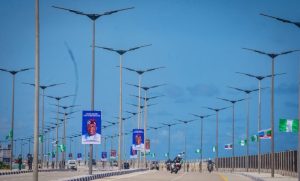
The development followed a controversial episode in Abuja, where residents woke up to massive billboards displaying President Bola Ahmed Tinubu and his wife, Senator Remi Tinubu, with the inscription:
“Grassroots Support for Tinubu 2027.”
This public display was interpreted as an early declaration of the President’s second-term ambition, nearly three years before the next general election.
Sources told PulseNets that while the campaign materials may not have originated directly from the President or his allies, such actions are often traced to overzealous supporters or political opportunists seeking attention and favour.
Analysts also pointed out the possibility of political opponents staging premature campaigns to implicate their rivals in breaches of the Electoral Act.
Regulatory Lapses and Institutional Weakness
Beyond INEC’s silence, stakeholders have queried why advertising and signage agencies allowed the billboards to be displayed without proper authorisation — or failed to remove them when discovered to be illegal.
PulseNets obtained reports indicating that similar campaign materials, bearing inscriptions such as “Tinubu Continuity 2027” alongside other notable politicians like Governor Umar Namadi, have surfaced in several states across Nigeria.
Social media platforms — from Facebook to TikTok and X — have also been flooded with campaign-style songs, skits, and hashtags promoting potential 2027 aspirants.
When INEC earlier cautioned some individuals for violating the law, the Presidency swiftly denied involvement, insisting it neither sponsored nor endorsed any of the materials.
“All unauthorised campaign materials should be taken down immediately,” the Presidency had demanded — a directive largely ignored.
PulseNets learnt that political actors still exploit public events such as cultural festivals, book launches, religious gatherings, and project inaugurations to subtly campaign long before the legally permitted period.
Legal Loopholes and INEC’s Dilemma
Section 94(1) of the Electoral Act 2022 clearly states:
“The period of campaigning in public by every political party shall commence 150 days before polling day and end 24 hours prior to that day.”
However, former INEC Chairman Prof. Mahmood Yakubu highlighted how vague enforcement provisions make regulation difficult.
“INEC is expected to act as the registrar and regulator of political parties,” he explained, “but the law itself presents our biggest challenge. Section 94(2) imposes only mild sanctions — a fine of ₦500,000 at most — and provides no penalty for campaigns that start before the official 150-day window. This gap leaves the Commission powerless in many situations.”
Analysts also raised concerns over Section 92(4), which grants political parties freedom to hold rallies or meetings “at any time” for constitutional purposes — a provision many say has been abused to justify early campaigns.
Calls for Reform and Accountability
Former INEC Chairman Prof. Attahiru Jega, in his recent lecture, stressed the need to clearly define what constitutes premature campaigning.
“Election offences, including premature campaigns, must be well defined and attract severe penalties,” he said.
“Candidates and political parties should be held responsible for the actions of third-party campaigners, and anti-graft agencies like the EFCC and ICPC must trace their funding sources.”
Jega further advocated for the creation of an Election Offences Commission and Tribunal to handle violations — an idea he described as “long overdue” and essential before the 2027 elections.
Civil Society Voices Frustration
Speaking to PulseNets, Mrs. Ene Obi, Convener of the Nigerian Civil Society Situation Room, lamented that disregard for the rule of law remains Nigeria’s biggest electoral challenge.
“People in authority know the laws but choose not to follow them,” she said.
“We keep hearing denials — that campaign posters are not from aspirants but from ‘unknown supporters.’ That excuse is getting old. INEC has yet to release a timetable, so these campaigns are clearly premature.”
She emphasised that government officials must avoid using official time and resources for campaigns, insisting that this undermines public service delivery.
“If INEC says it cannot enforce the law, then who can? Citizens must rise, demand accountability, and insist that the Constitution be obeyed,” Obi told PulseNets.
“Without sanctions, there can be no discipline, and without discipline, democracy cannot thrive.”
She also urged stronger civic education and national patriotism, lamenting that “too many Nigerians no longer see governance as a moral duty but as an opportunity for impunity.”
Opposition Criticism and Legal Proposals
Similarly, Yunusa Tanko, National Coordinator of the Obidient Movement, told PulseNets that the ruling party has already violated the Electoral Act.
“The government is already campaigning. It’s against the law, and they should be held accountable,” he insisted.
“INEC cannot claim to lack power — the law is clear.”
Tanko added that the Obidient Movement remains cautious in its activities to avoid being accused of pre-election misconduct.
Meanwhile, PulseNets learnt that the National Assembly is currently reviewing the Electoral Act (Amendment) Bill 2025, which seeks to move Nigeria’s next general elections from February 2027 to late 2026, as part of wider electoral reforms.
Also Read: Sowore Meets Jonathan in Abuja, Seeks Support for Nnamdi Kanu’s Release
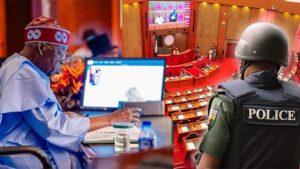
During Thursday’s plenary, the Senate confirmed Professor Joash Amupitan as the new INEC Chairman, following President Tinubu’s nomination. Amupitan replaces Prof. Mahmood Yakubu after completing his two constitutional terms.
In his remarks during screening, the new Chairman pledged to restore public trust in Nigeria’s electoral process through robust civic education and transparent enforcement of electoral laws.