Falling Inflation: Economists Explain Why Nigerians Feel No Relief
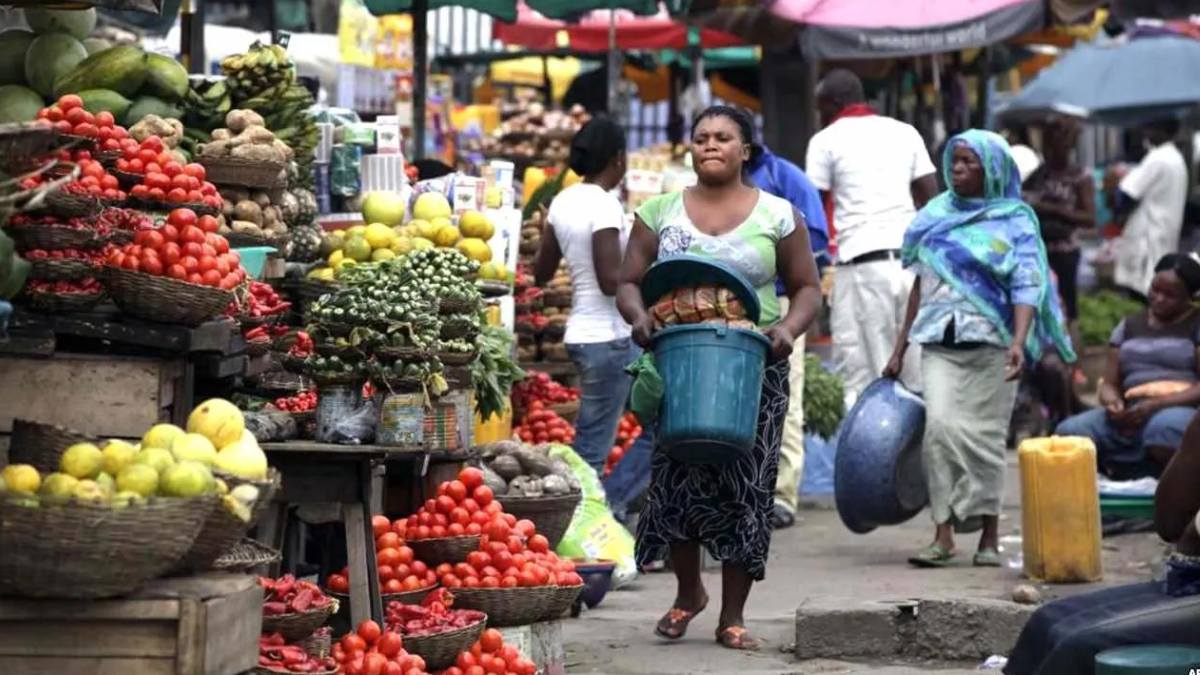
Nigeria’s seventh straight month of falling inflation has done little to ease the pressure on families already crushed by soaring living costs and deepening economic hardship, according to economists and financial analysts who say the latest figures offer “statistical comfort without real-life relief.”
Fresh inflation numbers obtained by PulseNets from the National Bureau of Statistics (NBS) show that headline inflation eased to 16.05 per cent in October 2025, down from 18.02 per cent in September, marking one of the sharpest monthly drops recorded this year.
Food inflation also slowed to 13.12 per cent, a notable decline from 16.9 per cent in the previous month.
Yet, despite the downward movement, experts say the figures barely scratch the surface of the economic reality confronting millions of Nigerians.
‘Disinflation Without Welfare Gains’ — CPPE
Dr. Muda Yusuf, the Chief Executive Officer of the Centre for the Promotion of Private Enterprise (CPPE), told PulseNets that the easing inflation rate “has not translated into meaningful cost-of-living relief,” stressing that price pressures remain stubbornly high across essential sectors.
“The pressure on basic household needs—food, transport, housing, electricity, education and healthcare—remains intense, and these areas alone account for more than 80 percent of overall inflation,” he said.
Yusuf explained that persistent structural bottlenecks continue to undermine any gains from disinflation. These include crippling logistics costs, unstable energy supply, insecurity across food-producing regions, and climate-related disruptions that keep production and distribution weak.
According to him:
“Households are yet to feel any real welfare benefit because the underlying structural problems remain unresolved.”
He added that turning statistical improvements into genuine economic progress requires deeper, sustained reforms backed by coordinated monetary, fiscal and structural policy actions.
‘NBS Figures Are Out of Touch’ — Former CIBN President, Unegbu
In a reaction learnt by PulseNets, former President of the Chartered Institute of Bankers of Nigeria (CIBN), Mazi Okechukwu Unegbu, dismissed the October inflation report as “detached from lived reality.”
He argued that the true state of inflation in Nigeria is far worse than the official figures imply.
“These numbers do not reflect what Nigerians face daily. In practical terms, our real inflation is closer to 29 percent,” Unegbu claimed.
He said the unrelenting spike in food prices, rent, transportation costs, fuel expenses and other necessities shows that the narrative of declining inflation “means nothing” to ordinary citizens grappling with unending hardship.
Why Nigerians Still Feel No Relief — Prof. Oyedokun
Economic scholar and university lecturer, Prof. Godwin Oyedokun, reported to PulseNets that most Nigerians feel no impact from the slowdown in inflation because the underlying drivers of the cost-of-living crisis remain firmly in place.
He outlined six key reasons why households are not experiencing any tangible relief:
-
Prices are still rising—just at a slower pace.
Disinflation does not mean prices are falling; Nigerians remain confronted with historically high costs of food, transportation, energy and rent. -
Incomes remain stagnant.
Wages, pensions and earnings of small businesses have not kept pace with inflation for nearly two years. -
Major cost drivers are unresolved.
Exchange-rate instability, elevated energy prices, poor logistics systems, insecurity in food belts and high interest rates continue to fuel price hikes. -
Inflation expectations remain elevated.
Businesses pre-emptively increase prices because they expect further cost increases. -
Wide state-by-state disparities.
Some states still record food and transportation inflation far above the national average, reducing any sense of relief. -
Poverty overwhelms statistical improvements.
With unemployment and poverty levels still high, marginal shifts in inflation make little difference to household welfare.
Also Read: Nigerians, Business Owners in Squeeze Amid Fourth Falling Inflation
Prof. Oyedokun concluded:
“The burden on Nigerians hasn’t eased because what matters is the absolute level of prices—and those prices remain painfully high amid persistent structural hardship.”