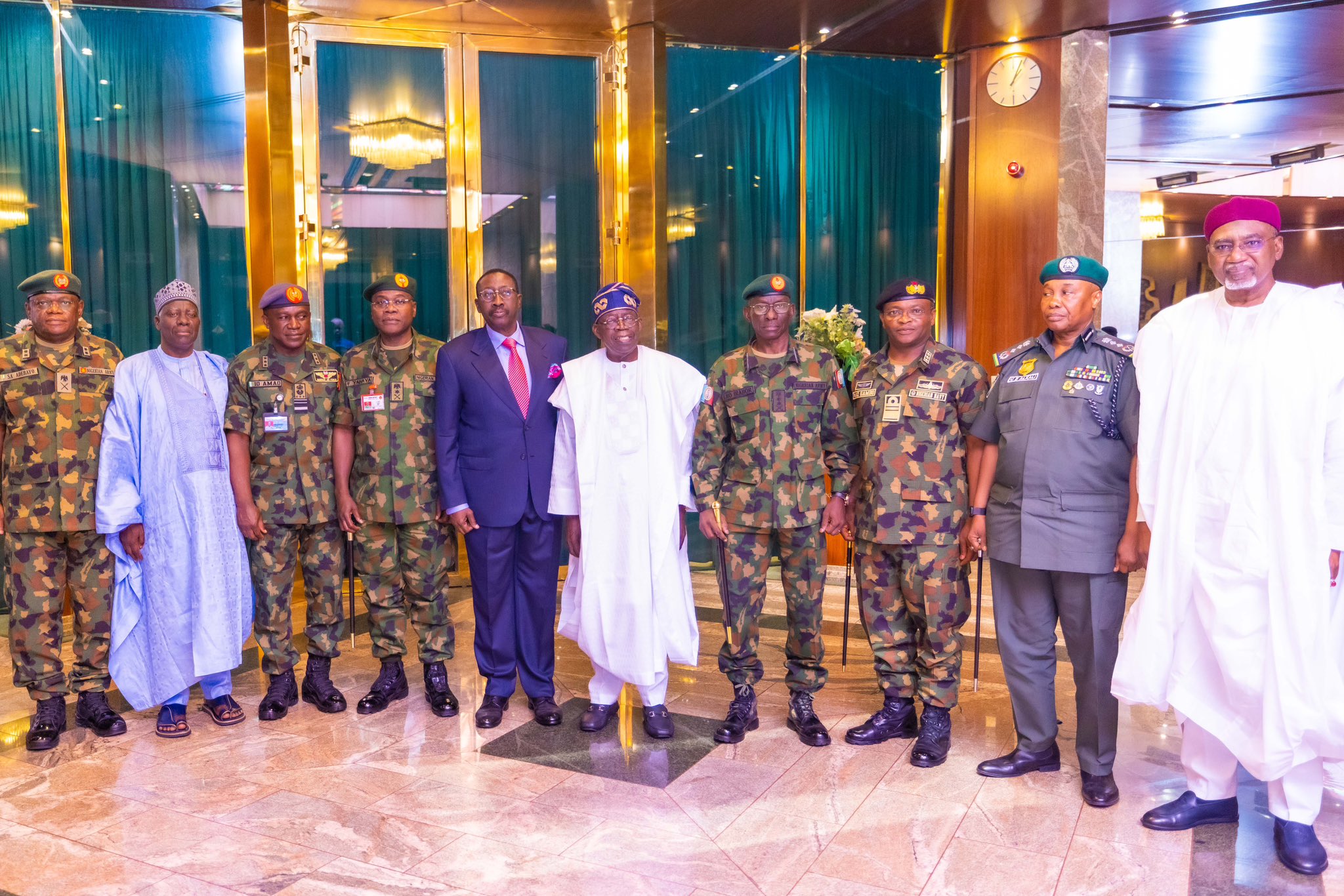
FG Moves to Review National Defence Policy, Strengthen Border Security and Veterans’ Welfare
Nigeria’s defence architecture is set for a strategic overhaul as the Federal Government reaffirmed its commitment to tightening border security, strengthening veterans’ welfare, and reviewing critical national defence policy documents to confront emerging security threats.
This development was disclosed by the Minister of Defence, Christopher Musa, while receiving members of the Alumni Association of the National Defence College (AANDEC) in Abuja. Details of the engagement were obtained by PulseNets through an official statement released Tuesday.
The Defence Minister noted that Nigeria’s national security environment remains fluid and increasingly complex, necessitating periodic and structured reviews of existing defence frameworks.
PulseNets learnt that foundational policy instruments, including the National Defence Policy (2017) and its Implementation Guidelines (2019), are due for comprehensive updates to align with evolving domestic and global security realities.
“Life is dynamic, and our security challenges are not static. Our Armed Forces and institutional frameworks must continuously adapt to stay ahead of emerging threats,” he said.
According to information obtained by PulseNets, the ministry will engage relevant authorities — including the Permanent Secretary and other strategic stakeholders — to initiate formal consultations aimed at reviewing critical defence policies and related regulatory instruments.
Border Security as National Security Priority
Speaking on border security, the minister identified effective border management as a cornerstone of Nigeria’s national security strategy. He emphasised the urgency of strengthening surveillance infrastructure and improving inter-agency coordination to track cross-border movements more efficiently.
PulseNets reported that the Defence Minister stressed the importance of accountability in monitoring inflows and outflows across Nigeria’s borders to curb transnational crimes.
“It is important that we know who is coming in, who is going out and what is entering our country. Strengthening border control will significantly curb transnational crimes and other forms of insecurity,” he said.
Security experts who spoke to PulseNets noted that enhanced border surveillance remains critical in addressing arms trafficking, irregular migration, and other cross-border threats affecting Nigeria’s internal stability.
Renewed Focus on Military Veterans’ Welfare
Beyond operational reforms, the Defence Ministry is also reviewing existing frameworks to improve post-service welfare for military veterans.
PulseNets learnt that the review will prioritise expanded healthcare access, improved welfare benefits, and strengthened institutional support systems for retired personnel, in line with global best practices in defence administration.
The minister underscored that personnel who have served Nigeria with distinction deserve structured and sustained post-service care.
AANDEC Seeks Stronger Institutional Partnership
Earlier during the visit, AANDEC President, Patrick Agholor, commended the minister for what he described as proactive leadership and a warm reception.
PulseNets gathered that AANDEC — an association of senior military officers and strategic-level experts — reiterated its readiness to support the Defence Ministry through research-based advisory services and high-level policy engagement.
Also Read: Defence Policy: Türkiye Targets $5bn Trade Volume With Nigeria as Tinubu, Erdoğan Sign 9 Strategic Agreements
Mr Agholor appealed for institutional backing to strengthen the association’s operational capacity, including logistics support, office infrastructure upgrades, and assistance in hosting a proposed national security summit.
He further reaffirmed the association’s commitment to collaborating with the ministry in deepening strategic thinking and advancing institutional reforms to confront Nigeria’s evolving security challenges.