Lassa Fever Claims 146 Lives, Infects 25 Doctors in Nigeria Within Three Months
Nigeria’s already overstretched healthcare system is facing intensified pressure as the outbreak of Lassa fever continues to expand nationwide, with no fewer than 146 deaths recorded and dozens of frontline medical workers infected, including doctors and nurses on the frontlines of containment efforts.
Health professionals are sounding urgent warnings over weak protective systems and institutional lapses, stressing that those battling the disease are increasingly becoming casualties themselves.
Data obtained by PulseNets from the Nigeria Centre for Disease Control and Prevention on Friday indicates that within 11 weeks, Nigeria confirmed 582 cases out of 3,222 suspected infections, with 146 fatalities already documented.
A state-by-state analysis of the deaths reveals a troubling pattern. Taraba State leads with 40 fatalities, followed by Ondo State with 31.
Bauchi State has recorded 25 deaths, while Plateau and Benue states each reported 11 fatalities. Edo State accounts for nine deaths, while Nasarawa State has recorded three.
The crisis is deepening within the medical community itself, as infections among healthcare personnel continue to rise sharply.
PulseNets learnt that the National Association of Resident Doctors confirmed at least 25 of its members have been infected, with one death already recorded.
Similarly, the Nigerian Medical Association disclosed that no fewer than 37 health workers nationwide have been affected, including three doctors who have died.
Lassa fever, an acute viral haemorrhagic illness endemic to West Africa, is caused by the Lassa virus and is primarily transmitted through exposure to food or household items contaminated by urine or faeces of infected Mastomys rats.
Human-to-human transmission remains a significant risk, particularly in healthcare environments where infection prevention protocols are weak or inconsistently applied.
Clinical symptoms range from mild fever and fatigue to severe complications such as bleeding, facial swelling, respiratory distress, and, in critical cases, shock and death.
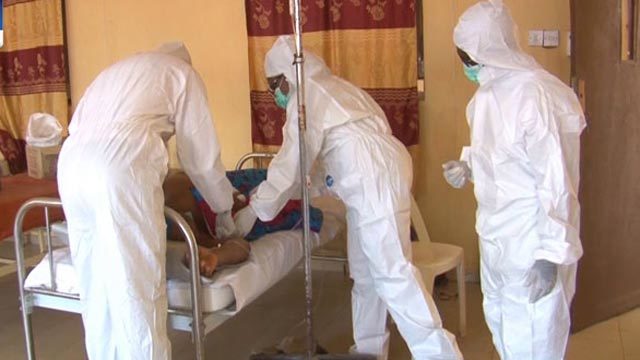
Medical experts say the growing number of infections among health workers reflects serious deficiencies in infection prevention systems, especially shortages and inconsistent usage of Personal Protective Equipment.
The President of the Nigerian Medical Association, Bala Audu, told PulseNets that while the outbreak follows a seasonal pattern, its current impact is unusually severe.
“Lassa fever is seasonal in this country from around October, November, December and beyond. The incidence had been falling over the last three to four years, but this year it has gone up again,” Audu said.
“We are not sure if there are more cases now or if surveillance has improved, but the devastating effect has been significant because the number of health workers affected is quite high.”
He confirmed that about 37 health workers, including doctors, nurses, and community health extension workers, have been infected.
“Among the doctors, there have been three deaths,” he added.
Audu emphasized that the disease is largely preventable but warned that gaps in compliance and access to protective equipment are putting lives at risk.
“It is a condition that is best prevented, and the best way to prevent it is to ensure the use of protective equipment. Every health facility must provide protective gear and also enforce its use.
“In some situations, facilities do not have protective equipment, and health workers are forced to manage patients, thereby putting themselves at risk. In other cases, the equipment may be available, but some health workers do not use it, which amounts to negligence of personal safety.”
On his part, the National Secretary of the National Association of Resident Doctors, Shuaibu Ibrahim, criticised authorities for failing to act decisively based on lessons from past outbreaks.
He told PulseNets that at least 25 doctors have been infected in the current outbreak cycle, with one death already recorded among members.
“Not only have some health workers been infected, but some have also died from the infection,” Ibrahim said.
“We are concerned because the outbreak reoccurs, and at this stage, we expect that lessons should have been learnt and preventive measures put in place.
“We are not satisfied with the government’s efforts in protecting health workers, particularly our members. The government has performed below expectations because we believe it should have gone beyond this stage by now.”
He further disclosed that the index case in the current cycle occurred about four months ago and led to the death of a doctor, yet infections have continued to rise.
“If appropriate measures had been taken, by now we should only have a very small number of infections,” he said.
PulseNets gathered that additional fatalities have been recorded among health workers outside the association, including a doctor in Benue State who contracted the virus while working in a private hospital.
Investigations by PulseNets show that several states are struggling to manage the surge in infections despite ongoing surveillance and intervention measures.
In Ondo State, one of the epicentres of the outbreak, over 20 deaths have been reported, with many patients currently receiving treatment at the Federal Medical Centre, Owo and the state government hospital in Akure.
A relative of one of the patients, Mrs Ariyo from Ifon in Ose Local Government Area, spoke to PulseNets on how her uncle became critically ill after returning from the farm.
“He was given herbal malaria treatment and asked to rest, but within 24 hours his condition worsened as he started vomiting and defecating, to the point that he lost consciousness. We quickly rushed him to FMC, where he is still receiving treatment,” she said.
A senior official at the Ondo State Ministry of Health, who spoke to PulseNets on condition of anonymity, confirmed the rising fatalities.
“We have hundreds of cases in Ondo State, while over 20 have died. Many are in state hospitals and FMC receiving treatment. We are also expecting results of some suspected cases from the state Public Health Laboratory in Akure to confirm the current figures,” the official disclosed.
In Benue State, the Commissioner for Health and Human Services, Paul Ogwuche, told PulseNets that the state has recorded 400 suspected cases, with 55 confirmed infections and 14 deaths.
He revealed that 11 health workers have been affected, including fatalities among frontline personnel.
“So far, five doctors and six other health workers have been infected. This is human-to-human transmission, and the gap lies in infection prevention lapses. Two doctors, two nurses, and a porter are among the fatalities,” Ogwuche said.
At the Benue State University Teaching Hospital, the Chairman of the Medical Advisory Committee, Michael Agbir, described the current trend as unusually severe compared to previous years.
Between January and February 2026, the hospital recorded 28 admissions, with 17 confirmed cases and three deaths.
Meanwhile, the Chief Medical Director of the Federal Medical Centre, Apir, Joseph Kontor, told PulseNets that erratic electricity supply is significantly affecting operations at isolation centres.
Also Read: Lassa Fever: Rivers State Confirms Outbreak As One Dies
In Bauchi State, authorities say emergency response protocols have been activated to curb the spread of the disease.
PulseNets learnt from Ibrahim Sani, Information Officer of the State Primary Health Care Board, that an incident action plan has been developed to strengthen surveillance and response systems.
He added that monitoring and contact tracing efforts have been intensified across affected local government areas, including Kirfi, Tafawa Balewa, Toro, Itas Gadau, Misau, and Katagum.