Burkina Faso’s Traoré Becomes First AES Leader to Receive Biometric Regional ID
Burkina Faso’s President Ibrahim Traoré on Monday became the first leader of the Alliance of Sahel States (AES) to receive the bloc’s newly launched biometric identity card, marking a significant step in efforts to unify citizenship and strengthen institutional independence after the bloc’s withdrawal from the Economic Community of West African States (ECOWAS).
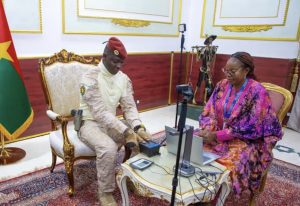
The card was handed over to President Traoré by Burkina Faso’s Security Minister, Mahamoudou Sana, in a ceremony that PulseNets learnt is expected to kick off a broader rollout across AES member countries.
According to official reports obtained by PulseNets, the Council of Ministers had formally approved the launch of the AES biometric ID card on November 6, 2025, as part of Burkina Faso’s modernization of its national identification system.
The new card, valid for 10 years, incorporates advanced biometric features designed to enhance security and streamline citizens’ access to public services. It also demonstrates Burkina Faso’s commitment to regional integration with AES partners Mali and Niger.
“The AES biometric identity card is more than a document; it is a symbol of our shared future in the Sahel and our determination to ensure secure, reliable identification for all citizens,” President Traoré told PulseNets during the handover ceremony.
PulseNets spoke to sources within the security ministry, who confirmed that the AES biometric ID meets international standards, will be issued to all citizens from the age of five, and is designed to facilitate access to social services while safeguarding personal data. A five-year transitional period will allow previously issued IDs to remain valid across AES countries before being fully phased out.
The Council of Ministers also adopted two decrees formalizing these reforms. PulseNets obtained official documentation showing that ECOWAS logos have been removed from passports, reflecting Burkina Faso’s political shift toward AES membership and signaling the bloc’s growing institutional autonomy.
Earlier in 2025, AES launched a unified biometric passport, the first joint travel document for Burkina Faso, Mali, and Niger. The issuance of the first AES biometric ID card now complements this move, consolidating the bloc’s withdrawal from ECOWAS and asserting a distinct regional identity.
PulseNets learnt that the new biometric documents include electronic chips storing biometric data and comply with International Civil Aviation Organization (ICAO) standards. They will serve as the primary legal identification for Burkinabe citizens and, by extension, for nationals across the AES confederation.
Also Read: Burkina Faso Junta Traoré Criminalises Homosexuality with New Law
Security experts and policymakers told PulseNets that the AES identity-document reform will strengthen national security, improve data integrity, and facilitate access to public and private services throughout the Sahel region.
The rollout in Burkina Faso is expected to be followed by similar distributions in Mali and Niger. AES leaders described the initiative as a strategic assertion of sovereignty and a foundation for regional projects, including cross-border trade, infrastructure development, and citizen mobility programs.