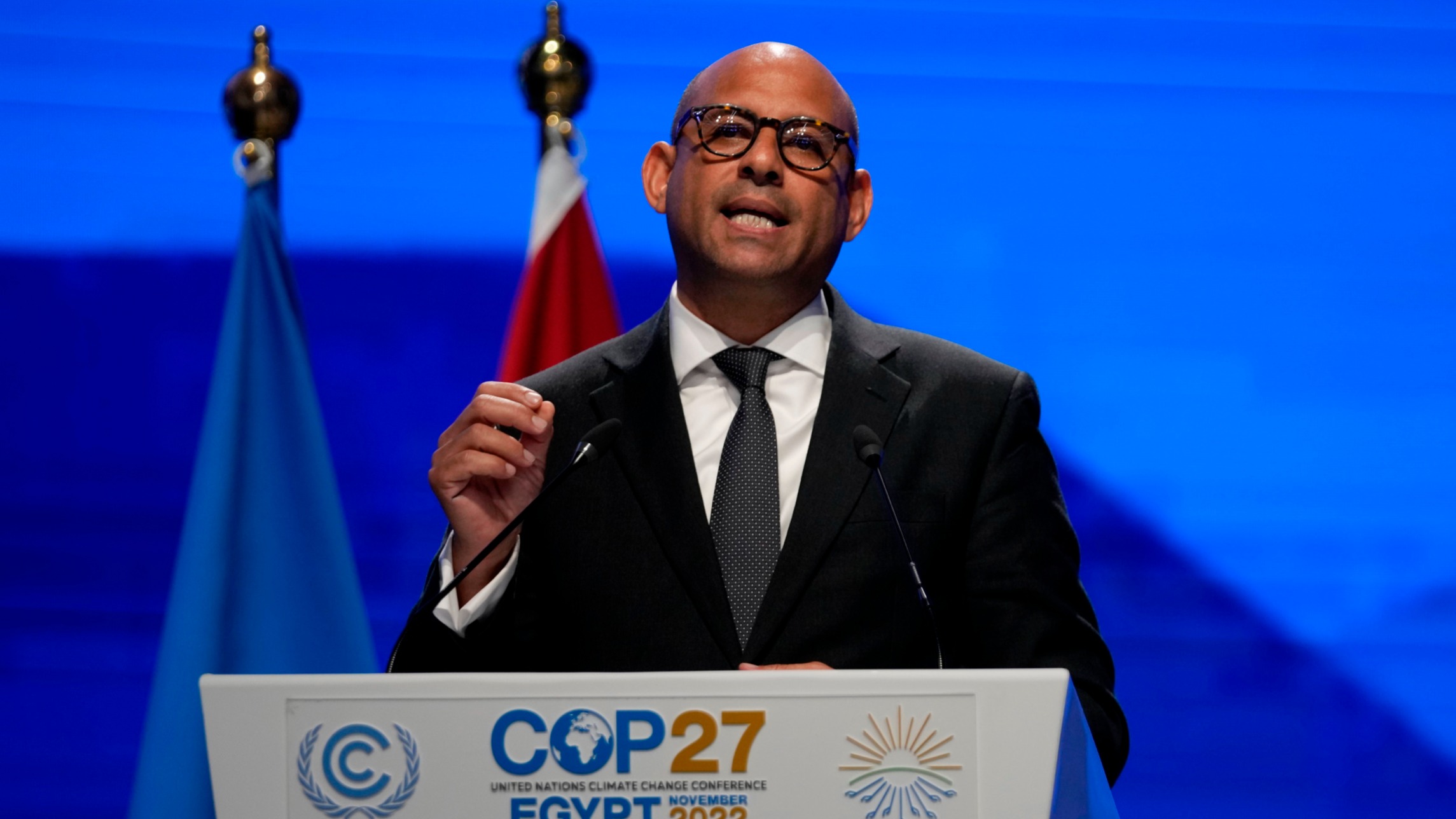
We need to transform approaches to climate change, biodiversity — Simon Stiell
The United Nations Climate Change Executive Secretary, Simon Stiell, has urged nations to transform their approaches to the fight against “Climate change and Biodiversity” loses by adopting climate-smart biodiversity policies and efficient resource allocation.
The UN official made the call while delivering his address on the occasion of International Day for Biological Diversity on Monday.
He said: “As we mark this year’s International Day for Biological Diversity, we acknowledge the intrinsic connection between biodiversity and climate change.
“The relationship is cyclical: a stable climate is the foundation for healthy and thriving biodiversity, which is critical to stabilise the climate system and ensure the long-term wellbeing of all, including nature and future generations,” Mr Stiell said.
He noted that nature, agriculture, human development and society are all linked, all at risk, and all part of a self-reinforcing cycle.
Mr Stiell explained that actions to meet the goals of the Paris Agreement must reinforce the Kunming-Montreal Global Biodiversity Framework, by ensuring that measures to tackle emissions such as planting trees also support efforts to maintain and enrich biodiversity.
Likewise, he said efforts to implement the Framework must strengthen the fight against negative climate change impacts.
“The parent conventions of the Paris Agreement and the Kunming-Montreal Global Biodiversity Framework are sisters, two of three conventions meant to safeguard the liveability of the planet,” he added.
The Paris Agreement notes the importance of ensuring the integrity of all ecosystems, including oceans, and the protection of biodiversity, recognized by some cultures as Mother Earth, the official said.
Unsustainable actions and untapped opportunities
In his remarks, the UN secretary General, Antonio Guterres, emphasised that the existence of humanity is dependent on a healthy environment.
“From the air we breathe and the food we eat, to the energy that fuels us and the medicines that heal us, our lives are wholly dependent on healthy ecosystems,” he said, adding that “Yet our actions are devastating every corner of the planet.”
He said: “One million species are at risk of extinction — the result of habitat degradation, skyrocketing pollution, and the worsening climate crisis.”
“We must end this war on nature,” he added.
Mr Guterres stressed that last year’s agreement on the Kunming-Montreal Global Biodiversity Framework marked an important step, but that now is the time to move from agreement to action.
This, he said, could be achieved by ensuring sustainable production and consumption patterns.
Also, the UN chief said sustainable environmental practices can be achieved by pushing governments and businesses to take stronger and faster action against biodiversity loss and the climate crisis.
On his part, Mr Stiell said nations have opportunities to transform the global approach to climate change and biodiversity and build mutual support between National Adaptation Plans and National Biodiversity Strategy and Action Plans.
“We can optimise co-benefits and synergies of finance targeting the biodiversity and climate crises – one of the specific targets of the Kunming-Montreal Global Biodiversity Framework,” he noted, saying “We know we can do much more – and we need to do much more.”
Call for action
As nations strive to achieve global climate goals and live in harmony with nature, the UN Climate Change Head urged countries to take concrete and collective actions, such as strengthening cooperation among Parties, indigenous peoples, local communities, and other relevant entities to stabilise the climate system and reverse biodiversity decline.
Also Read: Russia retaliates, bans Obama, 499 US Citizens over US sanctions
Mr Stiell said nations should foster mindset change to restore and maintain the health of all ecosystems in a timely and culturally appropriate manner, and engage diverse knowledge systems and practices, including that of the indigenous peoples to transform the global approach to climate change and biodiversity.
“Together, we can set ourselves on a path to build a resilient future where all life thrives,” he said.
This report is produced in fulfilment of the UNESCO & CIJ London Climate Change in News Media project facilitated by CJID.