Interpol Rejects EFCC’s Politically-Motivated Wanted Alert Against Atiku’s Son-in-Law
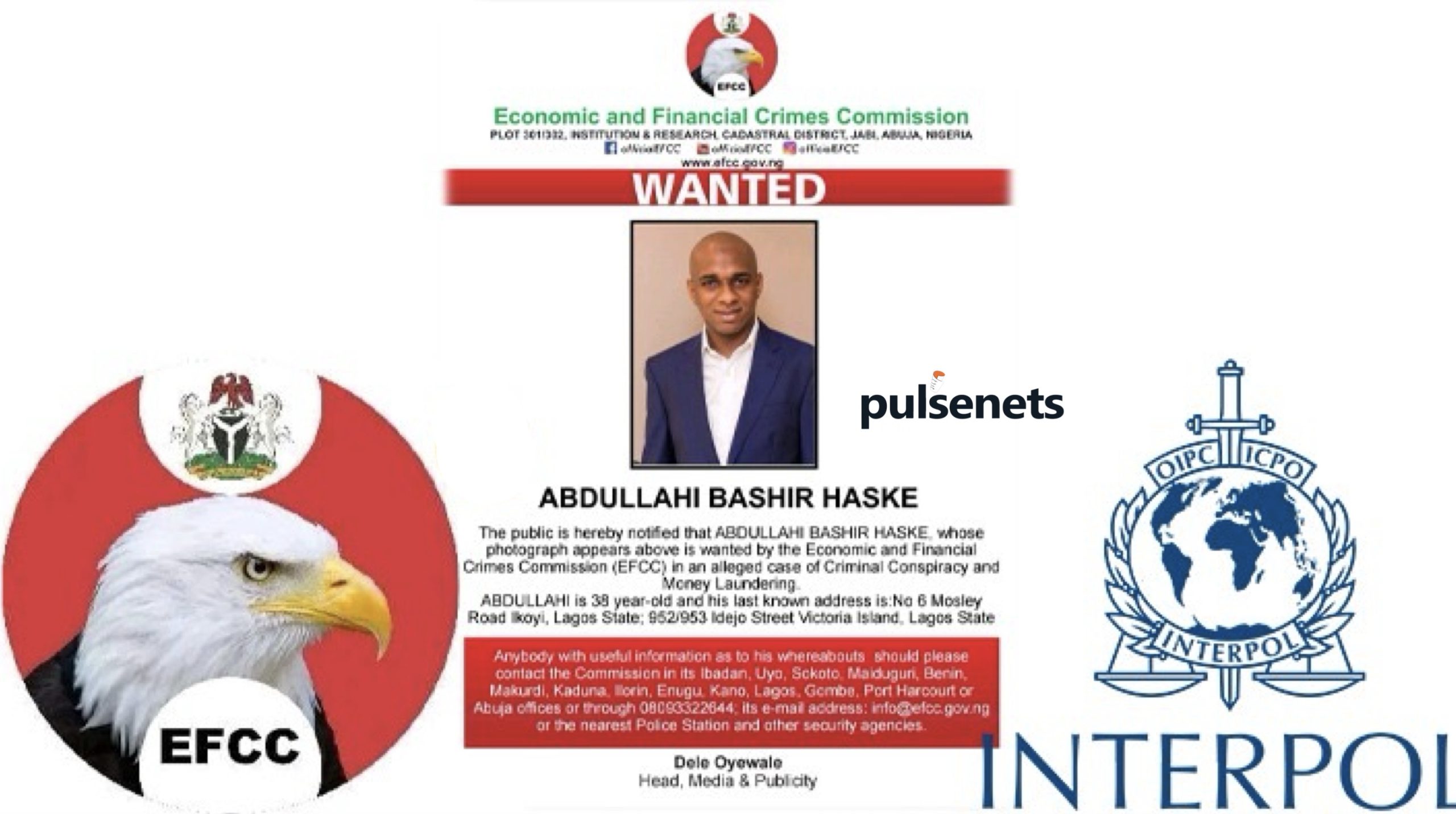
The International Criminal Police Organisation, Interpol, has rejected a wanted alert issued by Nigeria’s embattled anti-graft agency, the EFCC, against Bashir Haske, a Lagos businessman and son-in-law to opposition leader Atiku Abubakar.
PulseNets learnt on Friday that Interpol, renowned globally for tracking down fugitives across its 196 member nations, described the EFCC’s move as politically motivated and in violation of its constitutional mandate.
“Please note that Interpol has no plans to help member countries to advance politically-motivated cases,” the France-based organisation stated in a Friday morning email to Peoples Gazette, stressing that it was fully aware of Mr Abubakar’s position as Nigeria’s opposition leader.
Mr Abubakar, a former Vice President, was the main challenger in the 2023 presidential election and has recently been instrumental in forming a new opposition coalition to contest President Bola Tinubu’s grip on power ahead of 2027.
In its official response, Interpol further clarified:
“Please note that INTERPOL will only issue a Red Notice if it complies with the organisation’s rules and Constitution, which notably forbids INTERPOL from issuing a Notice on political, religious, racial or military grounds.”
The Lyon-based agency added that while member countries can recommend criminal targets, only requests that strictly comply with its stringent regulations will be honoured to safeguard fundamental human rights.
EFCC’s Defiance of Court Order
PulseNets learnt that the EFCC declared Mr Haske wanted late Thursday night over alleged money laundering, despite a federal court ruling against such actions. Sources familiar with the matter told PulseNets that the move was part of a broader campaign to weaponise his marital ties to Atiku Abubakar’s daughter in order to seize control of Nigeria’s oil giant, the NNPC.
Just weeks earlier, The Gazette reported how EFCC chairman Ola Olukoyede, under pressure from political interests, attempted to force the resignation of NNPC’s CEO, Bayo Ojulari. The plot collapsed only after First Lady Remi Tinubu intervened, neutralising the influence of President Tinubu’s long-time associate, Olatimbo Ayinde.
Neither Mr Haske nor NNPC spokespeople were immediately available to comment on the development. Meanwhile, sources told PulseNets that Mr Haske may have quietly left Nigeria following his brief detention last month.
Power Struggles and Political Weaponisation
Ms Ayinde, currently facing bribery and corruption charges in the UK, has been relentlessly lobbying to remove Mr Ojulari from the helm of NNPC. PulseNets learnt that the EFCC, under Olukoyede, has been one of the instruments deployed to advance this agenda.
Although Mr Olukoyede did not deny attempts to leverage Mr Haske’s family ties in his manoeuvres at NNPC, he argued that The Gazette’s reporting “painted him in a bad light” and demanded a retraction—a request the paper rejected while standing firmly by its investigation.
EFCC’s Damaged Credibility
For decades, the EFCC has been accused of being weaponised by ruling parties against political opponents. Established in 2003 under President Olusegun Obasanjo, the agency has long been dismissed by Nigerians as a corrupt, lazy, and politically compromised outfit rather than a credible anti-graft institution.
Mr Olukoyede recently defended the agency from allegations of partisanship, but as PulseNets reported, overwhelming public evidence shows the EFCC often shields allies of the sitting president while going after opposition figures with media-driven theatrics.
Only last month, a federal judge rebuked the EFCC for indulging in “insatiable media trials” rather than building solid prosecutorial cases as practised in countries with stronger judicial standards.
Also Read: Nigerian govt and INTERPOL commence extradition process for Binance chief Nadeem Anjarwalla
It remains unclear whether the EFCC officially requested Interpol’s cooperation in pursuing Mr Haske. However, Interpol’s decision to swiftly dismiss any involvement has further exposed the erosion of credibility within Nigeria’s anti-graft framework.
By refusing to lend its name to what it categorically described as a politically-motivated case, Interpol has not only discredited EFCC’s actions but also reinforced global concerns that Nigeria’s anti-corruption drive remains a blunt political weapon rather than a transparent institution of justice.