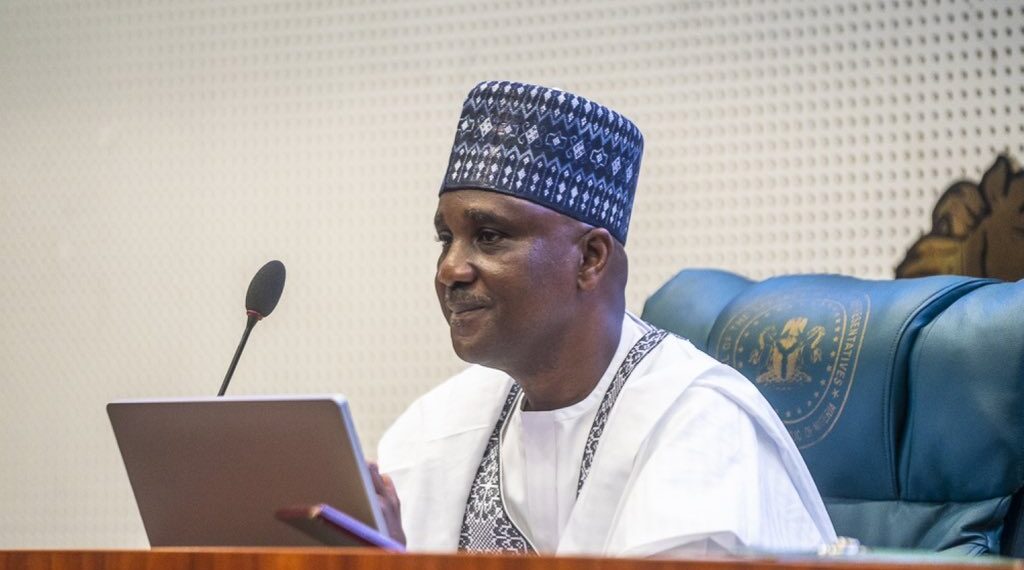
Nigeria’s Debt Alarming, We Must Reject Reckless Borrowing — Reps Speaker
Reckless Borrowing — The Speaker of the House of Representatives, Rt. Hon. Abbas Tajudeen, has raised fresh alarms over Nigeria’s soaring debt burden, warning that the country’s liabilities have now crossed the legal debt threshold and threaten long-term fiscal sustainability.
Speaking on Monday at the 11th Annual Conference and General Assembly of the West Africa Association of Public Accounts Committees (WAAPAC) in Abuja, Abbas disclosed that Nigeria’s total public debt had climbed to ₦149.39 trillion (about $97 billion) in the first quarter of 2025, up from ₦121.7 trillion in the same period last year.
According to figures obtained by PulseNets, the Speaker stressed that Nigeria’s debt-to-GDP ratio now stands at 52 percent, far above the statutory benchmark of 40 percent.
In his words, “By the first quarter of 2025, Nigeria’s debt reached ₦149.39 trillion, roughly $97 billion. This marks a sharp increase from ₦121.7 trillion just a year earlier, a clear sign of how quickly the burden is rising. More worrisome is our debt-to-GDP ratio, now about 52 percent, well beyond the 40 percent ceiling prescribed by our laws,” Abbas said.
PulseNets reports that the Speaker described the breach as a direct threat to Nigeria’s fiscal stability, calling for tighter parliamentary oversight, transparent borrowing practices, and reforms that ensure every loan translates into measurable social and economic development.
He warned that across Africa, “many countries are now paying more on debt servicing than on healthcare and other vital services. Nigeria must not allow itself to fall into that trap.”
New Oversight Framework on Debt
To tackle the fiscal dangers, Abbas told PulseNets that the Nigerian parliament will spearhead the creation of a West African Parliamentary Debt Oversight Framework under WAAPAC.
The framework, he explained, will standardise debt reporting across the sub-region, set strong transparency benchmarks, and provide lawmakers with reliable data to scrutinise borrowing decisions.
In addition, he revealed plans for a regional capacity-building programme designed to sharpen skills in debt sustainability analysis and fiscal risk management among parliamentary committees.
Loans Must Create Jobs and Reduce Poverty
Abbas further stressed that Nigeria’s borrowing should be purposeful, targeted, and tied strictly to projects that uplift citizens.
“Borrowing must be channelled into infrastructure, education, healthcare, and industries that generate jobs and reduce poverty. Reckless debts driven by consumption or corruption must never be tolerated,” the Speaker emphasised.
Also Read: FG Reckless Borrowing N30trn from CBN, inexperienced boy owned private jet under Buhari — Sanusi
Reaffirming the 10th House’s stand on accountability, Abbas told PulseNets that under the Open Parliament Policy, all major loan proposals will be subjected to public hearings, while simplified debt reports will be released to Nigerians for transparency.
The Speaker’s warning comes at a time when international rating agencies and economists continue to flag Nigeria’s debt service-to-revenue ratio as one of the highest in the world, further underscoring the urgency of his call.