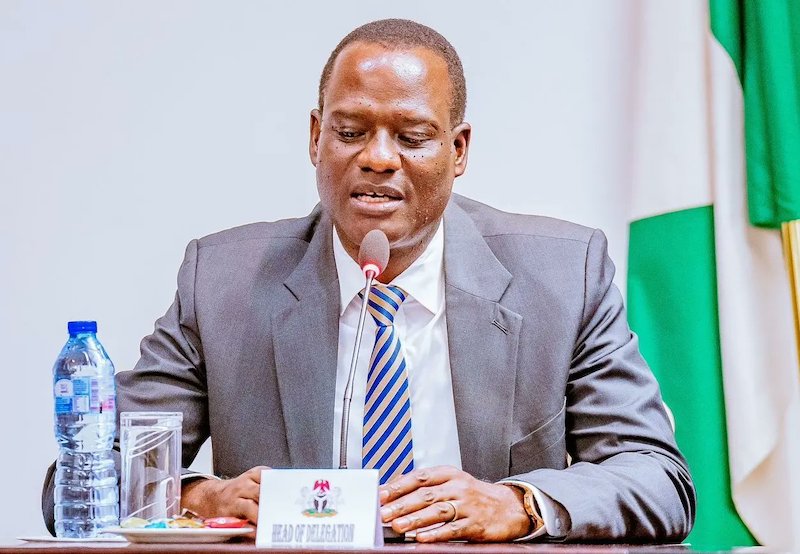
Oyedele Warns States: Rising Revenues, Deepening Poverty — Fiscal Reforms Needed for Real Prosperity
The Chairman of the Presidential Fiscal Policy and Tax Reforms Committee (PFPTRC), Mr. Taiwo Oyedele, has expressed deep concern that despite Nigeria’s ongoing fiscal expansion driven by recent reforms, poverty remains widespread across the country.
Speaking in Abuja during the launch of BudgIT’s 2025 State of States Report themed “A Decade of Subnational Fiscal Analysis: Growth, Decline and Middling Performance”, Oyedele told PulseNets that although states are currently experiencing unprecedented increases in revenue inflows, these have yet to translate into tangible improvements in citizens’ living standards.
“States are receiving more money than ever before. But there’s a paradox — while governments now have more naira, ordinary Nigerians have far less disposable income in their pockets,” Oyedele lamented.
PulseNets obtained that the PFPTRC boss further hinted that by 2026, when the new VAT reforms take effect, the states’ share is expected to rise to 55 per cent, equivalent to about ₦4 trillion.
“It is a sobering reminder that fiscal abundance does not automatically translate into social prosperity,” he said. “We must be intentional in turning positive macroeconomic outcomes into meaningful micro benefits for the people.”
States’ Revenues Surge but Impact Remains Weak
According to the report obtained by PulseNets, the combined revenue of 35 states soared by 31.2 per cent, reaching ₦17.17 trillion in 2024, up from ₦8.66 trillion in 2023. Lagos topped the chart with ₦2.24 trillion, representing 13.04 per cent of the cumulative revenue, while FAAC collections grew by an impressive 110.74 per cent to ₦11.38 trillion in 2024.
Despite this increase, 30 states—excluding Lagos, Ogun, and Enugu—still relied on FAAC allocations for at least 60 per cent of their recurrent revenues, with 31 states depending on federal transfers for up to 80 per cent.
“In other words, FAAC dependency has deepened,” Oyedele noted.
Few States Show Fiscal Resilience
However, the committee chairman told PulseNets that some states demonstrated remarkable fiscal progress. Enugu recorded a 381 per cent growth in Internally Generated Revenue (IGR), Bayelsa achieved 174 per cent, and Abia improved by 129 per cent, while Lagos, Ogun, Kwara, Anambra, and Edo maintained steady resilience.
He stressed that these states are gradually reducing their over-reliance on federal transfers and improving fiscal autonomy.
“The real test of progress is whether states can turn current windfalls into sustainable fiscal spaces and use their resources wisely to deliver shared prosperity,” Oyedele remarked.
He added that new tax reform laws now provide states with opportunities to benefit from increased VAT allocations, electronic money transfer levies, and tax exemptions on state bonds, which can reduce borrowing costs and close revenue gaps.
Spending Patterns Reveal Misplaced Priorities
PulseNets learnt that total state expenditure rose sharply to nearly ₦16 trillion in 2024, with capital expenditure surpassing recurrent spending for the first time in several years. However, Oyedele noted worrying gaps in social spending.
“States implemented only two-thirds of their education budgets, spending less than ₦7,000 per citizen. In health, implementation was even lower at 62 per cent — just ₦3,500 per citizen,” he disclosed.
“This is the uncomfortable truth: too many states are still prioritising recurrent costs and uncontrolled overheads over classrooms and clinics. No society can prosper if its people are unskilled and unhealthy.”
Debt Reduction and Persistent Arrears
Oyedele reported that 31 states successfully reduced their domestic debt stock, with total domestic debt falling by ₦2 trillion and foreign debt by $200 million — a sign of fiscal restraint. However, Lagos and Edo still shoulder debt burdens exceeding ₦100,000 per citizen, while nationwide, states owe over ₦1.2 trillion in arrears to pensioners, contractors, and workers.
“Borrowing isn’t the problem,” he clarified. “Unproductive use of debt is. Borrowing is good when it builds infrastructure, creates jobs, and stimulates productivity.”
Breakdown of IGR Growth and Expenditure
According to data obtained by PulseNets, aggregate IGR across states increased by 52.52 per cent to ₦3.02 trillion in 2024, from ₦1.92 trillion the previous year. Tax revenue accounted for 66.58 per cent of cumulative IGR, while non-tax revenue made up 33.42 per cent.
Lagos and Ogun collectively generated ₦1.26 trillion and ₦194.93 billion, equivalent to the IGR of 24 other states combined. Enugu led all states with a record 381.44 per cent growth, while Kebbi recorded the sharpest decline.
Total subnational expenditure surged 64.69 per cent to ₦15.63 trillion in 2024, with operating expenses forming 41.96 per cent of that figure.
Call for Fiscal Reforms and Smart Investments
On the way forward, Oyedele told PulseNets,
“We must rethink fiscal federalism and revenue reform. States should harmonise taxes, digitise collection systems, and invest in the informal economy instead of taxing vulnerable citizens.”
He urged states to shift from mere consumption to strategic investment in education, healthcare, and productive infrastructure.
“Borrow less for recurrent spending and more for infrastructure that yields long-term benefits. The new VAT reforms will raise states’ share to 55 per cent — roughly ₦4 trillion in 2026. The question is, will it be spent or invested?”
He concluded with a stern warning:
“Nigeria cannot afford another decade of mediocrity. States must rise above survival mode and create prosperity that is inclusive and sustainable.”
CBN and BudgIT React
CBN Deputy Governor for Economic Policy, Dr. Muhammad Abdullahi, told PulseNets that market normalisation and improved policy credibility were driving capital inflows back into Nigeria, with a 62 per cent year-on-year increase in total capital importation.
He urged state governments to complete 100 per cent Treasury Single Account (TSA) integration to close leakages, broaden their revenue bases instead of hiking taxes, and harmonise local tax structures to ease burdens on small businesses.
“Windfalls only become dividends through discipline, transparency, and human capital investment,” Abdullahi said.
Also Read: Tax Reform Bills to Become Law by Q1 2025, Implementation Begins July — Taiwo Oyedele
BudgIT Global Director, Oluseun Onigbinde, also spoke to PulseNets, stating that the report reflects the fiscal choices being made at subnational levels.
“Every kobo meant for citizens should be traceable, justified, and used to improve lives,” he said. “Transparency has become a competitive advantage, and data has become the lever for accountability.”
He added that the State of States Report serves as “a public resource, a call to action, and a roadmap for reform,” emphasising that “Nigeria’s prosperity must be driven not only in Abuja but across all federating states.”