Saudi Arabia Quietly Permits Alcohol Sales to Wealthy Nigerians, Foreign Expats Under Premium Residency
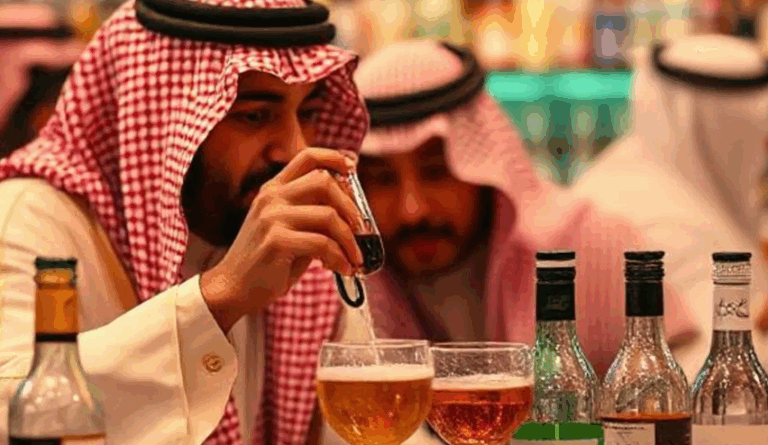
Saudi Arabia appears to be quietly allowing the sale of alcohol to affluent foreign residents, despite more than seven decades of prohibition. According to a recent report by a major international outlet, a liquor store in Riyadh has been offering whiskey and champagne to non‑Muslim foreigners with “premium residency.”
The “premium residency” is a special permit usually granted to wealthy or highly educated expatriates working for strategic sectors or government‑owned entities. PulseNets learnt from interviews cited in that report that some of these high‑status expats have been buying alcoholic beverages from the Riyadh shop.
Though the government has made no public statement announcing any change to its strict alcohol policy, customers leaving the store described chaotic scenes of eager buyers crowding the aisles — many purchasing thousands of dollars’ worth of liquor. Several customers told PulseNets they noticed a dual‑pricing system: diplomats were charged one tier of prices, while premium residency holders paid an even higher rate.
It remains unclear who owns the store, but details about its mode of operation suggest possible government involvement. Among those with knowledge of the matter, one source told PulseNets that entry required showing residency documents and salary proof before purchases could be made.
For decades, Saudi Arabia was known for its strict enforcement of Islamic‑based social rules — including bans on alcohol sales, restrictions on women driving, and strict dress codes. Over recent years, many of those policies have been loosened: mixed‑gender concerts are held, women now freely drive, work, and travel abroad. Yet, until recently, alcohol remained banned for everyone, with exceptions for diplomats who imported drinks via official consignments.
The kingdom first opened a licensed liquor store in Riyadh’s diplomatic quarter in early 2024 — the first of its kind in more than 70 years. That outlet was initially reserved for non‑Muslim diplomats.
Also Read: Saudi Arabia overtakes China and India as Kenya’s largest import market
Now, as reported by multiple sources and corroborated by several expatriates, access has quietly expanded to include non‑Muslim foreign residents with premium residency. “I went there a few days ago and it actually worked,” one premium visa‑holder told reporters. “It saved me a lot of money rather than buying from the black market.”
This shift — although unannounced officially — appears part of a broader drive under the vision of modernisation and economic diversification, designed to attract foreign professionals and investors while managing social transformation carefully.