Sokoto, Bayelsa, Gombe Tops List of States in Multidimensional Poverty
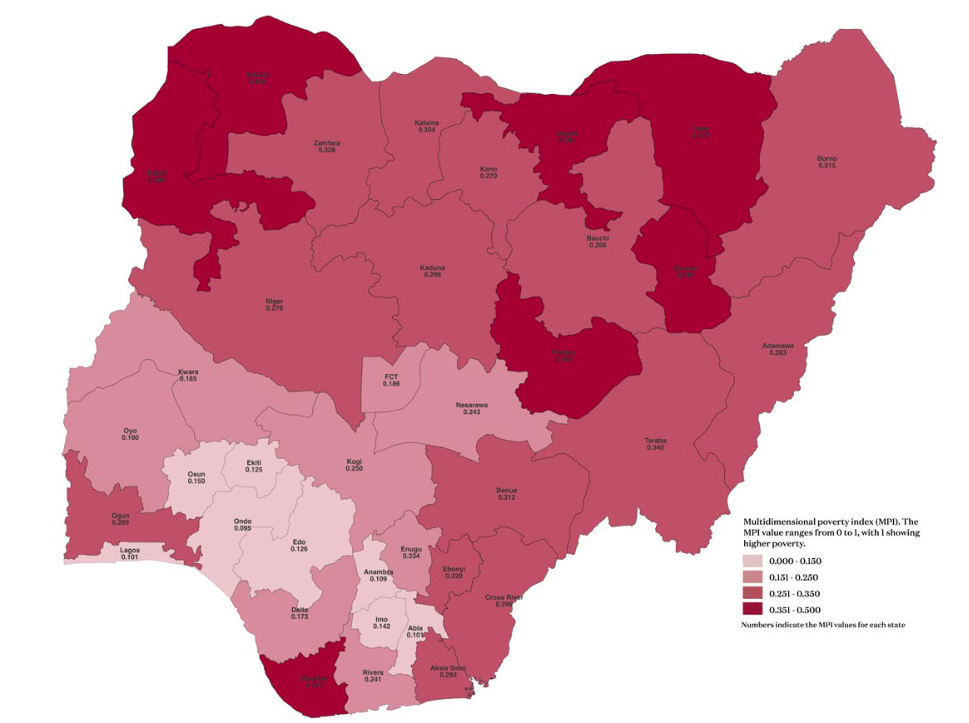
Abuja —The latest National Multidimensional Poverty Index (NMPI 2022) that poverty levels across Nigeria remain alarming, with Sokoto, Bayelsa, and Gombe officially ranked as the hardest-hit states.
The report obtained by PulseNets shows that nine out of every ten people in Sokoto (90.5%) live in multidimensional poverty, cementing its position as the poorest state in the federation. Bayelsa follows with 88.5 percent, while Gombe records 86.2 percent, confirming the spread of deprivation in both northern and southern regions.
Top 10 Poorest States in Nigeria (NMPI 2022)
-
Sokoto – 90.5%
-
Bayelsa – 88.5%
-
Gombe – 86.2%
-
Jigawa – 84.3%
-
Plateau – 84%
-
Yobe – 83.5%
-
Kebbi – 82.2%
-
Taraba – 79.4%
-
Ebonyi – 78%
-
Zamfara – 78%
Unlike traditional poverty measures that only consider income, the NMPI 2022 report captures a broader reality. It measures access to education, healthcare, housing, sanitation, electricity, and clean water. PulseNets learnt that this wider approach exposes how millions of households are excluded from basic human development opportunities.
States With Mid-Level Poverty
Moderate poverty levels were recorded in states such as Cross River (75.4%), Benue (75%), Bauchi (73.9%), and Kaduna (73.9%). Interestingly, oil-rich Rivers State showed a poverty rate of 62.4 percent. Experts who spoke to PulseNets described this as “a painful paradox of resource wealth without human development.”
States With Lower Poverty Rates
At the other end of the index, Ondo (27.2%), Lagos (29.4%), Abia (29.8%), Anambra (32.1%), Edo (35.4%), and Ekiti (36%) appear among the least poor. While these figures are lower compared to the national average, PulseNets learnt that over a quarter of residents in these states still live in poverty, pointing to deep structural challenges nationwide.
Nigeria’s National Poverty Picture
According to the report obtained by PulseNets, 63 percent of Nigerians — about 133 million people — are multidimensionally poor. This means poverty in Nigeria is not only about low income but also about deprivation in nutrition, education, healthcare, electricity, clean water, and sanitation.
Key Implications
-
Regional Divide: Northern states dominate the top poverty rankings, but the inclusion of Bayelsa among the poorest highlights that southern states are not spared.
-
Policy Concerns: Experts told PulseNets that unless urgent reforms are rolled out in education, healthcare, and job creation, inequality may worsen and poverty could become entrenched.
-
Oil Wealth Contradiction: Bayelsa and Rivers, despite their oil reserves, appear prominently among poverty-stricken states. Analysts who spoke to PulseNets described this as “a governance failure that underscores Nigeria’s resource mismanagement.”
Full List of Multidimensional Poverty Levels by State (NMPI 2022)
Top 10 Poorest States in Nigeria (NMPI 2022)
| Rank | State | % in Multidimensional Poverty |
|---|---|---|
| 1 | Sokoto | 90.5% |
| 2 | Bayelsa | 88.5% |
| 3 | Gombe | 86.2% |
| 4 | Jigawa | 84.3% |
| 5 | Plateau | 84% |
| 6 | Yobe | 83.5% |
| 7 | Kebbi | 82.2% |
| 8 | Taraba | 79.4% |
| 9 | Ebonyi | 78% |
| 10 | Zamfara | 78% |
States With Mid-Level Poverty Rates
| Rank | State | % in Multidimensional Poverty |
|---|---|---|
| 11 | Cross River | 75.4% |
| 12 | Benue | 75% |
| 13 | Bauchi | 73.9% |
| 14 | Kaduna | 73.9% |
| 15 | Katsina | 72.7% |
| 16 | Borno | 72.5% |
| 17 | Akwa Ibom | 71.3% |
| 18 | Niger | 69.1% |
| 19 | Adamawa | 68.7% |
| 20 | Ogun | 68.1% |
| 21 | Kano | 66.3% |
| 22 | Enugu | 63.1% |
| 23 | Rivers | 62.4% |
| 24 | Kogi | 61.3% |
| 25 | Nasarawa | 60.7% |
States With Lower Poverty Levels
| Rank | State | % in Multidimensional Poverty |
|---|---|---|
| 26 | Oyo | 48.7% |
| 27 | Kwara | 48.3% |
| 28 | FCT (Abuja) | 48.3% |
| 29 | Delta | 47.6% |
| 30 | Imo | 40.7% |
| 31 | Osun | 40.7% |
| 32 | Ekiti | 36% |
| 33 | Edo | 35.4% |
| 34 | Anambra | 32.1% |
| 35 | Abia | 29.8% |
| 36 | Lagos | 29.4% |
| 37 | Ondo | 27.2% |
Also Read: 133 million poverty index: Twists and turns as FG and states exchange blame
PulseNets learnt that the NMPI 2022 findings are a wake-up call for Nigeria. With nearly two-thirds of the population trapped in multidimensional poverty, the challenge goes beyond handouts or temporary interventions. Experts insist that bold reforms in governance, infrastructure, education, and healthcare remain the only path out of poverty.