Tax Reforms: Why Nigerians Are Afraid of January 2026 Implementation — Oyedele Explains
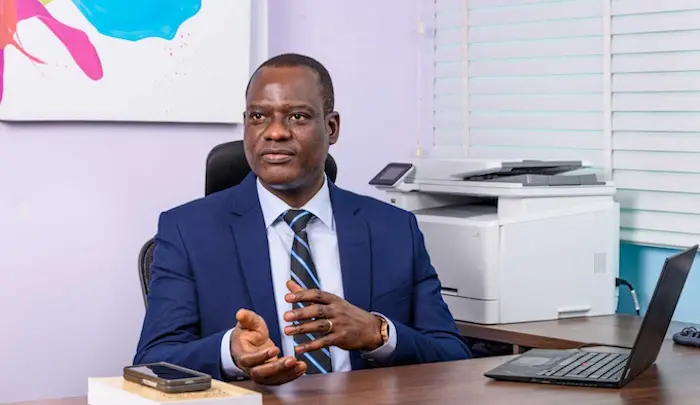
Public anxiety surrounding Nigeria’s incoming tax reforms ahead of their January 2026 implementation is largely rooted in poor awareness rather than new policy shocks, Taiwo Oyedele, chairman of the Presidential Fiscal Policy and Tax Reforms Committee, has said.
Oyedele made this clarification while speaking to journalists over the weekend, explaining that many Nigerians are encountering long-standing tax provisions for the first time. PulseNets learnt that the growing panic is being driven by widespread misconceptions about what the reforms actually introduce and how they affect individual bank accounts.
According to Oyedele, much of the information currently circulating about the Tax Identification Number (TIN), taxpayer registration requirements, and banks’ obligation to submit periodic reports on customers’ accounts is not new. He noted that these provisions are already contained in the Finance Act of 2020.
“The challenge we have is that tax awareness in Nigeria is extremely low,” Oyedele told PulseNets. “People are just finding out about many of these requirements for the first time and assuming that the new tax law is introducing them. That is simply not the case.”
PulseNets obtained that concerns over possible deductions from bank accounts have been a major source of fear, particularly among salaried workers, entrepreneurs, and informal sector operators. Oyedele, however, dismissed claims that the new framework gives banks or government agencies the power to arbitrarily debit individuals’ accounts.
“Even if you have one billion naira in your bank account, nobody has the authority to just debit it,” he said. “There is a clear legal process: the tax authority writes to you, you respond, an assessment is done, it becomes final, and if there is still disagreement, the matter goes to court. It is not automatic.”
He further explained that existing tax laws already recognise a mechanism known as the “power of substitution,” which is similar to what other jurisdictions refer to as a garnishee order. However, Oyedele stressed that this power is subject to strict legal safeguards and due process.
“No one has the power to wake up and access your account,” he added. “The law is very explicit about procedures and protections.”
His remarks come amid rising uncertainty ahead of the January 2026 rollout of the 2025 Nigeria Tax Administration Act, which has sparked intense debate across social media and financial circles. PulseNets reported that misinformation surrounding the reforms has amplified fears of excessive surveillance and forced deductions by tax authorities.
Also Read: Nigerian Governors Back Federal Tax Reforms, Propose New VAT Sharing Formula
Recall that Oyedele had earlier stated that all taxable Nigerians would be required to possess a valid tax identification number to operate bank accounts, a measure he said is aimed at improving compliance, transparency, and revenue efficiency rather than penalising citizens.
As the implementation date approaches, Oyedele urged Nigerians to seek accurate information and engage with verified explanations of the reforms, warning that misunderstanding existing tax laws could continue to fuel unnecessary panic.