WHO Report on Nigeria’s Road Accident Rate Raises Concerns
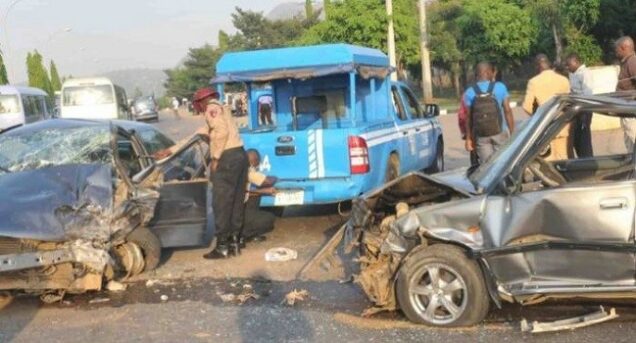
The recent revelation obtained by PulseNets from the World Health Organization’s Global Status Report on Road Safety 2023, that Nigeria records one of the highest road accident-related death rates in Africa at 21.4 deaths per 100,000 people, has raised grave concern across the country.
At a press briefing in Abuja, Justice Monica Dongban-Mensem, Founder of Kwapda’as Road Safety Demand (KRSD), cited the disturbing WHO figures and warned that Nigeria must take decisive action to curb the rising tide of road fatalities.
She also announced plans to host the maiden International Road Crash Victims Africa Conference (IRCVAC) in November, which she said will amplify the voices of road crash victims and their families.
In her words,
“Nigeria has been listed among African countries with the highest road traffic deaths, with 21.4 deaths per 100,000 population. This is not just about numbers. Behind these figures are shattered families, livelihoods lost and futures cut short. The rate is higher than both global and continental averages.”
On his part, FRSC Corps Marshal, Shehu Mohammed, told PulseNets that the Corps will intensify its efforts to reduce crashes nationwide. He confirmed that the FRSC and KRSD have begun collaborating to establish trauma centres across Nigeria in order to save lives after accidents.
Debate Over Causes of Crashes
The WHO report has reignited the longstanding debate about the real causes of road accidents in Nigeria. While some observers blame reckless drivers and poor vehicle maintenance, others point to government negligence in road construction and maintenance. A growing consensus suggests that the carnage stems from a dangerous mix of human behaviour, bad roads and poorly maintained vehicles.
Offering expert insight, Mr. Pius Akwashiki, a luxury driver with over 20 years of experience across Nigeria and West Africa, spoke to PulseNets and identified three main causes: road conditions, vehicle conditions and human factors.
Road Conditions
According to Akwashiki, the condition of Nigerian roads remains a primary factor in the alarming crash rate. He cited the Lagos–Benin–Ore Road as a death trap for more than 15 years, accounting for an estimated 40 percent of annual crashes.
He lamented,
“Across Nigeria’s highways, you find potholes as deep as three feet. Vehicles that hit them either somersault or ram into others, leading to fatal accidents with high casualty figures. Add abandoned rickety vehicles, wooden barricades and police roadblocks made with tyres, and our roads become nightmares for motorists.”
He further pointed to the lack of proper road signage, which leaves non-locals struggling to navigate highways without prior guidance.
Vehicle Conditions
On vehicle maintenance, Akwashiki explained that many Nigerian vehicles are rarely serviced by certified engineers or manufacturer-authorised centres. Instead, unskilled mechanics and fake spare parts dominate the system.
He submitted,
“Improvised maintenance and substandard spare parts are widespread. These fake parts fail when least expected, often leading to deadly accidents. The shortage of skilled mechanics also keeps maintenance standards far below global benchmarks.”
Human Factors
Perhaps the most dangerous element, Akwashiki stressed, is the human factor. From careless driving habits to systemic failures in licensing and regulation, he argued that negligence runs deep.
He told PulseNets,
“Licenses can be obtained without proper driving knowledge. People pay their way through. This is why incompetent drivers flood our roads. Many don’t understand road signs, yet they overtake at sharp bends, ignore traffic rules, drink while driving or even sleep on the steering from fatigue.”
Investigations by PulseNets also learnt that many transport companies adopt a “Pay-As-You-Go” policy, where drivers are paid per trip. This encourages overdriving, fatigue and speeding.
Akwashiki added,
“Some drivers even make phone calls while driving. A single distracted moment has cost countless lives on our roads. Combined with the widespread use of fairly used ‘tokunbo tyres’ far beyond their lifespan, it is a recipe for disaster.”
Systemic Failures and Recommendations
Beyond individual drivers, Akwashiki did not spare government agencies. He blamed the FRSC and the Ministry of Transport for failing to enforce standards and monitor reckless drivers. He revealed that drivers involved in multiple crashes simply move to new companies, with no national database to track their records.
He recommended that the FRSC establish a driver data bank, publishing the names of repeat offenders in national newspapers to deter reemployment.
For solutions, Akwashiki urged:
-
Proper road rehabilitation to eliminate potholes and hazards
-
Genuine vehicle inspections free of corruption and kickbacks
-
FRSC adoption of modern tools to detect drunk drivers
-
Stricter enforcement of road safety laws
-
Elimination of fake and expired tyres from circulation
Also Read: Over 40,000 people die annually in road accidents in Nigeria — FRSC
“If agencies perform their duties sincerely and the government provides safe roads, while drivers commit to discipline, Nigeria can drastically cut down its road carnage,” he concluded.
The WHO’s damning report has once again underscored that road crashes in Nigeria are not accidents in the true sense, but preventable tragedies resulting from systemic neglect, human error and infrastructural decay.