Why Africa’s Unity Is the Key to Escaping Dollar Dominance After the U.S.–Venezuela Crisis
African heavyweights are once again under pressure to accelerate economic and monetary integration as concerns mount over renewed United States interventionism beyond its borders.
Recent US actions in Venezuela, alongside stern warnings directed at Mexico and Cuba, have revived deep anxieties about economic coercion and geopolitical pressure being deployed against resource-rich regions of the Global South. Analysts and Pan-African thinkers argue that Africa’s continued reliance on the US dollar and Western-dominated financial systems leaves the continent exposed to similar vulnerabilities.
PulseNets learnt that leading African policymakers and economists increasingly view deeper continental integration, expanded free trade, and the pursuit of a shared monetary framework as essential buffers against external economic and political pressure.
The US operation in Venezuela, widely condemned by several governments as a breach of international law, is being interpreted as a broader signal of Washington’s evolving strategic posture. Observers warn that such actions could carry serious implications not only for Latin America but also for Africa and other emerging regions.
For decades, Africa’s most influential states have debated pathways toward genuine economic sovereignty. However, amid what many describe as increasingly aggressive displays of American hard power, the argument for unity—financial, monetary, and political—has grown significantly stronger.
According to analysts who spoke to PulseNets, the Venezuelan episode goes far beyond a regional dispute. It represents a modern iteration of a long-standing global pattern in which powerful states leverage economic dominance and military capability to influence resource access, political alignment, and global governance structures.
For Africa’s economic heavyweights, this moment presents both a warning and a call to action: dismantle the structural constraints of dependency on the US dollar and Western financial institutions, while reviving continental aspirations once championed by figures such as Muammar Gaddafi.
US invasion of Venezuela and the return of hard power politics
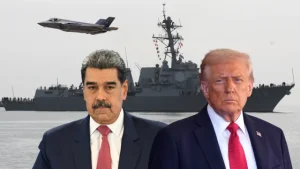
In early January 2026, United States forces carried out what many observers described as an unprecedented operation in Venezuela, detaining President Nicolás Maduro and transferring him to the US to face charges. The move marked a dramatic escalation of American involvement in the Western Hemisphere.
The US administration defended the action on grounds of narco-terrorism and national security. However, critics argue that deeper motivations lie beneath the surface. As one regional analyst told PulseNets, “This is less about law enforcement and more about control—control over energy resources and geopolitical influence.”
PulseNets reported that the situation was further inflamed by warnings from US officials suggesting that other governments in the region, including Mexico and Cuba, could face similar pressure if they fail to align with Washington’s priorities on drug enforcement and political cooperation.
The response across Latin America has been swift and critical. Mexico, among others, described the operation as a violation of the United Nations Charter and a direct threat to regional stability. International law experts have also stressed that the action undermines long-established principles of sovereignty and non-intervention.
Several Latin American leaders have drawn comparisons to historical US interventions that were later revealed to have been driven by strategic and economic interests rather than humanitarian concerns.
For Africa, these events are not merely distant geopolitical developments. They serve as a stark reminder of how dominant global powers may act when access to strategic resources or geopolitical leverage is perceived to be under threat.
As one African policy expert told PulseNets, “If diplomatic norms can be ignored in one hemisphere, no region should assume it is immune.”
Economic hegemony, dollar dependence, and Africa’s quest for monetary autonomy

The global financial system remains firmly anchored to the US dollar. Oil—the world’s most strategically traded commodity—is overwhelmingly priced and traded in dollars, effectively binding both exporters and importers to the currency’s dominance.
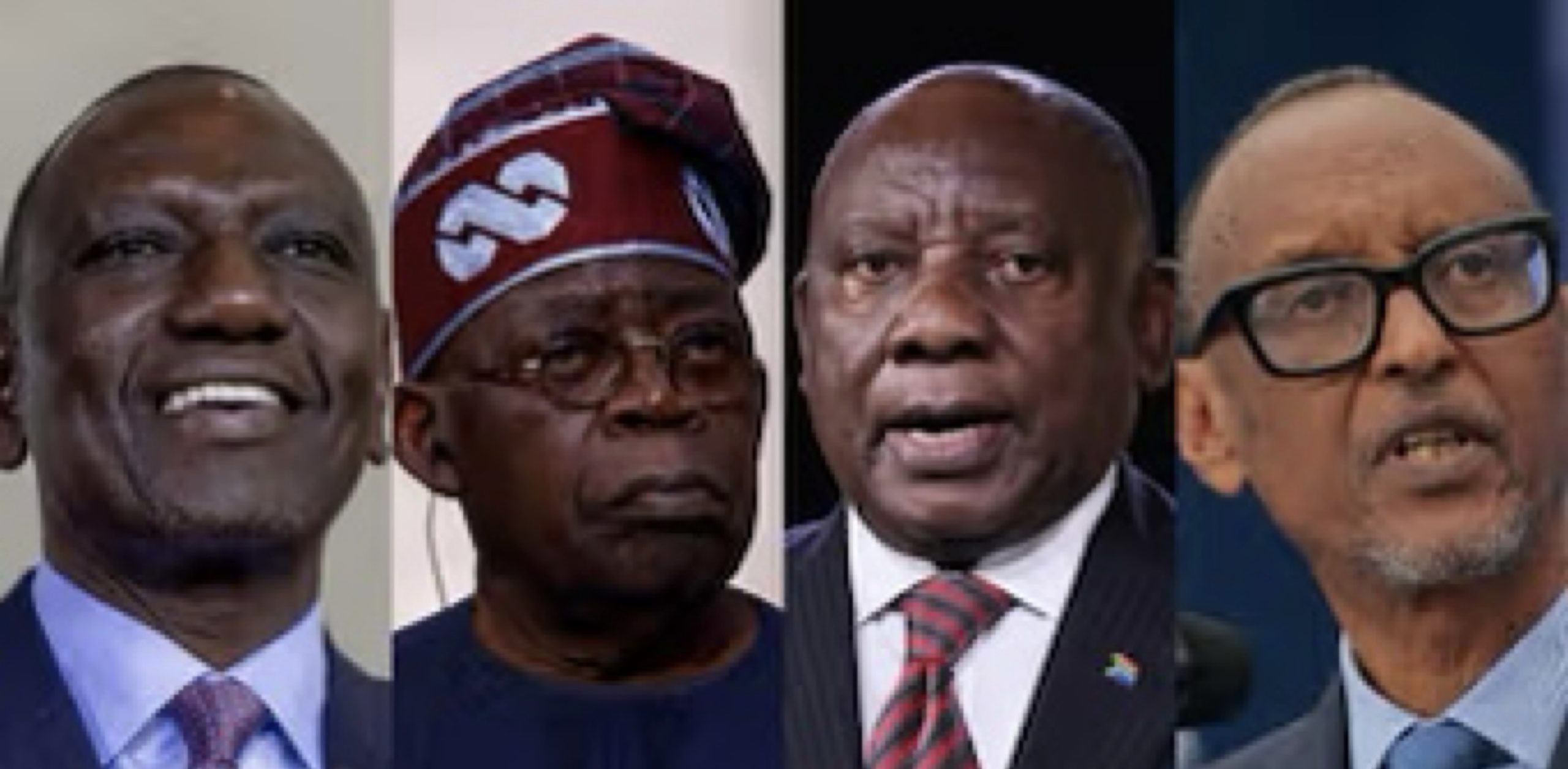
This system has allowed the United States to wield disproportionate influence over global finance and trade, often with adverse consequences for developing economies. Africa’s most resource-rich nations, including Nigeria, South Africa, Egypt, and Kenya, remain deeply embedded in this structure.
PulseNets obtained data showing that foreign reserves, trade finance mechanisms, and sovereign debt across much of Africa are largely dollar-denominated, leaving economies vulnerable to currency fluctuations, rising debt-servicing costs, and external financial shocks.
Proponents of a United Africa argue that a common currency and stronger continental financial institutions would significantly reduce reliance on external currencies. Such measures, they say, would restore greater control over fiscal and monetary policy while encouraging cross-border investment within Africa itself.
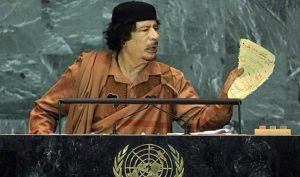
This vision closely mirrors Muammar Gaddafi’s long-advocated proposal for a United African currency, underpinned by a gold-backed dinar. His broader agenda sought to unify Africa’s vast natural resources and emerging markets through shared institutions and collective bargaining power.
While critics questioned the practicality of Gaddafi’s ideas, analysts who spoke to PulseNets noted that the underlying logic remains compelling: “Without financial sovereignty, political independence remains incomplete.”
Unity as a response to external pressure
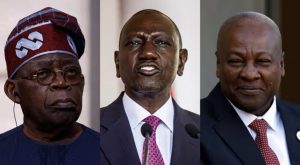
Africa’s economies are diverse, reflecting wide differences in political systems, development levels, and resource endowments. Yet common patterns emerge when viewed through the prism of external economic influence.
Raw materials are frequently exported without value addition, while finished goods are imported at premium prices. Intra-African trade remains low compared to trade volumes with Europe, the United States, and China. Meanwhile, external debt obligations and policy conditions attached to financial assistance continue to restrict domestic policy choices.
In this context, unity is not about erasing national differences. Rather, it is about strategic cooperation designed to strengthen collective economic resilience.
Analysts told PulseNets that a fully operational continental free trade area, expanded infrastructure connectivity, and coordinated industrial strategies could allow African states to negotiate from a position of strength rather than remain fragmented and vulnerable to external conditionalities.
The consequences of fragmentation were laid bare in Libya following NATO’s 2011 intervention. The overthrow of Gaddafi and the prolonged instability that followed illustrated how exposed African states can become when external powers intervene under contested justifications.
Observers argue that this experience underscores the urgent need for continental mechanisms capable of collective diplomatic, economic, and security responses.
Lessons from Latin America for Africa’s future
Latin America’s reaction to the US intervention in Venezuela has combined condemnation, caution, and calls for dialogue. Mexico’s firm emphasis on peaceful conflict resolution and respect for international law reflects a long-standing non-interventionist tradition.
Regional institutions have sought to reinforce legal accountability, recognising that failure to uphold international norms creates precedents that could be exploited elsewhere.
For Africa’s leading economies, these developments reinforce several key realities. Global power relations remain competitive and, at times, coercive. Dependence on external financial systems weakens national agency. And coordinated regional strategies significantly enhance bargaining power on the global stage.
A strategic imperative for African unity

The turbulence surrounding Venezuela is not merely a South American political crisis; it is a manifestation of deeper fractures within the global order. For Africa’s economic heavyweights, the moment represents both a cautionary tale and a strategic opportunity.
To escape cycles of external control, shape independent development paths, and safeguard sovereignty, African states must prioritise deeper integration and shared economic frameworks that reduce dependence on dominant global powers.
The vision of a United Africa may not be immediately achievable in full. However, its core pillars—economic autonomy, monetary innovation, expanded intra-African trade, and cooperative security—are within reach and increasingly urgent.
In a global system where power is exercised as much through financial instruments as through military force, unity is not a symbolic aspiration. It is a strategic necessity.