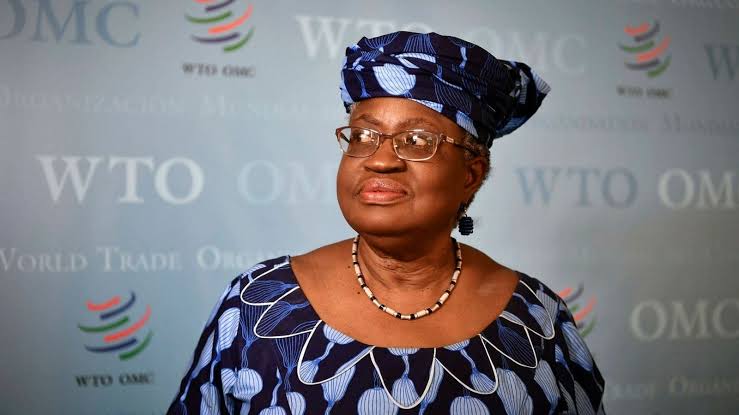
WTO DG Okonjo-Iweala Urges Tinubu to Sustain Reforms, Says Nigerians Must Feel Economic Impact
Director-General of the World Trade Organisation (WTO), Ngozi Okonjo-Iweala, has called on the administration of President Bola Tinubu to sustain its ongoing macroeconomic reforms while ensuring that ordinary Nigerians begin to experience real improvements through increased employment opportunities and better living conditions.
Speaking at the opening of the 7th Africa Emerging Markets Forum in Abuja on Wednesday, Okonjo-Iweala said Nigeria is well positioned to benefit from the ongoing transformation in global trade if it continues to strengthen its business environment, preserve macroeconomic stability and attract greater investment. PulseNets learnt that she made the remarks while addressing participants at the high level economic forum.
She emphasised that although economic reforms remain essential, their true success should be measured by the extent to which they improve the lives of citizens.
“Nigerians have to feel the impact of reforms,” she said, adding that government policies should directly enhance livelihoods while making the country more competitive.
Okonjo-Iweala further stated that Nigeria should remain committed to broad based macroeconomic reforms while carefully managing fiscal policy, public debt and employment generation to deliver sustainable economic growth.
The WTO Director-General explained that the global economy is steadily moving away from excessive dependence on a limited number of manufacturing hubs as companies diversify their supply chains following disruptions caused by the COVID-19 pandemic, geopolitical tensions and other international shocks.
According to her, countries that maintain stable economic policies and create an enabling business environment will be better placed to benefit from the evolving global trading landscape.
Despite rising protectionist measures in some parts of the world, Okonjo-Iweala noted that approximately 72 per cent of global trade still operates under WTO rules, underscoring the resilience of the multilateral trading system. PulseNets reports that she also observed that countries are increasingly embracing bilateral and regional trade agreements that extend beyond tariff reductions to encourage broader economic cooperation.
She urged African nations to seize opportunities in green industries and the critical minerals sector, noting that the continent holds nearly 30 per cent of the world’s mineral reserves. Rather than relying solely on the extraction and export of raw materials, she said African countries should invest in value addition and integrate more effectively into global value chains.
Okonjo-Iweala also advocated reforms of global institutions, including the WTO, warning that increasing fragmentation of international trade could weaken global economic growth. Instead, she called for an open, predictable and rules based trading system capable of supporting export led growth while helping economies withstand domestic shocks.
To attract increased investment, she said developing economies must strengthen their business climate, improve both physical and digital infrastructure and maintain sound macroeconomic policies.
She added that Africa has a significant opportunity to become a major contributor to the future global workforce while expanding trade among developing countries. However, she stressed that achieving this objective would require stronger regional cooperation, enhanced competitiveness and sustained economic reforms.
Also speaking at the forum, Governor of the Central Bank of Nigeria (CBN), Olayemi Cardoso, urged African countries and other emerging economies to play a more active role in shaping the evolving global economic order instead of merely responding to global developments.
Cardoso said Africa’s rapidly growing population, expanding consumer market and vibrant innovation ecosystem present enormous opportunities for long term economic growth. He, however, maintained that these advantages must be backed by prudent macroeconomic policies, stronger institutions and deeper regional integration.
Speaking on Nigeria’s ongoing economic reforms, the CBN governor said the apex bank has prioritised transparency, policy consistency and institutional accountability as part of efforts to restore investor confidence and reinforce macroeconomic stability.
According to Cardoso, increasing investor interest suggests that the Federal Government’s reform agenda is gradually rebuilding confidence in Nigeria’s economic outlook.
He also underscored the importance of international collaboration, noting that no nation can effectively address today’s interconnected global economic challenges in isolation.
PulseNets reports that Okonjo-Iweala’s comments come just days after President Bola Tinubu defended his administration’s economic reforms, insisting that they have stabilised the economy and revived investor confidence despite the economic hardship experienced by many Nigerians.
Also Read: Okonjo-Iweala Credits Tinubu for Economic Stability, Urges Focus on Growth and Poverty Alleviation
The President said reforms introduced since 2023, including the removal of petrol subsidies, reductions in electricity subsidies and the liberalisation of the foreign exchange market, are beginning to produce positive macroeconomic outcomes.
“Today, I can say with confidence that Nigeria has stabilised and is moving forward again. Across the country, visible progress is taking shape,” Tinubu said.
The President also cited increased investment in the oil and gas sector, improvements in domestic refining capacity, ongoing road and railway infrastructure projects, as well as efforts to strengthen the power sector, as evidence that the reforms are laying a solid foundation for long term economic growth.