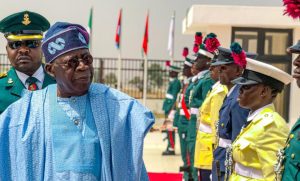
Tinubu Replaces Wale Edun with Taiwo Oyedele as Finance Minister, Sparks Investor Concerns
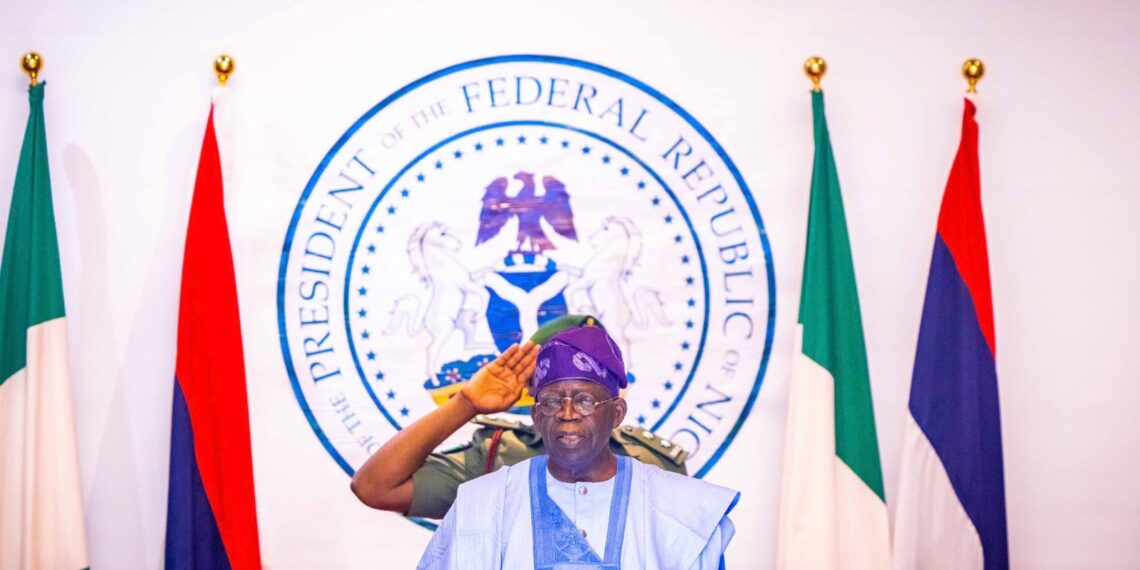
President Bola Ahmed Tinubu’s removal of Wale Edun as Minister of Finance and the appointment of Taiwo Oyedele as his replacement on Tuesday has triggered mixed reactions across various sectors of Nigeria’s economy.
PulseNets learnt that Edun’s dismissal, alongside that of the Minister of Housing and Urban Development, Ahmed Muda Dangiwa, was formally announced by the Secretary to the Government of the Federation, Senator George Akume, through an official memo.
Edun was instructed to hand over to Oyedele, while Dangiwa is to transfer responsibilities to Muttaqha Rabe Darma, who has been named minister-designate.
PulseNets reported that the Presidency did not disclose specific reasons for the removal of Edun and Dangiwa, but maintained that the cabinet reshuffle aligns with the President’s constitutional authority under Sections 147 and 148 of the 1999 Constitution as amended.
Edun, prior to his exit, played a central role in advancing Tinubu’s “Renewed Hope” economic agenda, including the removal of fuel subsidy, exchange rate liberalisation, and a mix of fiscal and monetary reforms. He had previously stated that these policies contributed to Nigeria’s economic growth, which rose to 4.07 percent in the fourth quarter of 2025 from 2 percent in 2023, while inflation declined to 15 percent from 22.04 percent.
Despite these macroeconomic improvements, PulseNets learnt that many Nigerians continue to grapple with high living costs, as food prices, transportation, and general expenses remain elevated.
The development comes amid global economic uncertainties, with the International Monetary Fund recently revising Nigeria’s growth projection downward to 4.1 percent from 4.3 percent, citing pressures linked to global shocks, including tensions in the Middle East.
Edun had only just returned from the World Bank and IMF Spring Meetings in Washington, where he stated during a Friday interview that Nigeria would not pursue an IMF bailout, even in the face of external economic pressures. He also reaffirmed the stability of the country’s domestic economic framework.
However, his sudden removal has unsettled segments of the investment community. PulseNets obtained market data indicating that the naira depreciated to close at N1,350.74 per dollar, while the Nigerian Exchange recorded an N88 billion gain, significantly lower than the N609 billion recorded a day earlier.
Policy clarity, not personalities, will shape investor confidence — Godwin Oyedokun
In an exclusive interview, a professor of accounting and finance at Lead City University, Godwin Oyedokun, spoke to PulseNets on the implications of the development, urging a balanced interpretation from both strategic and economic stability standpoints.
He noted that such cabinet changes can reflect a government’s readiness to reassess its economic direction and reinvigorate policy execution.
Oyedokun explained that leadership transitions are sometimes necessary to respond to evolving economic realities and strengthen governance outcomes.
However, he warned that sudden or insufficiently explained decisions could carry unintended risks, particularly in relation to investor sentiment.
According to him, any perception of inconsistency or lack of transparency could heighten uncertainty within financial markets and weaken investor confidence.
“Cabinet reshuffling, in this context, should be viewed through a dual lens.
“On one hand, it can signal responsiveness, a willingness by the government to recalibrate strategy and inject new energy into economic management.
“On the other hand, if perceived as abrupt or lacking clear justification, it risks undermining investor confidence by introducing uncertainty about policy continuity,” he said.
Oyedokun further stressed that investors are typically less concerned with individual officeholders and more focused on the overall policy environment.
He emphasized that coherence, predictability, and credibility in government policies remain the primary drivers of investment decisions.
Also Read: US Urged to Sanction Tinubu Officials as APC Chieftain Alleges Threat to Nigeria’s Democracy
He added that sustaining a clear policy direction, improving communication, and strengthening institutional frameworks are more critical than any single appointment.
The finance expert urged the government to prioritise transparency and consistency in its economic policies in the wake of the transition, noting that these factors will ultimately shape the response of both domestic and foreign investors.