Dangote Rejects NNPC Bid for More Refinery Shares, Plans Public Ownership for Nigerians
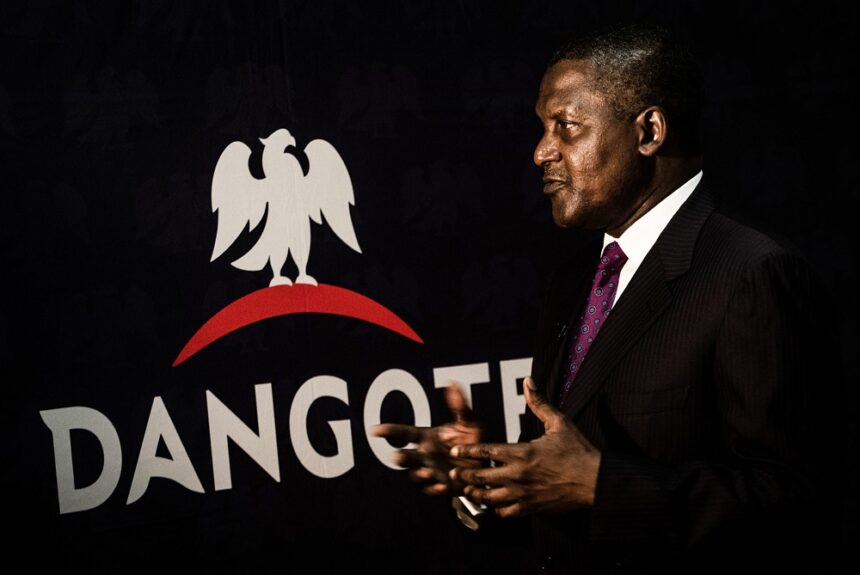
President of the Dangote Group, Aliko Dangote, has disclosed that his company rejected fresh attempts by the Nigerian National Petroleum Company Limited to acquire additional shares in the Dangote Petroleum Refinery.
The billionaire industrialist made the disclosure during an interview with the Chief Executive Officer of Norway’s Sovereign Wealth Fund, Nicolai Tangen, PulseNets learnt.
According to Dangote, the decision was driven by plans to widen ownership of the refinery by listing it publicly and allowing more Nigerians to participate in the investment.
NNPC currently owns a 7.25 per cent stake in the $20bn Lekki-based refinery after acquiring the shares for approximately $1bn in 2021. Under the initial agreement, the national oil company had the option of increasing its ownership to 20 per cent before the arrangement later changed.
Speaking during the interview obtained by PulseNets, Dangote revealed that his company intentionally declined further acquisition attempts by the state-owned oil firm.
“The national oil company already owns 7.25 per cent, and they are trying to buy more. We are the ones that said no; we want to now spread it and have everybody be part of it,” he said.
Dangote further identified policy inconsistency as one of the most significant threats confronting businesses and industrial investments in Nigeria.
The businessman warned that abrupt policy reversals and unstable government decisions remain major concerns for investors handling large-scale projects across the country.
While discussing potential risks to his business empire, Dangote explained that instability and unfavourable policies could negatively impact long-term investments.
“Actually, if there are civil wars, which is not in the offing at all. The other biggest risk is government inconsistencies in policies,” he stated.
The disclosure comes amid the growing dominance of the Dangote refinery in Nigeria’s downstream petroleum sector. Industry figures for the first quarter of 2026 showed a sharp increase in petrol supply from the refinery as fuel importation into Nigeria declined significantly.
PulseNets reported that the refinery supplied more than three billion litres of petrol within the first three months of 2026 as local refining capacity continued to expand.
The development has further strengthened the refinery’s strategic position as Nigeria intensifies efforts to reduce dependence on imported petroleum products and boost local refining.
Dangote also disclosed that investors in his companies could soon begin earning dividends in dollars as export revenues continue to rise across the group’s operations.
According to him, nearly 80 per cent of the group’s earnings are expected to come from foreign exchange inflows generated through exports from its cement, fertiliser, petrochemical and refinery businesses.
“What we are announcing is that when you invest in any of our businesses going forward, in cement or in the refinery, in petrochemicals, in fertiliser, we guarantee to pay you a dividend in dollars because we are very well into exports,” he said.
Dangote further explained that the refinery project received critical backing from several financial institutions after the company encountered challenges arising from naira devaluation during the construction phase.
Financial institutions mentioned by the businessman included Afreximbank, Africa Finance Corporation, Zenith Bank, Access Bank and United Bank for Africa.
He noted that despite major financial and operational difficulties encountered during the refinery’s development, the final outcome surpassed expectations.
PulseNets recalls that Dangote had earlier disclosed in 2024 that NNPC’s actual ownership in the refinery stood at 7.25 per cent rather than the widely reported 20 per cent stake.
Also Read: Tinubu Meets Dangote, Otedola on Easter as Economic Reforms Take Centre Stage
At the time, he explained that the national oil company did not complete payment for the remaining shares and eventually retained only the portion already paid for.
The latest revelation is expected to reignite conversations surrounding refinery ownership structure, transparency, investment participation and the role of the private sector in Nigeria’s oil and gas industry.