CBN Governor Cardoso Warns Bank Directors on Governance Failures, Ends Regulatory Forbearance
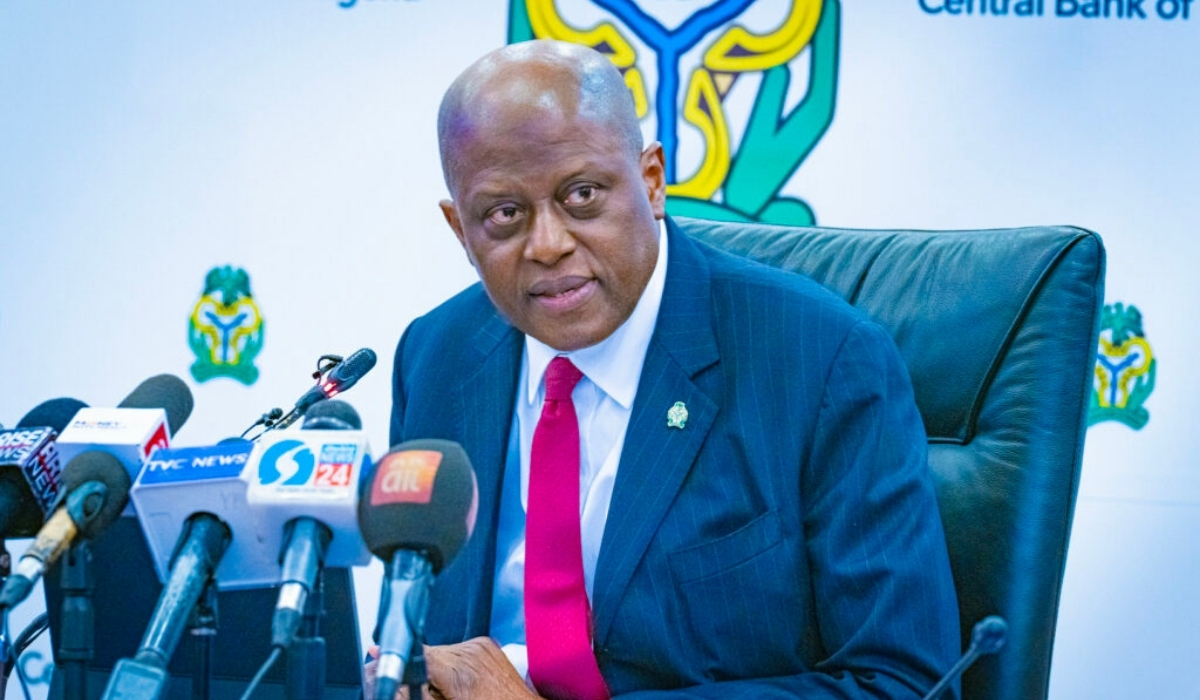
The Governor of the Central Bank of Nigeria, Mr Olayemi Cardoso, has issued a stern warning to bank directors and key industry stakeholders to strengthen corporate governance frameworks or face firm regulatory consequences, insisting that “strong governance is the foundation of trust and stability in the financial system.”
The caution was delivered during a keynote address at the Chartered Institute of Directors induction ceremony in Lagos, where Cardoso was represented by the CBN Director of Banking Supervision, Dr Olubukola Akinwunmi.
He explained that the outcome of the recently concluded bank recapitalisation exercise will be determined largely by the effectiveness of leadership and the quality of oversight provided by bank directors. PulseNets learnt that the apex bank views the exercise not simply as a compliance requirement, but as a calculated strategy to enhance financial system resilience, deepen investor confidence, and position institutions to drive sustainable economic growth.
Cardoso stressed that recapitalisation on its own will not deliver the desired outcomes without disciplined governance structures.
“As we enter this new phase, the role of directors becomes even more critical. Stewardship must now be exercised with sharper focus on consolidation, confidence, and stability,” he said.
He warned that the Central Bank would not hesitate to act against institutions operating with weak governance systems. PulseNets reported that the governor linked recurring instability in Nigeria’s banking sector to persistent corporate governance failures, noting that regulatory intervention becomes unavoidable when such lapses threaten depositors and the wider economy.
Referencing recent enforcement actions, Cardoso pointed to the dissolution of boards and management of three banks in January 2024 over serious governance breaches, reinforcing the apex bank’s zero tolerance stance on regulatory infractions.
The CBN governor further stated that the evolving regulatory landscape now demands stricter discipline and accountability from bank directors. He called for leadership that strikes a balance between profitability and long-term sustainability, while maintaining compliance without stifling innovation.
On regulatory reforms, Cardoso highlighted the introduction of Risk-Based Capital Requirements as a defining shift in Nigeria’s financial system. PulseNets gathered that the new framework moves away from size-based capital assessment to a model that aligns capital adequacy with actual risk exposure.
He urged directors to take a more strategic role in risk management by strengthening internal frameworks covering credit, market, and operational risks, while assuming full responsibility for compliance rather than depending on regulatory leniency.
Also Read: CBN Governor Cardoso Reassures US Investors of Nigeria’s Macroeconomic Stability Drive
Cardoso also signalled the end of regulatory forbearance, indicating that stricter enforcement of capital adequacy standards will now take effect. He maintained that financial institutions must align their capital base with their risk profile to ensure durability and long-term stability.
“These measures are not punitive; they are enabling. They provide directors with the framework to exercise stewardship with discipline, foresight, and confidence,” he added.