Economists Reject Nigeria’s Q1 2026 GDP Growth Report as Cost of Living Crisis Deepens
Nigeria’s latest Gross Domestic Product report released by the National Bureau of Statistics (NBS) has come under heavy criticism from economists and financial stakeholders as millions of citizens continue to struggle with worsening economic hardship and soaring living costs across the country.
The NBS report, released on Monday and obtained by PulseNets, showed that Nigeria’s economy expanded by 3.89 percent in the first quarter of 2026, compared to the 3.13 percent growth recorded during the same period in 2025.
According to the report, the services sector remained the dominant contributor to the nation’s aggregate GDP with 57.73 percent, while agriculture contributed 23.16 percent and industries accounted for 19.11 percent.
The statistics further showed that nominal GDP stood at N110.79 trillion, while real GDP was put at N51.36 trillion. The non-oil sector contributed 96.08 percent to the economy, while the oil sector accounted for just 3.92 percent.
However, the latest GDP figures have continued to generate mixed reactions among Nigerians and economic experts amid persistent inflationary pressure and rising energy costs nationwide.
PulseNets had earlier reported the sharp increase in the prices of essential commodities and energy products, with cooking gas selling above N1,500 per kilogram, petrol hovering around N1,400 per litre, and diesel nearing N2,000 per litre amid the lingering Middle East crisis.
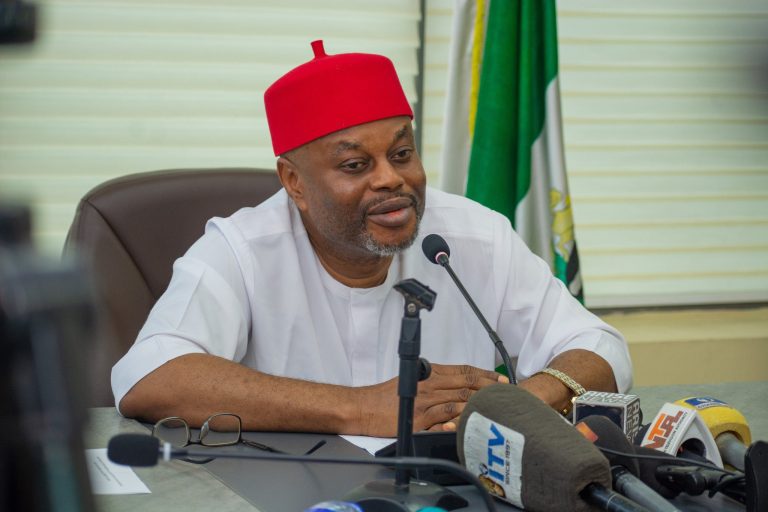
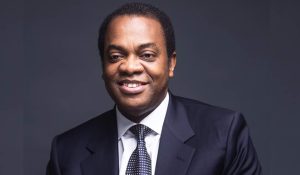
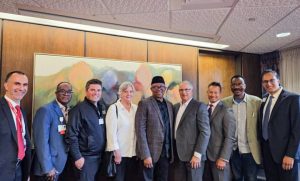
Speaking exclusively on the development, former President and Chairman of the Council of the Chartered Institute of Bankers of Nigeria, Mazi Okechukwu Unegbu, alongside the President of the Bank Customers’ Association of Nigeria, Dr. Uju Ogunbunka, argued that the country’s reported economic growth has failed to improve the living conditions of ordinary Nigerians.
GDP Growth Yet to Reflect Reality of Nigerians — Unegbu
Unegbu told PulseNets that despite repeated improvements in Nigeria’s GDP figures, the economic situation facing average citizens continues to deteriorate.
He maintained that the reported growth has not translated into meaningful relief for households battling rising food prices, transportation costs, and expensive energy products.
The economist further explained that experts are now considering new approaches to GDP measurement that would better capture the daily realities of Nigerians rather than relying solely on macroeconomic statistics.
According to him, the continuous rise in the prices of essential goods and services under the current administration has made survival increasingly difficult for citizens across different sectors of society.
Unegbu stressed that GDP growth during periods of economic hardship should not be treated as the only indicator of economic well-being, insisting that market realities and citizens’ purchasing power must also be factored into economic assessments.
He pointed to the increasing cost of cooking gas, fuel, and diesel as clear indicators that many Nigerians are worse off despite the positive GDP figures released by the NBS.
The financial expert also suggested that future GDP calculations should incorporate the realities faced by traders, artisans, students, and other grassroots economic participants.
“Economists are now trying to recalibrate the GDP to link it to the life of the ordinary person on the street. Despite improvement in Nigeria’s GDP, the life of the ordinary person is not improving.
“The GDP has no meaning; that is why the economy wants to recalibrate it and link it to the life of the ordinary person in this space.
“Right now the price of everything has increased since this administration. The cost of living has been going up. Nothing has come down.
“The NBS GDP report showed that the economy is growing, but in actual fact, if you go to the market, instead of prices of things changing, things are going up.
“So we are now worse off than before despite the improvement in GDP. The GDP during the crisis should not be used to compare the life of the ordinary person, and that’s why we are thinking.
“The best thing would be to compare the GDP or calculate the GDP based on the life of market forces. For instance, cooking gas is now over N1500 per kilogram.
“Fuel and diesel are as high as N1400 and N2000 per liter. The GDP improvement has not impacted positively on the life of the common man.
“My own suggestion is that when the GDP is published, it should not be used to measure what the common man is doing.
“To me, the GDP should reflect the common man. GDP should reflect people whose lives are affected: the life of the schoolboy, the life of the market woman/man, the life of traders, mechanics, and hair dressers,” he told PulseNets.
‘Beautiful Statistics’ Do Not Match Nigerians’ Reality — Ogunbunka
Also reacting to the report, Ogunbunka told PulseNets that the latest GDP growth figures released by the NBS do not accurately represent the realities confronting ordinary Nigerians.
Also Read: Nigeria Begins New Tax Regime as Economists Urge Calm Amid Public Fears
He noted that despite the reported economic expansion, millions of citizens are still grappling with rising inflation, declining purchasing power, and worsening economic conditions.
“Unfortunately, beautiful statistics do not match reality. The NBS report on GDP growth to 3.89 percent leaves more than expected as many battle with the rising cost of living,” he stated.